


How O-Rings Master Temperature Challenges?
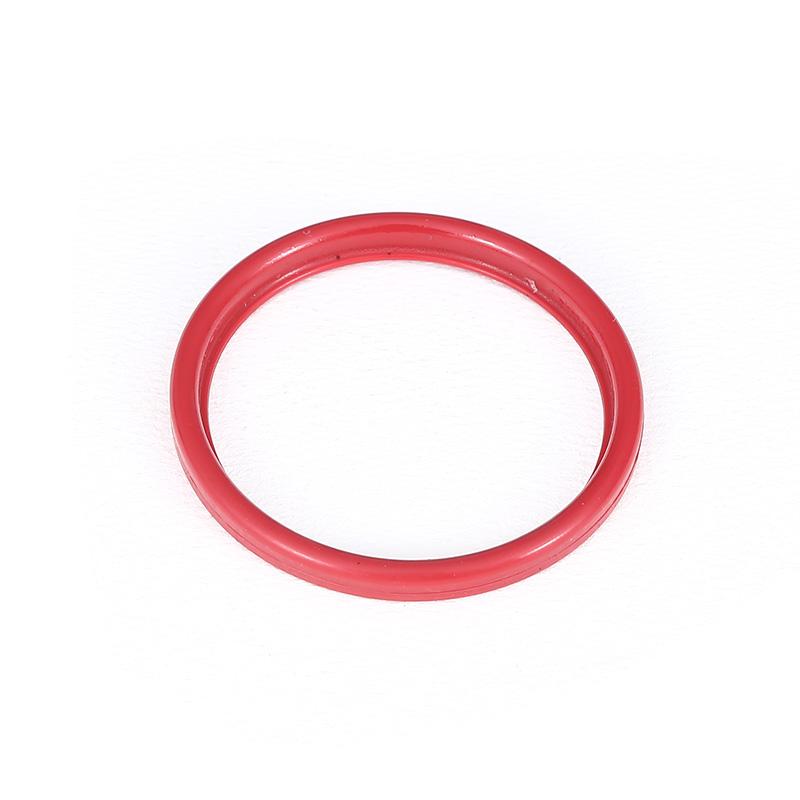
In the demanding world of sealing, temperature swings pose a constant threat. This is where the remarkable temperature resistance of O-Rings becomes a critical superpower. Unlike rigid seals, O-Rings made from specialized elastomers maintain their elasticity and sealing integrity across astonishingly wide thermal ranges, enabling reliable performance in environments that would cripple lesser components.
The true brilliance of O-Rings lies in material diversity. Unlike a one-size-fits-all solution, engineers can select the optimal elastomer based on the specific high and low temperature demands of the application. For instance, common Nitrile (NBR) O-Rings reliably function from approximately -40°C to +120°C, making them suitable for many automotive and industrial hydraulic systems. When higher heat resistance is paramount, Fluorocarbon (FKM/Viton®) O-Rings excel, typically handling -20°C to +200°C, with special formulations pushing even higher for applications like engine compartments or chemical processing. For ultra-low temperatures or broad, stable ranges, Silicone (VMQ) O-Rings perform admirably from -60°C to +200°C (with tolerance for momentary spikes). And for the most extreme thermal environments, such as deep-well tools or aerospace propulsion, Perfluoroelastomer (FFKM) O-Rings can withstand continuous operation exceeding +300°C.
This broad spectrum is crucial because an O-Ring's effectiveness hinges on maintaining its elastic properties. Exceeding the upper temperature limit of a material risks permanent compression set, hardening, cracking, and catastrophic loss of seal as the elastomer degrades. Conversely, plunging below the lower limit can cause the material to transition towards a glassy state, losing elasticity and becoming brittle and prone to shattering under stress or impact – a critical concern in cryogenic applications or arctic conditions. Choosing the right O-Ring material isn't just about function; it's about preventing thermal failure.
Therefore, understanding and leveraging the temperature resistance of O-Rings is fundamental to design success. Whether facing the intense heat of a power plant turbine, the cryogenic chill of liquid nitrogen handling, or the fluctuating conditions under an automotive hood, selecting an O-Ring engineered for the specific thermal profile ensures long-term sealing integrity, safety, and system reliability. It’s this ability to conquer thermal extremes that solidifies the O-Ring’s position as an indispensable sealing solution.
 Portuguese (Brazil)
 English
 Arabic
 French
 Spanish
 Portuguese
 Deutsch
 Turkish
 Dutch
Dutch
 Italiano
 Russian
 Romaian
 Greek
Greek