


Precision Engineering with Laser Resistor Trimming: Technologies, Machines, and Applications
Introduction
In the world of high-precision electronics, accuracy is everything. Whether you're manufacturing analog circuits, sensor modules, or aerospace systems, component tolerance can make or break the final performance. One of the most effective and widely adopted methods for achieving precise resistance values is laser resistor trimming.
The laser trim resistor process uses focused laser energy to finely adjust resistor values to within extremely tight tolerances—often down to 0.1%. With the growing demand for reliability and miniaturization in electronics, laser trimming machines have become indispensable in industries such as automotive, medical, aerospace, and telecommunications.
What Is Laser Resistor Trimming?
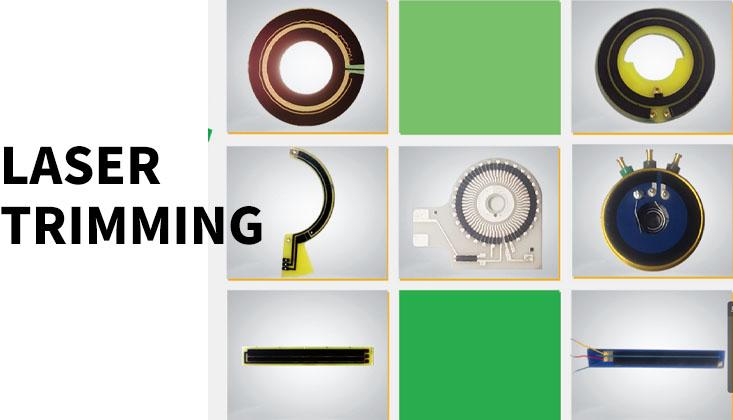
Laser resistor trimming is a method of adjusting the resistance of printed or deposited resistors by using a laser to remove controlled amounts of resistive material. The process is non-contact, highly precise, and performed after initial resistor fabrication, allowing final values to be fine-tuned according to design specifications.
-
How it works:
A laser trimming machine directs a focused beam (usually UV, green, or infrared) onto the resistor's surface. By ablating tiny amounts of material, the geometry of the resistor changes, which in turn adjusts the resistance. -
Why it’s used:
Manufacturing processes (screen printing, sputtering, etc.) inherently produce resistors with variations. Laser trimming ensures that each laser trim resistor meets its precise target resistance.
Laser Trimming Machine Overview
A laser trimming machine is a sophisticated system designed for high-accuracy, automated trimming of resistors and circuit components. It includes:
-
Laser Source: Typically a solid-state or fiber laser (UV, green, IR depending on material)
-
Precision Stage: XY or XYZ stages for accurate component positioning
-
Vision System: High-resolution cameras for alignment and real-time process monitoring
-
Measurement System: In-line resistance feedback system for closed-loop trimming
-
Control Software: Allows recipe-based automation and real-time monitoring
These machines are capable of both passive trimming (adjusting based on measured resistance) and functional trimming (adjusting based on output voltage, frequency, or gain in an active circuit).
Types of Resistor Trimming Patterns
The trimming process can follow various cut patterns depending on material type and required resistance change:
-
Single Line Cut: A straight line reduces the conductive path
-
L-Cut / Notch Cut: Adds an angled cut to further increase resistance
-
Serpentine or Zig-Zag Cut: Provides fine control with small increments
-
Progressive Trimming: Involves gradual material removal with continuous feedback
These patterns are chosen carefully to minimize thermal effects and avoid damage to the substrate or surrounding components.
Applications of Laser Trim Resistor Technology
Laser trim resistor technology is used across many industries where resistor precision is critical:
1. Automotive Electronics
-
Engine control units (ECUs)
-
ABS systems
-
Sensor circuits
2. Medical Devices
-
Diagnostic equipment calibration
-
ECG/EEG signal conditioning
-
High-reliability sensing systems
3. Aerospace and Defense
-
Guidance systems
-
Satellite electronics
-
Communication modules
4. Consumer Electronics
-
Audio equipment
-
Precision timers and clocks
-
Smart sensors and IoT devices
5. Industrial Controls
-
Analog instrumentation
-
Factory automation sensors
-
Power electronics calibration
Benefits of Laser Trimming Machines
Using a laser trimming machine offers several significant advantages:
-
High Precision – Achieve tolerance levels of ±0.1% or better
-
Non-Contact Process – No mechanical stress on components
-
Fast & Repeatable – Ideal for high-volume production
-
In-Line Automation – Integration into SMT lines or test stations
-
Reduced Scrap – Corrects deviations from printing/sputtering without rework
The ability to fine-tune resistors after fabrication increases yield, lowers cost, and boosts product performance and reliability.
Thin Film vs Thick Film Resistor Trimming
| Feature | Thick Film Resistors | Thin Film Resistors |
|---|---|---|
| Material | Printed resistive ink on ceramic | Sputtered metal film on substrate |
| Tolerance (pre-trim) | ±10–20% | ±1–5% |
| Common Applications | Power modules, hybrids, low-cost circuits | High-frequency, precision analog circuits |
| Laser Wavelength | IR (1064nm) or Green (532nm) | UV (355nm) or Green (532nm) |
| Trimming Required? | Yes, for most applications | Yes, especially high-reliability sectors |
Trends in Resistor Trimming Technology
The future of resistor trimming is driven by demand for automation, miniaturization, and AI-assisted testing. Emerging trends include:
-
Inline Functional Trimming – Adjusting resistors during full-circuit operation
-
AI-Powered Feedback Systems – Intelligent control for trimming decisions
-
Robot-Integrated Trimming Heads – High-speed pick-and-trim solutions
-
Green Manufacturing – Low-waste, energy-efficient trimming systems
As electronics become smaller and more precise, laser trimming machines will continue evolving to meet advanced design requirements.
How to Choose the Right Laser Trimming Equipment
When selecting a laser trimming machine, consider:
-
Required tolerance level (e.g., ±1%, ±0.1%, or better)
-
Resistor material and process (thin film, thick film, polymer)
-
Throughput and automation compatibility
-
Type of trimming (resistance-only vs. functional trimming)
-
Software capabilities (data logging, recipe management)
Leading manufacturers also offer customized platforms for hybrid circuits, chip resistors, SMD arrays, and flexible substrates.
Conclusion
As electronics become more compact and performance-critical, laser resistor trimming offers a precise, reliable, and scalable method for achieving exact resistance values. From adjusting thin film networks in medical devices to calibrating thick film resistors in power modules, laser trim resistor technology is now a cornerstone of high-quality electronics manufacturing.
Investing in a laser trimming machine not only ensures compliance with performance standards but also opens the door to automation, yield improvement, and long-term product reliability. Whether you're a high-volume manufacturer or a precision electronics lab, resistor trimming is the silent hero behind perfect performance.
 Dutch
Dutch
 English
 Arabic
 French
 Spanish
 Portuguese
 Deutsch
 Turkish
 Italiano
 Russian
 Romaian
 Portuguese (Brazil)
 Greek
Greek