


Why Choose Raman Spectrometers Used in Semiconductor Materials
In the realm of the semiconductor industry, Raman spectrometers play a pivotal role in examining the fundamental properties of semiconductor materials. These materials encompass single elements such as silicon (Si) and germanium (Ge), as well as more complex compositions like zinc selenium (ZnSe) and gallium arsenide (GaAs) semiconductors. The characteristics of these semiconductor materials during manufacturing significantly impact the quality of subsequent processes like wafer manufacturing and IC packaging, making this stage absolutely critical.
Utilizing Raman spectrometers as tools for process analysis and quality control during wafer manufacturing can lead to improved product quality, increased yield rates, and ultimately higher overall productivity.
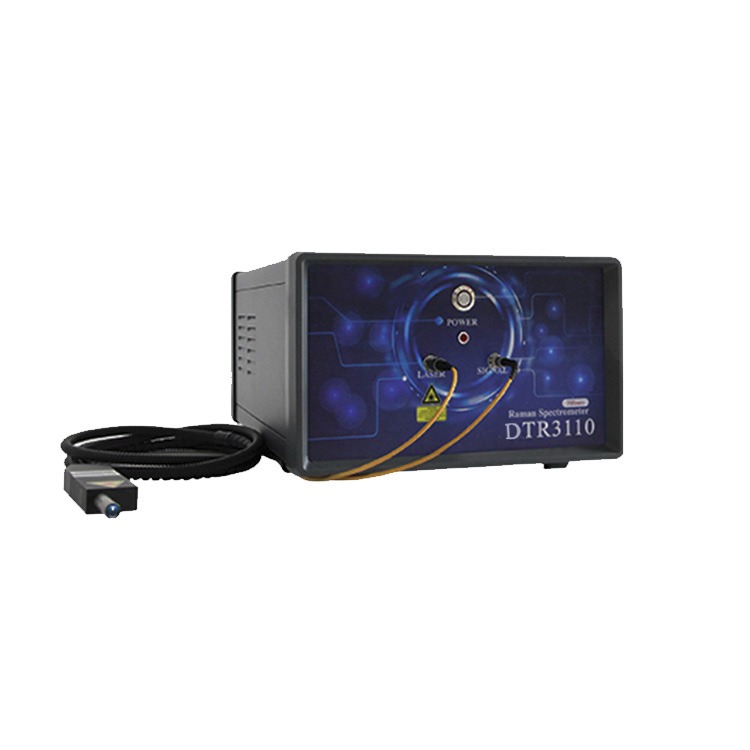
Presently, Raman spectrometers find various applications in the semiconductor industry, including:
Material purity analysis
Identification of contaminants
Determining alloy compositions
Analyzing superlattice structures
Studying characteristic factors of intrinsic stress and strain
Defect analysis
Investigating semiconductor heterostructures
Examining doping effects of heterojunctions
What is ZnSe?
ZnSe stands as a prototypical II-VI semiconductor material, possessing a zinc blend structure and a direct band gap. At room temperature (300K), its band gap is 2.698eV, and at low temperatures (<10K), it increases to 2.821eV, corresponding to blue light with a wavelength of 459.4nm.
Applications and Research of ZnSe
Researchers have employed thermal evaporation of ZnSe powder in a high vacuum for various applications. Deposition of ZnSe monolayers with thicknesses ranging from 30 nm to 1 µm on c-Si and glass substrates has been achieved at room temperature.
Furthermore, researchers have investigated SiOx/ZnSe periodic multilayer films using the same deposition technique, with ZnSe layer thicknesses of 2 and 4 nm. The Raman spectra, measured at 295K with various laser lines, revealed distinct Raman signatures corresponding to multiple optical phonon (1LO to 4LO) light scattering and randomly oriented crystalline ZnSe grains in both monolayers and multilayers.
Notably, relatively large line widths of the 1LO band (approximately 15 cm-1) were observed, which were associated with lattice distortions in the grains and the presence of amorphous phases in layers thinner than 100 nm.
The Behavior of ZnSe in Raman Analysis
During the experiments, all measurements were conducted in air at room temperature, and the spectra were plotted on the same graph with consistent scaling.
In the upper panels, Raman spectra of 1 µm (a) and 30 nm (b) ZnSe monolayers and SiOx (4 nm)/ZnSe (4 nm) multilayers (c) were measured under three different laser excitations.
Figure 1a showcases three Raman spectra of a 1 µm-thick ZnSe layer deposited on a Corning 7059 glass substrate. Superior resolution was obtained with excitation conditions near the resonance Raman scattering conditions.
The most substantial enhancement of the Raman signal was observed when the excitation light closely matched the material's optical bandgap, Eg0. This aligns with prior findings indicating that for a 1 µm-thick ZnSe layer, the optical absorption follows the laws of directly allowed electronic transitions in crystalline semiconductors.
Figures b and c exhibit the Raman spectra of a 30 nm-thick ZnSe layer and a SiOx (4 nm)/ZnSe (4 nm) multilayer, respectively, both deposited on a c-Si substrate. In these spectra, a narrow solid band peaked at 521 cm-1 appeared due to scattering from the substrate. The 1LOZnSe band intensity increased with decreasing excitation wavelength, and a series of 4 peaks were visible only in the spectrum excited by the 457.9 nm line.
In practical applications, SiOx/ZnSeML (with various thicknesses between 2 and 10 nm) were characterized using Raman spectroscopy with the 442 nm line, revealing resonance behavior in the Raman spectrum associated with size-induced variation of the bandgap energy with layer thickness.
The Raman spectra of ZnSe monolayers with four different thicknesses are depicted, showing that the 30 nm layer's 1LO band exhibited significantly higher intensity than the other samples. The results indicate that ZnSe layers with thicknesses less than 50 nm can exhibit excellent chemical sensitivity due to their small grain size.
 French
 English
 Arabic
 Spanish
 Portuguese
 Deutsch
 Turkish
 Dutch
Dutch
 Italiano
 Russian
 Romaian
 Portuguese (Brazil)
 Greek
Greek