


What Are the Distinctions Between CNC Machining and Other Manufacturing Methods?
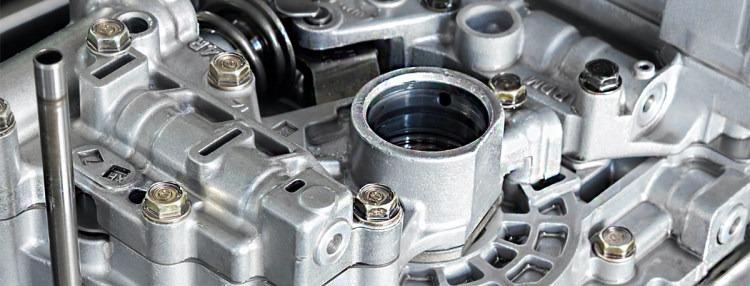
CNC machining stands out from other manufacturing methods in several key ways. Here's a breakdown of its key differences:
l Subtractive vs. Additive: CNC machining is a subtractive process that removes material from a solid block to create the desired shape. This provides high precision and control but produces waste. Other manufacturing methods use additive techniques, which involve layering the desired shape. Examples include 3D printing, injection molding, and metal additive manufacturing. These can be more efficient for complex geometries, but they may be limited in precision and strength.
l Automation vs. Manual: CNC machining is based on computer-controlled automation, providing high repeatability, accuracy, and speed. This reduces human error and enables more complex designs. Other methods, such as casting and forging, are semi-automated, whereas traditional machining is primarily manual. These may be slower and more prone to human error, but they provide flexibility for one-of-a-kind pieces or simple designs.
l Material Compatibility: CNC machining works with a variety of materials, including metals, plastics, wood, and composites. Certain materials, however, necessitate the use of specialized tools and expertise. Other methods frequently have specific material limitations. For example, 3D printing may not be appropriate for all metals, whereas injection molding is limited to specific plastics.
l Cost and Complexity: CNC machining can be costly, particularly for complex parts and small-scale production. Skilled personnel may also be required for the machine's setup and programming. Other methods' costs vary according to their method and complexity. Some methods, such as 3D printing, are more cost-effective for small batches or prototypes, whereas injection molding is better suited to high-volume production.
l Applications: CNC machining is best suited for producing high-precision parts with complex geometries in small to medium volumes. Used in a variety of industries, including aerospace, automotive, medical, and electronics. The applications of other methods vary according to the method. 3D printing is commonly used for prototyping and low-volume production, whereas injection molding is used for mass-production of plastic components.
 Portuguese
 English
 Arabic
 French
 Spanish
 Deutsch
 Turkish
 Dutch
Dutch
 Italiano
 Russian
 Romaian
 Portuguese (Brazil)
 Greek
Greek