


How to Choose the Right Electronic Analytical Balance
The laboratory electronic analytical balance stands as an indispensable weighing instrument within laboratory settings. Its presence is not merely recommended but required for precise measurements and experiments. In the realm of electronic laboratory balances, the key to assessing their quality lies in their performance. Although some might argue against the relevance of four fundamental measurement criteria in evaluating electronic laboratory balances, the author maintains that these four parameters remain foundational for assessing their quality.
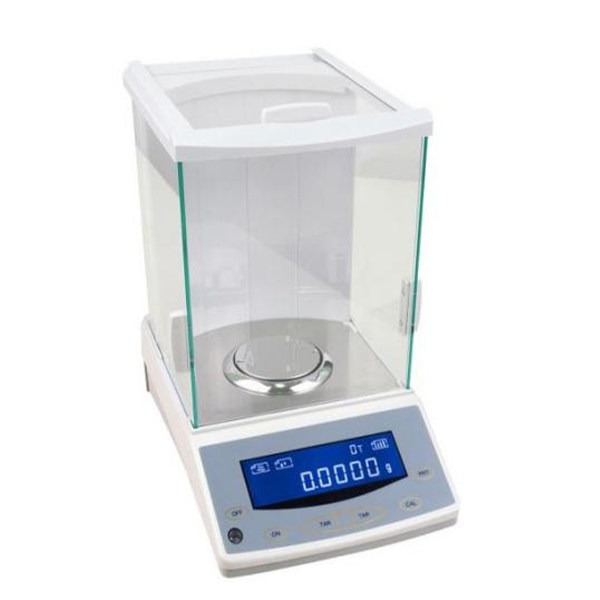
Stability of the Balance:
The stability of a balance signifies its ability to return to its initial equilibrium position after being subjected to disturbances. In electronic balances, this equilibrium is reflected in the analog or digital indication value. A stable electronic balance will always return to its initial indicated value after momentary disruptions. Without this stability, an electronic balance is practically unusable.
Balance Sensitivity:
Balance sensitivity pertains to the balance's capability to detect changes in the mass placed on the weighing pan. In the context of electronic laboratory balances, this sensitivity is typically measured using graduation sensitivity or digital (division) sensitivity. The higher the sensitivity, the better the balance can detect even minuscule changes in mass. Sensitivity is, therefore, a critical factor in evaluating the quality of electronic laboratory balances.
Correctness of the Balance:
Correctness refers to the accuracy of the balance's indication in relation to the true value. This accuracy can be assessed by examining the systematic error in the balance indication. For electronic balances, correctness is not only seen in the balance arm ratio for lever electronic laboratory balances but also in the analog or digital scale indications when loads are placed at various points on the balance plate. Correctness remains a significant parameter for assessing balance quality, whether it's mechanical or electronic.
Invariance of Balance Indication:
The invariance of balance indication relates to the consistency of measurement results obtained when the balance measures the same object multiple times under identical conditions. This aspect includes controlling the repeatability, reproducibility, zero position, and return of the electronic balance, as well as monitoring drift in the balance indication value after an extended period of loading.
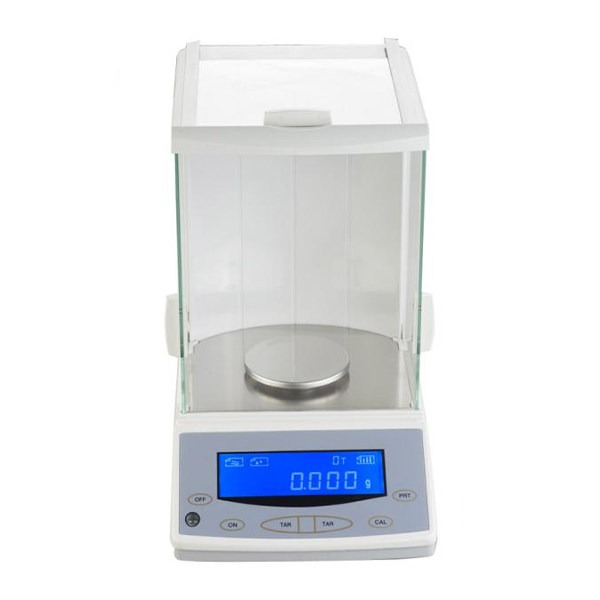
Selecting an Electronic Analytical Balance:
When purchasing electronic laboratory balances, it's crucial for users to choose a balance that aligns with their weighing accuracy and range requirements. Here are some considerations for making the right choice:
Balance Accuracy: Ensure the balance accuracy matches your measurement requirements. Avoid overinvestment in accuracy that exceeds your needs. Consider the typical sample weights you work with, which should account for 60-80% of the balance's weighing range.
Usage Occasions: Select balances that suit the environmental conditions in your lab. High-grade balances are suitable for controlled environments, while simple, rugged balances are better for outdoor or challenging conditions.
Quality Assurance and Additional Functions: Prioritize trusted quality assurance and consider additional features that might facilitate your experiments.
Cost-Effectiveness: Strive for a balance between quality and price. Seek products that offer the best cost-performance ratio, ensuring efficiency in resource utilization.
Annual Usage Costs: Consider the long-term costs, including maintenance and replacement expenses. A more expensive, durable balance might prove more cost-effective over time.
Compatibility and Tolerance: Evaluate how well the balance accommodates different operators and environmental factors, offering consistent and reliable results.
After-Sales Service: Choose products from reputable manufacturers with good after-sales support and the potential for function expansion.
Humanized Design: Opt for balances with user-friendly designs that minimize the risk of operational errors and offer a comfortable user experience.
In conclusion, the selection of an electronic analytical balance is a critical decision that can significantly impact the accuracy and efficiency of laboratory work. By considering these factors, users can make informed choices that align with their specific needs and laboratory conditions.
 Italiano
 English
 Arabic
 French
 Spanish
 Portuguese
 Deutsch
 Turkish
 Dutch
Dutch
 Russian
 Romaian
 Portuguese (Brazil)
 Greek
Greek