


What are Production Well Logging Simulators
Production well logging is a vital operation in the oil and gas sector, offering critical insights into subsurface reservoirs. Analyzing the physical parameters of formations and fluid content is crucial for optimizing output and recovery. This article delves into the significance, characteristics, and applications of production well logging simulators in modern oil and gas operations.

The Significance of Production Well Logging Simulators
Production well logging involves collecting data from downhole tools on an oil or gas well's production string, monitoring factors like formation porosity, resistivity, fluid saturation, pressure, and temperature. This data forms the foundation for informed decisions that enhance production, improve well performance, and extend reservoir life. The production well logging simulator, capable of simulating downhole tool responses and accurately interpreting logging data, empowers operators in these endeavors.
Key Components and Features of Production Well Logging Simulators
Downhole Tool Models: These simulators include realistic representations of industry-standard downhole logging tools:
Gamma Ray (GR) Detector: Identifies lithology and estimates mineral content by measuring natural gamma radiation emitted by formations.
Resistivity Sensors: Identify hydrocarbon-bearing zones and water saturation levels by determining the formation's electrical resistivity.
Neutron Porosity Tool: Estimates porosity and distinguishes between oil, gas, and water zones by measuring hydrogen content.
Density Log: Provides lithology information and computes porosity by measuring bulk density.
Pressure Gauge: Records downhole pressure, aiding well performance evaluation and reservoir pressure analysis.
Reservoir and Fluid Models: Precise geology, petrophysical, and hydrodynamic models consider variables such as formation porosity, permeability, fluid saturation, and rock properties to simulate the subsurface reservoir accurately.
Numerical Algorithms: Advanced algorithms transform raw logging data into valuable reservoir properties, including inversion algorithms for formation characteristics and machine learning techniques for data-driven interpretations.
3D Visualization: Engineers can observe reservoir changes over time, enhancing understanding of reservoir dynamics and production effects.
Data Integration: Incorporating seismic data, historical production data, and well test results provides a holistic view of the reservoir, improving characterization and interpretation accuracy.
Uncertainty Analysis: Well logging data inherently carries uncertainties; thus, the simulator employs uncertainty analysis methods to enhance decision-making under uncertainty.
User Interface: A user-friendly interface facilitates data entry, simulation setup, and result visualization, catering to professionals with varying levels of expertise.
Scenario Analysis: Engineers can assess various production tactics' influence on reservoir performance and optimize production plans by running different scenarios.
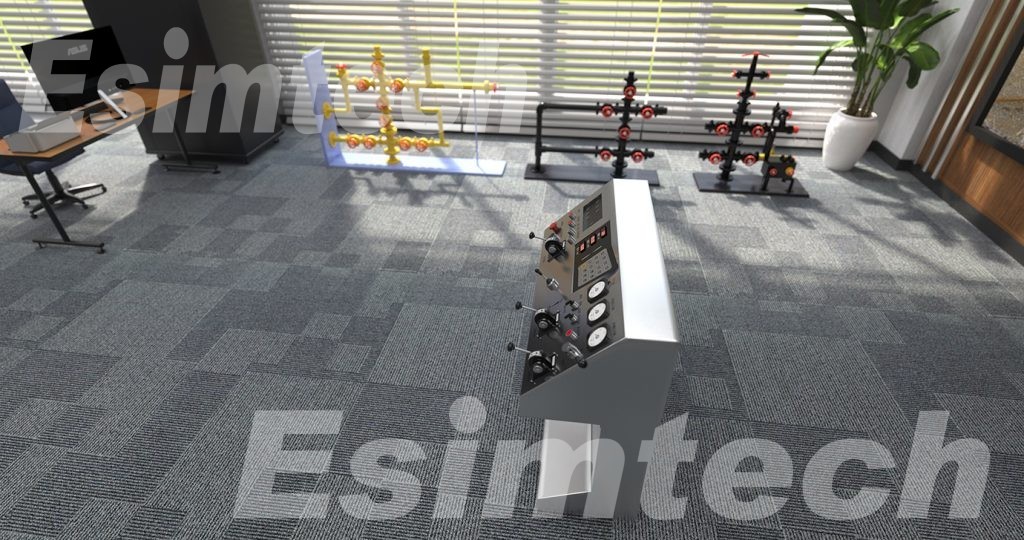
Applications of Production Well Logging Simulators
Reservoir Management: Vital for optimizing production plans, predicting reservoir behavior, and extending reservoir lifespan.
Field Development Planning: Aids in selecting well locations, well completion designs, and overall reservoir development strategies, ensuring efficient resource utilization and maximized production potential.
Well Performance Evaluation: Helps engineers evaluate individual well performance, identify production issues, and implement corrective actions to increase output.
Enhanced Well Stimulation: Supports the design of effective well stimulation and enhanced oil recovery (EOR) procedures, increasing hydrocarbon recovery rates through accurate formation and fluid saturation calculations.
Reservoir Monitoring and Surveillance: 3D visualization enables operators to track reservoir changes, identify production difficulties, and respond promptly.
Reserve Estimation: Accurate well logging data and reservoir characterization aid in precise calculations of recoverable hydrocarbon reserves, influencing financial planning, asset valuation, and investment decisions.
Conclusion
Production well logging simulators provide engineers with invaluable data and insights into subsurface reservoirs, enabling informed decision-making and optimizing production and reservoir management. They have evolved into indispensable tools within the oil and gas industry.
 Russian
 English
 Arabic
 French
 Spanish
 Portuguese
 Deutsch
 Turkish
 Dutch
Dutch
 Italiano
 Romaian
 Portuguese (Brazil)
 Greek
Greek