


Item Selection and Packaging in Roadside Car First Aid Kits
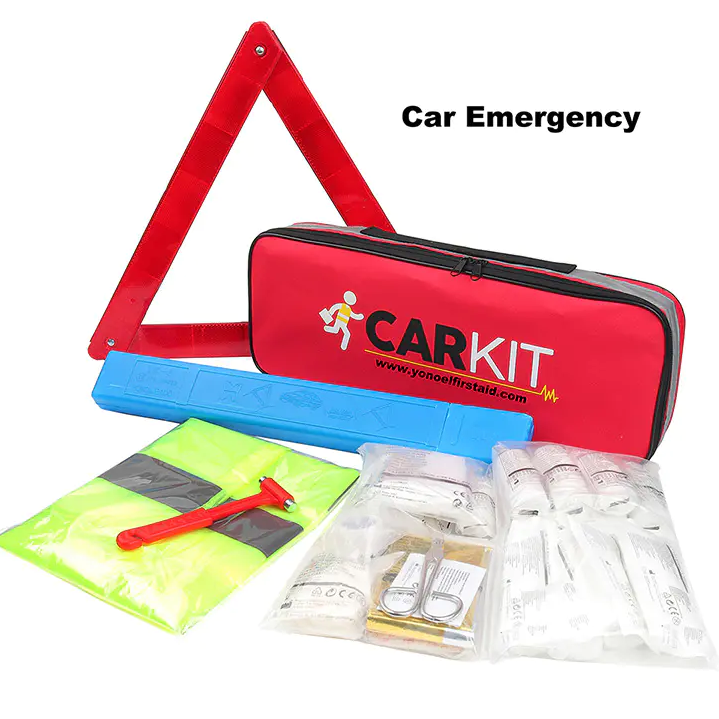
From a manufacturer’s perspective, producing roadside car first aid kits involves careful planning, material selection, and attention to regulatory requirements. These kits are designed to assist drivers in handling minor injuries or emergencies during travel, so manufacturers must focus on creating a product that is practical, durable, and easy to use.
The selection of items included in a roadside car first aid kit is one of the most important steps in the production process. Manufacturers typically choose commonly needed medical supplies such as adhesive bandages, antiseptic wipes, gauze pads, and safety scissors. Additional items like thermal blankets, gloves, and emergency whistles may be included to address a wider range of roadside situations. Each product within the kit is selected not only for its functionality but also for its compliance with health and safety standards in target markets.
Packaging design is another key consideration. A roadside car first aid kit needs to be compact enough to fit into limited vehicle storage areas while still offering enough space to hold a reasonable variety of supplies. Manufacturers often design the outer case using durable, lightweight materials that protect the contents from dust, moisture, and physical impact. Zippered pouches, hard plastic cases, or soft-sided bags are common choices, with organizational compartments inside to keep items neatly arranged.
Quality control is an essential part of the manufacturing process. Each component within the kit must meet specific quality benchmarks for safety, cleanliness, and durability. Manufacturers typically conduct inspections of both the individual items and the assembled kits to ensure that nothing is missing or damaged. Sterile products, such as wound dressings and antiseptic wipes, are handled under appropriate conditions to maintain their integrity until use.
Manufacturers must also consider ease of restocking and customization options. Some roadside car first aid kits are designed with refillable compartments, allowing consumers to replace used or expired items without needing to purchase a completely new kit. Offering flexibility in kit contents is another way manufacturers meet the needs of different markets, vehicle types, and user preferences.
Finally, attention to clear labeling and user instructions is vital. Manufacturers prepare simple, easy-to-read guides that explain how to use each item in the kit. This ensures that users can respond effectively in unexpected roadside situations, even if they lack medical training.
In summary, producing roadside car first aid kits requires manufacturers to balance thoughtful item selection, reliable packaging, strict quality control, and clear user guidance to create a product that drivers can depend on during their travels.
 Spanish
 English
 Arabic
 French
 Portuguese
 Deutsch
 Turkish
 Dutch
Dutch
 Italiano
 Russian
 Romaian
 Portuguese (Brazil)
 Greek
Greek