


How Should Pipette Tips Be Removed for Safe Disposal?
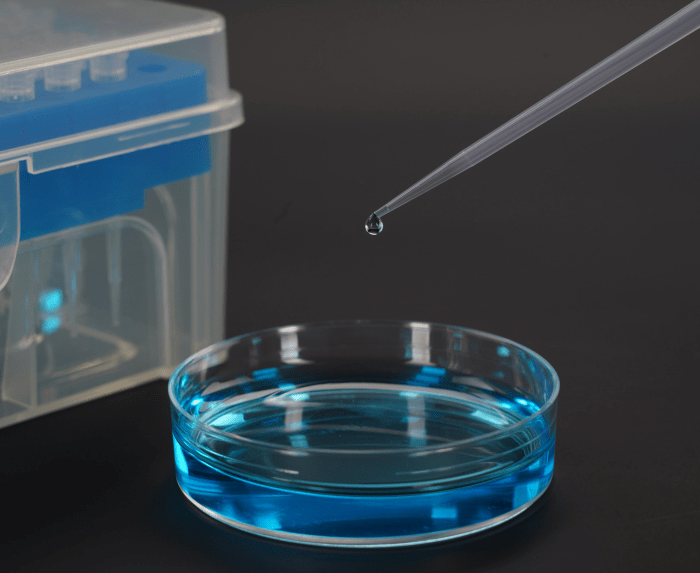
It is crucial to understand how to properly dispose of pipette tips to protect the environment, public health, and laboratory safety. It guarantees adherence to rules and encourages moral laboratory procedures. We can reduce the risks and promote a more sustainable and accountable scientific community by properly disposing of hazardous waste. Depending on the kind of liquid they were used with, pipette tips must be disposed of properly. Here are the general guidelines for safe disposal:
Non-hazardous Pipette Tips
l Collect in a puncture-proof container: Collect non-toxic pipette tips in a hard, piercing-resistant container like a metal, cardboard, plastic, or glass box.
l Label the container clearly: To avoid unintentionally coming into contact with hazardous waste, make sure the container is clearly labeled as "Non-hazardous Pipette Tips".
l Dispose of in-general waste: Make sure the filled container is securely sealed and dispose of it in the general waste stream in accordance with your organization's policies.
Hazardous Pipette Tips
l Segregate hazardous tips: After coming into contact with radioactive, infectious, or chemically hazardous liquids, pipette tips should be kept apart.
l Use a biohazard sharps container: Put the tips of any potentially dangerous pipettes in a biohazard sharps container, which is a container made especially to safely hold sharp objects.
l Label the sharps container clearly: Make sure the words "Hazardous Pipette Tips" and any other labels that are attached to the tips (like "Infectious," "Radioactive," or "Chemically Hazardous") are visible on the sharps container.
l Dispose of according to hazardous waste protocols: Get rid of the sealed sharps container by following the hazardous waste disposal procedures your institution has established. This could entail making contact with hazardous waste management staff or making use of facilities that are approved for the disposal of hazardous waste.
General Safety Precautions
l Wear appropriate PPE: When handling pipette tips, particularly those that pose a risk, it is imperative to wear safety glasses, a lab coat, and gloves.
l Handle chemicals with caution: When handling hazardous materials, wear the proper personal protective equipment and adhere to established chemical handling protocols.
l Avoid direct contact: Avoid using reusable pipette tips, especially if they have come into contact with anything potentially dangerous.
l Follow institutional guidelines: Always follow the particular instructions your organization gives you regarding disposing of pipette tips and managing hazardous waste.
 French
 English
 Arabic
 Spanish
 Portuguese
 Deutsch
 Turkish
 Dutch
Dutch
 Italiano
 Russian
 Romaian
 Portuguese (Brazil)
 Greek
Greek