


A Complete Beginner's Guide to Automotive Sheet Metal Fabrication Techniques
Have you ever looked at a car and wondered how those perfectly shaped panels, curved doors, and sleek bonnets come to life? The answer lies in one of the most fundamental disciplines of vehicle manufacturing — Automotive Sheet Metal Fabrication. Whether you are an aspiring fabricator, an automotive enthusiast, a mechanical engineering student, or a business owner exploring manufacturing partnerships, understanding the basics of sheet metal fabrication can open a whole new world of possibilities.
01 What Is Automotive Sheet Metal Fabrication?
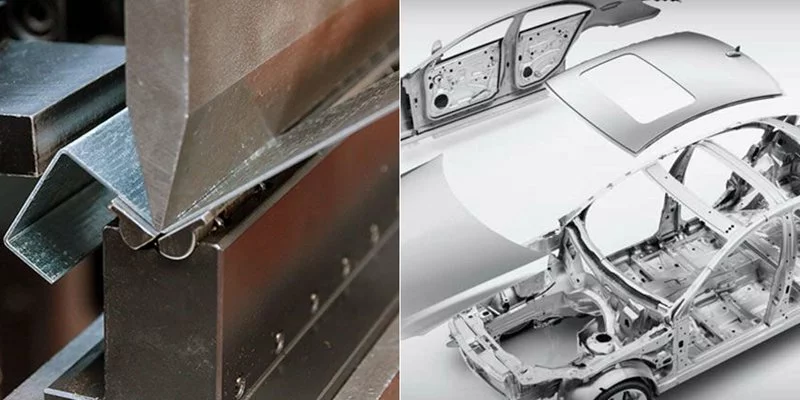
At its simplest, Automotive Sheet Metal Fabrication is the art and science of shaping metal sheets — typically ranging from 0.5mm to 6mm in thickness — into the structural and aesthetic components that make up a vehicle. These include body panels, door skins, floor pans, firewall panels, roof sections, fenders, bonnets, boot lids, chassis rails, and many more.
Unlike casting or forging, sheet metal fabrication works with relatively thin, flat metal stock and uses mechanical force, heat, or pressure to transform that stock into the desired shape. The resulting components must be dimensionally accurate, structurally sound, and ready for surface finishing.
◆ Why Is It So Important in Automotive Manufacturing?
Every vehicle on the road — from the smallest hatchback to the largest commercial truck — relies on fabricated sheet metal components for its structural integrity, aerodynamic efficiency, and visual appeal. Without precision Automotive Sheet Metal Fabrication, modern vehicle manufacturing simply could not exist.
Structural Safety — Sheet metal forms the safety cage, crumple zones, and reinforcement ribs that protect occupants in a crash.
Aerodynamic Efficiency — Precisely formed body panels reduce drag and improve fuel economy.
Vehicle Identity — The unique shape of every model is defined entirely by its fabricated panels.
Weight Management — Choosing the right metal and thickness balances strength against weight.
Corrosion Resistance — Properly treated fabricated panels protect the vehicle from rust and degradation.
Beginner's Note
Automotive Sheet Metal Fabrication is one of the few manufacturing disciplines where both artistic skill and engineering knowledge are equally valued. Great fabricators are part craftsman, part engineer.
02 Types of Metals Used in Automotive Sheet Metal Fabrication
Choosing the right material is the first and most critical decision in any Automotive Sheet Metal Fabrication project. Different metals offer different combinations of strength, weight, formability, corrosion resistance, and cost. Here is a breakdown of the most commonly used materials:
◆ Mild Steel (Low Carbon Steel)
Mild steel is the workhorse of the automotive fabrication world. It is affordable, widely available, easy to cut, bend, and weld, and provides good strength for most body panel applications. Most traditional vehicle body panels are fabricated from mild steel with a thickness of 0.8mm to 1.5mm.
Pros — Low cost, excellent weldability, easy to form, widely available.
Cons — Susceptible to corrosion if not properly treated or coated.
Common Uses — Door skins, floor pans, bonnets, boot lids, quarter panels.
◆ Galvanised Steel
Galvanised steel is mild steel coated with a thin layer of zinc to provide superior corrosion resistance. It is widely used in underbody components and areas exposed to moisture, salt, and road debris.
Pros — Excellent corrosion protection, cost-effective.
Cons — Zinc coating releases toxic fumes when welded — requires proper ventilation.
Common Uses — Underbody panels, wheel arches, rocker panels.
◆ High-Strength Steel (HSS) and Advanced High-Strength Steel (AHSS)
Modern vehicles increasingly use High-Strength Steel and Advanced High-Strength Steel to achieve better crash performance while reducing overall weight. These materials are harder to form but offer exceptional structural benefits.
Pros — Superior strength-to-weight ratio, excellent crash energy absorption.
Cons — Requires specialised tooling and higher press forces to form accurately.
Common Uses — B-pillars, door beams, roof reinforcements, structural rails.
◆ Aluminium
Aluminium has become increasingly popular in modern automotive fabrication due to its outstanding weight-saving potential. It is approximately one-third the weight of steel, with good corrosion resistance and recyclability.
Pros — Lightweight, corrosion-resistant, excellent for EV applications.
Cons — More expensive than steel, requires specialised welding techniques (TIG or MIG with aluminium wire).
Common Uses — Bonnets, bootlids, structural components in premium and electric vehicles.
◆ Stainless Steel
Stainless steel offers excellent corrosion resistance and a premium aesthetic finish. It is used in specialty, restoration, and high-end automotive applications.
Pros — Outstanding corrosion resistance, premium appearance.
Cons — Expensive, work-hardens quickly, difficult to weld.
Common Uses — Exhaust systems, decorative trim, specialty restoration panels.
03 Core Techniques in Automotive Sheet Metal Fabrication
Automotive Sheet Metal Fabrication relies on a combination of cutting, forming, and joining techniques. As a beginner, understanding these core processes gives you a clear picture of how a flat sheet of metal is transformed into a complex automotive component.
◆ 1. Cutting Techniques
Before any forming can take place, the sheet metal must be cut to the correct size and shape (called a "blank"). The most common cutting methods in automotive fabrication include:
Laser Cutting — Uses a focused laser beam to cut intricate shapes with extreme precision and clean edges. Ideal for complex profiles and high-volume production.
Plasma Cutting — Uses an electrically ionised gas jet to cut through thicker metal sheets. Fast and effective for medium-precision cuts.
Waterjet Cutting — Uses a high-pressure stream of water mixed with abrasive particles. Leaves no heat-affected zone, preserving material properties.
Shearing — A mechanical process using two blades to make straight-line cuts. Fast and efficient for producing rectangular blanks.
Punching / Blanking — Uses a die and punch to cut specific shapes from sheet metal in a single press stroke.
Pro Tip
Laser cutting is the gold standard for Automotive Sheet Metal Fabrication because it combines speed, precision, and minimal material waste. Always request laser-cut blanks when precision matters most.
◆ 2. Forming and Bending Techniques
Once the blank is cut, it must be formed into the required three-dimensional shape. This is where the real artistry of Automotive Sheet Metal Fabrication begins.
Press Brake Bending — A CNC-controlled press brake uses a punch and die to bend sheet metal to precise angles. This is the most common forming operation in automotive fabrication.
Stamping / Deep Drawing — A punch presses the sheet metal blank into a die cavity to form complex three-dimensional shapes. Used in high-volume production of body panels.
Roll Forming — Sheet metal is fed through a series of rollers that progressively bend it into long, uniform profiles — ideal for door frames, window channels, and structural rails.
Hydroforming — Uses hydraulic pressure to force sheet metal into the shape of a die. Ideal for producing complex, double-curved shapes with high surface quality.
Stretch Forming — The sheet is stretched over a shaped die to produce large, gently curved panels like roof skins and bonnets.
Wheeling / English Wheeling — A manual or powered process that rolls the sheet between two wheels to create smooth, compound curves — widely used in custom fabrication and restoration.
Hammer Forming — Skilled fabricators use shaped hammers and dollies to hand-form complex curves — a traditional technique still used in custom and restoration work.
━━━━━━━━
CONCLUSION
━━━━━━━━
When it comes to world-class Automotive Sheet Metal Fabrication, few names carry the credibility and expertise of Raamps Industries. With a state-of-the-art manufacturing facility, decades of hands-on experience, and an uncompromising commitment to quality, Raamps Industries delivers precision-fabricated automotive components that meet the most demanding OEM and aftermarket requirements.
From custom prototype panels to high-volume production runs, from mild steel body sections to advanced aluminium structures, Raamps Industries brings the full spectrum of Automotive Sheet Metal Fabrication capabilities under one roof — backed by rigorous quality systems, cutting-edge technology, and a team of highly skilled fabricators who are passionate about their craft.
Whether you are a manufacturer seeking a reliable fabrication partner, or a beginner looking to learn from industry leaders, Raamps Industries is the name to trust. Precision crafted. Built to last. That is the Raamps Industries promise.
https://www.raampsindustries.com/automotive-sheet-metal-fabrication-different-techniques/
Have you ever looked at a car and wondered how those perfectly shaped panels, curved doors, and sleek bonnets come to life? The answer lies in one of the most fundamental disciplines of vehicle manufacturing — Automotive Sheet Metal Fabrication. Whether you are an aspiring fabricator, an automotive enthusiast, a mechanical engineering student, or a business owner exploring manufacturing partnerships, understanding the basics of sheet metal fabrication can open a whole new world of possibilities.
01 What Is Automotive Sheet Metal Fabrication?
At its simplest, Automotive Sheet Metal Fabrication is the art and science of shaping metal sheets — typically ranging from 0.5mm to 6mm in thickness — into the structural and aesthetic components that make up a vehicle. These include body panels, door skins, floor pans, firewall panels, roof sections, fenders, bonnets, boot lids, chassis rails, and many more.
Unlike casting or forging, sheet metal fabrication works with relatively thin, flat metal stock and uses mechanical force, heat, or pressure to transform that stock into the desired shape. The resulting components must be dimensionally accurate, structurally sound, and ready for surface finishing.
◆ Why Is It So Important in Automotive Manufacturing?
Every vehicle on the road — from the smallest hatchback to the largest commercial truck — relies on fabricated sheet metal components for its structural integrity, aerodynamic efficiency, and visual appeal. Without precision Automotive Sheet Metal Fabrication, modern vehicle manufacturing simply could not exist.
Structural Safety — Sheet metal forms the safety cage, crumple zones, and reinforcement ribs that protect occupants in a crash.
Aerodynamic Efficiency — Precisely formed body panels reduce drag and improve fuel economy.
Vehicle Identity — The unique shape of every model is defined entirely by its fabricated panels.
Weight Management — Choosing the right metal and thickness balances strength against weight.
Corrosion Resistance — Properly treated fabricated panels protect the vehicle from rust and degradation.
Beginner's Note
Automotive Sheet Metal Fabrication is one of the few manufacturing disciplines where both artistic skill and engineering knowledge are equally valued. Great fabricators are part craftsman, part engineer.
02 Types of Metals Used in Automotive Sheet Metal Fabrication
Choosing the right material is the first and most critical decision in any Automotive Sheet Metal Fabrication project. Different metals offer different combinations of strength, weight, formability, corrosion resistance, and cost. Here is a breakdown of the most commonly used materials:
◆ Mild Steel (Low Carbon Steel)
Mild steel is the workhorse of the automotive fabrication world. It is affordable, widely available, easy to cut, bend, and weld, and provides good strength for most body panel applications. Most traditional vehicle body panels are fabricated from mild steel with a thickness of 0.8mm to 1.5mm.
Pros — Low cost, excellent weldability, easy to form, widely available.
Cons — Susceptible to corrosion if not properly treated or coated.
Common Uses — Door skins, floor pans, bonnets, boot lids, quarter panels.
◆ Galvanised Steel
Galvanised steel is mild steel coated with a thin layer of zinc to provide superior corrosion resistance. It is widely used in underbody components and areas exposed to moisture, salt, and road debris.
Pros — Excellent corrosion protection, cost-effective.
Cons — Zinc coating releases toxic fumes when welded — requires proper ventilation.
Common Uses — Underbody panels, wheel arches, rocker panels.
◆ High-Strength Steel (HSS) and Advanced High-Strength Steel (AHSS)
Modern vehicles increasingly use High-Strength Steel and Advanced High-Strength Steel to achieve better crash performance while reducing overall weight. These materials are harder to form but offer exceptional structural benefits.
Pros — Superior strength-to-weight ratio, excellent crash energy absorption.
Cons — Requires specialised tooling and higher press forces to form accurately.
Common Uses — B-pillars, door beams, roof reinforcements, structural rails.
◆ Aluminium
Aluminium has become increasingly popular in modern automotive fabrication due to its outstanding weight-saving potential. It is approximately one-third the weight of steel, with good corrosion resistance and recyclability.
Pros — Lightweight, corrosion-resistant, excellent for EV applications.
Cons — More expensive than steel, requires specialised welding techniques (TIG or MIG with aluminium wire).
Common Uses — Bonnets, bootlids, structural components in premium and electric vehicles.
◆ Stainless Steel
Stainless steel offers excellent corrosion resistance and a premium aesthetic finish. It is used in specialty, restoration, and high-end automotive applications.
Pros — Outstanding corrosion resistance, premium appearance.
Cons — Expensive, work-hardens quickly, difficult to weld.
Common Uses — Exhaust systems, decorative trim, specialty restoration panels.
03 Core Techniques in Automotive Sheet Metal Fabrication
Automotive Sheet Metal Fabrication relies on a combination of cutting, forming, and joining techniques. As a beginner, understanding these core processes gives you a clear picture of how a flat sheet of metal is transformed into a complex automotive component.
◆ 1. Cutting Techniques
Before any forming can take place, the sheet metal must be cut to the correct size and shape (called a "blank"). The most common cutting methods in automotive fabrication include:
Laser Cutting — Uses a focused laser beam to cut intricate shapes with extreme precision and clean edges. Ideal for complex profiles and high-volume production.
Plasma Cutting — Uses an electrically ionised gas jet to cut through thicker metal sheets. Fast and effective for medium-precision cuts.
Waterjet Cutting — Uses a high-pressure stream of water mixed with abrasive particles. Leaves no heat-affected zone, preserving material properties.
Shearing — A mechanical process using two blades to make straight-line cuts. Fast and efficient for producing rectangular blanks.
Punching / Blanking — Uses a die and punch to cut specific shapes from sheet metal in a single press stroke.
Pro Tip
Laser cutting is the gold standard for Automotive Sheet Metal Fabrication because it combines speed, precision, and minimal material waste. Always request laser-cut blanks when precision matters most.
◆ 2. Forming and Bending Techniques
Once the blank is cut, it must be formed into the required three-dimensional shape. This is where the real artistry of Automotive Sheet Metal Fabrication begins.
Press Brake Bending — A CNC-controlled press brake uses a punch and die to bend sheet metal to precise angles. This is the most common forming operation in automotive fabrication.
Stamping / Deep Drawing — A punch presses the sheet metal blank into a die cavity to form complex three-dimensional shapes. Used in high-volume production of body panels.
Roll Forming — Sheet metal is fed through a series of rollers that progressively bend it into long, uniform profiles — ideal for door frames, window channels, and structural rails.
Hydroforming — Uses hydraulic pressure to force sheet metal into the shape of a die. Ideal for producing complex, double-curved shapes with high surface quality.
Stretch Forming — The sheet is stretched over a shaped die to produce large, gently curved panels like roof skins and bonnets.
Wheeling / English Wheeling — A manual or powered process that rolls the sheet between two wheels to create smooth, compound curves — widely used in custom fabrication and restoration.
Hammer Forming — Skilled fabricators use shaped hammers and dollies to hand-form complex curves — a traditional technique still used in custom and restoration work.
━━━━━━━━
CONCLUSION
━━━━━━━━
When it comes to world-class Automotive Sheet Metal Fabrication, few names carry the credibility and expertise of Raamps Industries. With a state-of-the-art manufacturing facility, decades of hands-on experience, and an uncompromising commitment to quality, Raamps Industries delivers precision-fabricated automotive components that meet the most demanding OEM and aftermarket requirements.
From custom prototype panels to high-volume production runs, from mild steel body sections to advanced aluminium structures, Raamps Industries brings the full spectrum of Automotive Sheet Metal Fabrication capabilities under one roof — backed by rigorous quality systems, cutting-edge technology, and a team of highly skilled fabricators who are passionate about their craft.
Whether you are a manufacturer seeking a reliable fabrication partner, or a beginner looking to learn from industry leaders, Raamps Industries is the name to trust. Precision crafted. Built to last. That is the Raamps Industries promise.
https://www.raampsindustries.com/automotive-sheet-metal-fabrication-different-techniques/
A Complete Beginner's Guide to Automotive Sheet Metal Fabrication Techniques
Have you ever looked at a car and wondered how those perfectly shaped panels, curved doors, and sleek bonnets come to life? The answer lies in one of the most fundamental disciplines of vehicle manufacturing — Automotive Sheet Metal Fabrication. Whether you are an aspiring fabricator, an automotive enthusiast, a mechanical engineering student, or a business owner exploring manufacturing partnerships, understanding the basics of sheet metal fabrication can open a whole new world of possibilities.
01 What Is Automotive Sheet Metal Fabrication?
At its simplest, Automotive Sheet Metal Fabrication is the art and science of shaping metal sheets — typically ranging from 0.5mm to 6mm in thickness — into the structural and aesthetic components that make up a vehicle. These include body panels, door skins, floor pans, firewall panels, roof sections, fenders, bonnets, boot lids, chassis rails, and many more.
Unlike casting or forging, sheet metal fabrication works with relatively thin, flat metal stock and uses mechanical force, heat, or pressure to transform that stock into the desired shape. The resulting components must be dimensionally accurate, structurally sound, and ready for surface finishing.
◆ Why Is It So Important in Automotive Manufacturing?
Every vehicle on the road — from the smallest hatchback to the largest commercial truck — relies on fabricated sheet metal components for its structural integrity, aerodynamic efficiency, and visual appeal. Without precision Automotive Sheet Metal Fabrication, modern vehicle manufacturing simply could not exist.
Structural Safety — Sheet metal forms the safety cage, crumple zones, and reinforcement ribs that protect occupants in a crash.
Aerodynamic Efficiency — Precisely formed body panels reduce drag and improve fuel economy.
Vehicle Identity — The unique shape of every model is defined entirely by its fabricated panels.
Weight Management — Choosing the right metal and thickness balances strength against weight.
Corrosion Resistance — Properly treated fabricated panels protect the vehicle from rust and degradation.
💡
Beginner's Note
Automotive Sheet Metal Fabrication is one of the few manufacturing disciplines where both artistic skill and engineering knowledge are equally valued. Great fabricators are part craftsman, part engineer.
02 Types of Metals Used in Automotive Sheet Metal Fabrication
Choosing the right material is the first and most critical decision in any Automotive Sheet Metal Fabrication project. Different metals offer different combinations of strength, weight, formability, corrosion resistance, and cost. Here is a breakdown of the most commonly used materials:
◆ Mild Steel (Low Carbon Steel)
Mild steel is the workhorse of the automotive fabrication world. It is affordable, widely available, easy to cut, bend, and weld, and provides good strength for most body panel applications. Most traditional vehicle body panels are fabricated from mild steel with a thickness of 0.8mm to 1.5mm.
Pros — Low cost, excellent weldability, easy to form, widely available.
Cons — Susceptible to corrosion if not properly treated or coated.
Common Uses — Door skins, floor pans, bonnets, boot lids, quarter panels.
◆ Galvanised Steel
Galvanised steel is mild steel coated with a thin layer of zinc to provide superior corrosion resistance. It is widely used in underbody components and areas exposed to moisture, salt, and road debris.
Pros — Excellent corrosion protection, cost-effective.
Cons — Zinc coating releases toxic fumes when welded — requires proper ventilation.
Common Uses — Underbody panels, wheel arches, rocker panels.
◆ High-Strength Steel (HSS) and Advanced High-Strength Steel (AHSS)
Modern vehicles increasingly use High-Strength Steel and Advanced High-Strength Steel to achieve better crash performance while reducing overall weight. These materials are harder to form but offer exceptional structural benefits.
Pros — Superior strength-to-weight ratio, excellent crash energy absorption.
Cons — Requires specialised tooling and higher press forces to form accurately.
Common Uses — B-pillars, door beams, roof reinforcements, structural rails.
◆ Aluminium
Aluminium has become increasingly popular in modern automotive fabrication due to its outstanding weight-saving potential. It is approximately one-third the weight of steel, with good corrosion resistance and recyclability.
Pros — Lightweight, corrosion-resistant, excellent for EV applications.
Cons — More expensive than steel, requires specialised welding techniques (TIG or MIG with aluminium wire).
Common Uses — Bonnets, bootlids, structural components in premium and electric vehicles.
◆ Stainless Steel
Stainless steel offers excellent corrosion resistance and a premium aesthetic finish. It is used in specialty, restoration, and high-end automotive applications.
Pros — Outstanding corrosion resistance, premium appearance.
Cons — Expensive, work-hardens quickly, difficult to weld.
Common Uses — Exhaust systems, decorative trim, specialty restoration panels.
03 Core Techniques in Automotive Sheet Metal Fabrication
Automotive Sheet Metal Fabrication relies on a combination of cutting, forming, and joining techniques. As a beginner, understanding these core processes gives you a clear picture of how a flat sheet of metal is transformed into a complex automotive component.
◆ 1. Cutting Techniques
Before any forming can take place, the sheet metal must be cut to the correct size and shape (called a "blank"). The most common cutting methods in automotive fabrication include:
Laser Cutting — Uses a focused laser beam to cut intricate shapes with extreme precision and clean edges. Ideal for complex profiles and high-volume production.
Plasma Cutting — Uses an electrically ionised gas jet to cut through thicker metal sheets. Fast and effective for medium-precision cuts.
Waterjet Cutting — Uses a high-pressure stream of water mixed with abrasive particles. Leaves no heat-affected zone, preserving material properties.
Shearing — A mechanical process using two blades to make straight-line cuts. Fast and efficient for producing rectangular blanks.
Punching / Blanking — Uses a die and punch to cut specific shapes from sheet metal in a single press stroke.
💡
Pro Tip
Laser cutting is the gold standard for Automotive Sheet Metal Fabrication because it combines speed, precision, and minimal material waste. Always request laser-cut blanks when precision matters most.
◆ 2. Forming and Bending Techniques
Once the blank is cut, it must be formed into the required three-dimensional shape. This is where the real artistry of Automotive Sheet Metal Fabrication begins.
Press Brake Bending — A CNC-controlled press brake uses a punch and die to bend sheet metal to precise angles. This is the most common forming operation in automotive fabrication.
Stamping / Deep Drawing — A punch presses the sheet metal blank into a die cavity to form complex three-dimensional shapes. Used in high-volume production of body panels.
Roll Forming — Sheet metal is fed through a series of rollers that progressively bend it into long, uniform profiles — ideal for door frames, window channels, and structural rails.
Hydroforming — Uses hydraulic pressure to force sheet metal into the shape of a die. Ideal for producing complex, double-curved shapes with high surface quality.
Stretch Forming — The sheet is stretched over a shaped die to produce large, gently curved panels like roof skins and bonnets.
Wheeling / English Wheeling — A manual or powered process that rolls the sheet between two wheels to create smooth, compound curves — widely used in custom fabrication and restoration.
Hammer Forming — Skilled fabricators use shaped hammers and dollies to hand-form complex curves — a traditional technique still used in custom and restoration work.
━━━━━━━━
CONCLUSION
━━━━━━━━
When it comes to world-class Automotive Sheet Metal Fabrication, few names carry the credibility and expertise of Raamps Industries. With a state-of-the-art manufacturing facility, decades of hands-on experience, and an uncompromising commitment to quality, Raamps Industries delivers precision-fabricated automotive components that meet the most demanding OEM and aftermarket requirements.
From custom prototype panels to high-volume production runs, from mild steel body sections to advanced aluminium structures, Raamps Industries brings the full spectrum of Automotive Sheet Metal Fabrication capabilities under one roof — backed by rigorous quality systems, cutting-edge technology, and a team of highly skilled fabricators who are passionate about their craft.
Whether you are a manufacturer seeking a reliable fabrication partner, or a beginner looking to learn from industry leaders, Raamps Industries is the name to trust. Precision crafted. Built to last. That is the Raamps Industries promise.
https://www.raampsindustries.com/automotive-sheet-metal-fabrication-different-techniques/
0 Commentarios
0 Compartido
621 Vistas

 English
 Arabic
 French
 Portuguese
 Deutsch
 Turkish
 Dutch
Dutch
 Italiano
 Russian
 Romaian
 Portuguese (Brazil)
 Greek
Greek