


Optical Delay Lines in Quantum Key Distribution (QKD): Synchronization Challenges
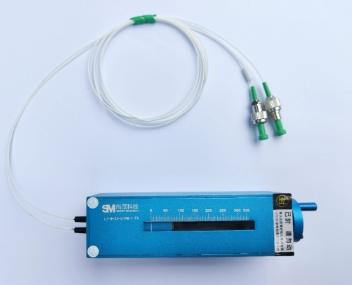
Quantum Key Distribution (QKD) enables ultra-secure communication by leveraging the principles of quantum mechanics to exchange cryptographic keys. A critical component in many QKD systems is the optical delay line (ODL), which introduces precise time delays to synchronize photons or compensate for path-length differences. However, implementing ODLs in QKD presents several synchronization challenges that can impact system performance.
The Role of Optical Delay Lines in QKD
In QKD protocols like BB84 or measurement-device-independent (MDI) QKD, precise timing is essential to ensure that photons arrive at detectors simultaneously. ODLs are used to:
Compensate for fiber length mismatches between sender and receiver.
Align detection windows for time-bin or phase-encoded QKD.
Mitigate timing jitter in single-photon detectors.
Without proper synchronization, errors in photon detection increase, leading to higher quantum bit error rates (QBER) and reduced key rates.
Key Synchronization Challenges
1. Temperature-Induced Drift
Optical fibers and delay components are sensitive to temperature fluctuations, causing path-length variations. Even small thermal changes can introduce picosecond-level timing shifts, disrupting synchronization. Active stabilization or temperature-controlled enclosures may be necessary.
2. Polarization Mode Dispersion (PMD)
Delay lines must maintain polarization stability, especially in phase-encoded QKD. PMD can distort quantum states, increasing errors. Polarization-maintaining (PM) fibers or dynamic polarization controllers help mitigate this issue.
3. Mechanical Vibrations and Acoustic Noise
Mechanical ODLs (e.g., fiber stretchers or movable mirrors) are susceptible to environmental vibrations, leading to timing jitter. Passive vibration isolation or fiber Bragg grating (FBG)-based delay lines offer more stable alternatives.
4. Dynamic Reconfiguration Latency
In adaptive QKD networks, delay lines must adjust in real-time to varying path lengths. Electromechanical ODLs may introduce switching delays, while tunable FBGs or integrated photonic solutions provide faster responses.
5. Integration with High-Speed Detectors
Modern QKD systems operate at GHz clock rates, requiring sub-nanosecond synchronization. Delay lines must match these speeds without introducing additional jitter, necessitating high-precision calibration.
Conclusion
Optical delay lines are indispensable for QKD synchronization but introduce challenges related to thermal stability, polarization, mechanical noise, and dynamic reconfiguration. Advances in photonic integrated circuits (PICs) and adaptive delay compensation techniques are helping overcome these hurdles, enabling more robust and scalable QKD systems.
By addressing these synchronization issues, researchers and engineers can enhance the reliability and performance of quantum communication networks, paving the way for widespread quantum-secured communications.
 Russian
 English
 Arabic
 French
 Spanish
 Portuguese
 Deutsch
 Turkish
 Dutch
Dutch
 Italiano
 Romaian
 Portuguese (Brazil)
 Greek
Greek