


rubber timing belts are essential components in various industries
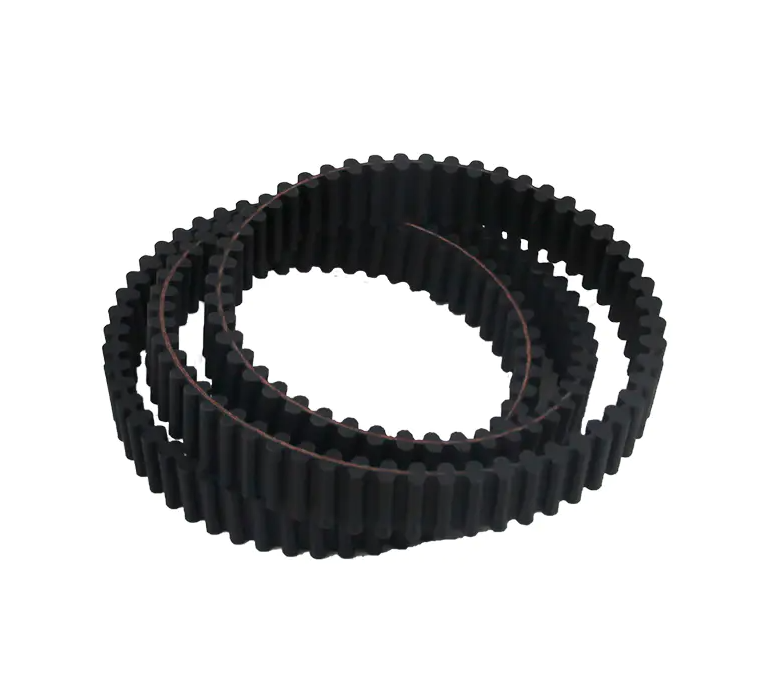
Rubber timing belts are critical components used in various mechanical systems to transfer motion and synchronize the operation of different parts. Found in a wide range of machines, from automobiles to industrial equipment, these belts play a key role in ensuring smooth and precise functioning. Made primarily from rubber, often reinforced with fibers like polyester or aramid for added strength, timing belts are designed to engage with toothed gears or pulleys to transmit rotational force efficiently.
One of the primary functions of a rubber timing belt is its ability to synchronize the movement of two or more rotating parts. In automotive engines, for example, the timing belt is responsible for connecting the crankshaft to the camshaft, ensuring that the engine's intake and exhaust valves open and close at the right times in relation to the pistons' movement. This synchronization is crucial for the engine’s performance and efficiency. If the timing belt were to slip or break, it could cause serious damage to the engine, making regular inspection and maintenance essential.
Beyond the automotive industry, rubber timing belts are also widely used in industrial machinery. Many manufacturing processes involve systems that require precise timing, such as conveyor belts, printers, and textile machines. The rubber timing belt ensures that different components of these systems operate in harmony, preventing errors or misalignments that could disrupt the production process. For example, in a conveyor system, the timing belt may synchronize the movement of various components to ensure that products are correctly positioned or moved along the production line.
The material used in the construction of rubber timing belts contributes to their performance and durability. Rubber, as a flexible material, allows the belt to absorb and distribute the forces applied to it, reducing wear and tear over time. The addition of reinforcing fibers, such as polyester, increases the belt’s strength and helps prevent elongation, which could lead to inaccuracies in timing or failure. This combination of flexibility and strength allows rubber timing belts to handle varying loads and speeds, making them suitable for a wide range of applications.
Rubber timing belts also offer the advantage of being quieter compared to other types of mechanical drives. Their construction allows for smoother operation, which reduces the noise produced by the moving parts in machines. This makes them particularly useful in applications where noise reduction is a priority, such as in high-end office equipment, medical devices, or consumer appliances. In environments where noise pollution is a concern, the quieter operation of rubber timing belts can contribute to a more pleasant and productive atmosphere.
In addition to their durability and performance, rubber timing belts are relatively low-maintenance. While they do require periodic inspection for wear and tear, they generally do not require lubrication, unlike chain-driven systems. This reduces maintenance costs and the risk of contamination, particularly in environments where cleanliness is critical, such as food processing or pharmaceutical manufacturing. The lack of lubrication also contributes to the efficiency of the system, as there is less friction to overcome during operation.
Despite their many advantages, there are some considerations when selecting and maintaining rubber timing belts. Temperature, load, and speed are important factors that can affect the lifespan and performance of the belt. In extreme conditions, such as very high or low temperatures, or in systems with heavy loads, it may be necessary to choose a timing belt designed for those specific requirements. Regular inspection for signs of wear, such as cracks or stretching, is also important to ensure continued safe operation.
In conclusion, rubber timing belts are essential components in various industries, offering reliable, efficient, and precise motion transfer. Whether in automotive engines or industrial machinery, these belts ensure the synchronization of moving parts, helping machines operate smoothly and effectively. Their combination of flexibility, strength, and quiet operation makes them an ideal choice for a wide range of applications, contributing to the performance and longevity of the systems they are part of. Proper maintenance and selection of the right timing belt for the application are key to ensuring optimal performance and minimizing the risk of failure.
 Italiano
 English
 Arabic
 French
 Spanish
 Portuguese
 Deutsch
 Turkish
 Dutch
Dutch
 Russian
 Romaian
 Portuguese (Brazil)
 Greek
Greek