


Top Benefits of SAP Bookkeeping Services for Growing Companies
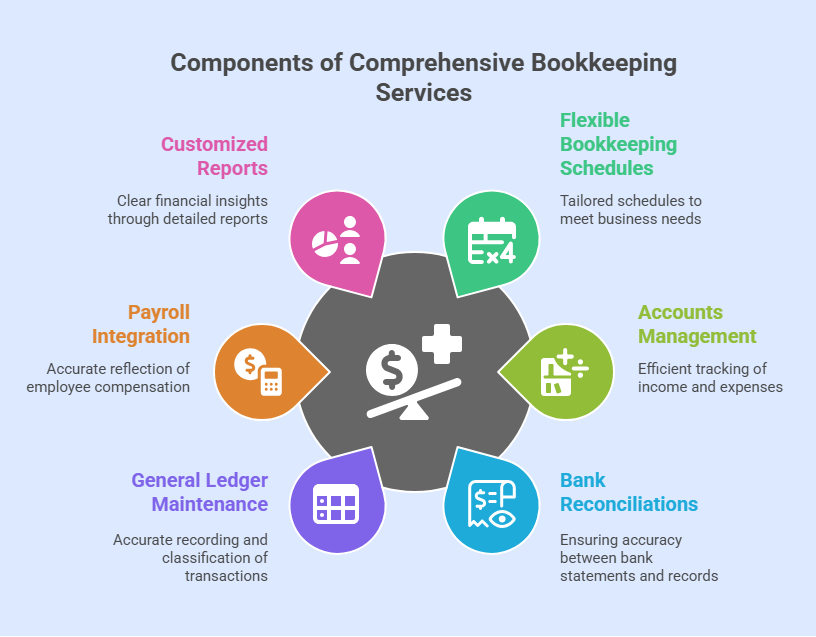
In today’s fast-paced business environment, managing accounting and financial operations efficiently is critical for companies of all sizes. Traditional bookkeeping methods, whether manual or basic software-based, often fall short when handling large volumes of transactions, complex reporting requirements, and multiple departments. This is where SAP bookkeeping services come in. SAP, a leading enterprise resource planning (ERP) system, provides robust tools to streamline accounting processes, improve accuracy, and enhance financial management. Here’s a detailed look at how SAP bookkeeping services achieve these benefits.
Understanding SAP Bookkeeping Services
SAP bookkeeping services leverage SAP’s ERP system to manage a company’s financial records systematically. The services include tracking income, expenses, accounts payable, accounts receivable, general ledger management, and reporting. Businesses can integrate these services into their existing financial operations, allowing for real-time monitoring and control.
Unlike standalone accounting software, SAP provides a centralized platform where all financial and business data is interconnected. This integration ensures consistency across departments, reduces errors, and simplifies complex processes such as consolidations, inter-company transactions, and compliance reporting.
Automation of Routine Accounting Tasks
One of the primary ways SAP bookkeeping services streamline accounting is through automation. Manual bookkeeping requires significant time for tasks such as:
-
Recording invoices
-
Reconciling accounts
-
Updating ledgers
-
Generating financial reports
With SAP bookkeeping, these tasks are automated. For example, when an invoice is entered into the system, the relevant accounts are updated automatically, reducing the need for manual ledger entries. Automated reconciliation tools can match payments with invoices and flag discrepancies instantly.
This automation minimizes human error, ensures timely updates, and allows accounting teams to focus on strategic financial planning rather than repetitive tasks.
Real-Time Financial Data and Reporting
Another major advantage of SAP bookkeeping services is real-time financial reporting. Traditional accounting systems often involve delays in updating financial data, which can lead to outdated reports and slower decision-making. SAP systems update transactions immediately, providing accurate financial information at any time.
Real-time reporting allows management to generate:
-
Profit and loss statements
-
Balance sheets
-
Cash flow reports
-
Department-wise expense analysis
-
Budget variance reports
Access to real-time data helps businesses make informed decisions quickly, whether it’s allocating resources, managing cash flow, or planning investments.
Integration With Other Business Functions
SAP bookkeeping services do not operate in isolation—they integrate seamlessly with other business functions such as sales, procurement, inventory, payroll, and HR.
For example:
-
When a sale is made, the system automatically updates accounts receivable.
-
When salaries are processed, payroll expenses are recorded in the general ledger.
-
Inventory purchases are reflected in both accounts payable and stock reports.
This integration ensures that financial data across the organization is consistent and up-to-date, eliminating the need for duplicate data entry and reducing the risk of errors.
Enhanced Accuracy and Compliance
Maintaining accurate financial records is essential for any business. SAP bookkeeping services improve accuracy by:
-
Standardizing data entry and accounting procedures
-
Automating calculations and reconciliations
-
Minimizing manual interventions
Moreover, SAP supports compliance with local and international accounting standards, including GAAP and IFRS. By maintaining proper records and providing audit-ready reports, businesses can avoid penalties and simplify regulatory reporting.
Streamlined Accounts Payable and Accounts Receivable
Managing payables and receivables is often one of the most time-consuming parts of accounting. SAP bookkeeping services streamline these processes by:
-
Automatically tracking invoices and payment schedules
-
Sending reminders for overdue payments
-
Matching purchase orders, goods receipts, and invoices
-
Generating detailed accounts receivable reports for faster collections
This reduces administrative overhead, improves cash flow management, and strengthens supplier and customer relationships.
Scalability for Growing Businesses
Large and growing businesses require systems that can scale with their operations. SAP bookkeeping services are highly scalable, meaning they can handle increasing volumes of transactions, multiple currencies, and multiple company divisions without compromising performance.
Whether a company is expanding to new markets, adding subsidiaries, or managing international operations, SAP ensures that accounting processes remain efficient and organized.
Data Security and Access Control
Financial data is highly sensitive, and SAP bookkeeping services offer robust security features. Businesses can control access so that only authorized personnel can view or modify financial records. The system maintains a complete audit trail of all transactions and changes, which is essential for internal controls and compliance audits.
This security not only protects the company from unauthorized access but also enhances trust among stakeholders, including investors, auditors, and regulatory authorities.
Insights and Strategic Decision-Making
By streamlining accounting processes, SAP bookkeeping services free up time for finance teams to focus on strategic analysis rather than transactional work. The system provides valuable insights into cash flow trends, expense patterns, and profitability metrics.
For example, management can identify which departments are overspending, which projects are most profitable, and how to optimize resource allocation. These insights support better business planning, investment decisions, and operational efficiency.
Cost Efficiency and Productivity
While implementing SAP bookkeeping services may require initial investment, it proves cost-effective in the long run. Automation reduces the need for large accounting teams, minimizes errors that could lead to financial losses, and accelerates reporting processes.
Employees can dedicate more time to high-value tasks such as financial analysis, budgeting, and strategy, which increases overall productivity and contributes to business growth.
Conclusion
SAP bookkeeping services streamline accounting processes by combining automation, real-time reporting, system integration, and enhanced accuracy. They simplify routine tasks, improve data integrity, and provide actionable insights for strategic decision-making.
From accounts payable and receivable management to compliance, auditing, and financial planning, SAP systems offer a centralized and secure solution for modern businesses. By implementing SAP bookkeeping services, companies can save time, reduce errors, scale operations efficiently, and maintain full control over their financial processes, ultimately driving better business performance.
 Portuguese (Brazil)
 English
 Arabic
 French
 Spanish
 Portuguese
 Deutsch
 Turkish
 Dutch
Dutch
 Italiano
 Russian
 Romaian
 Greek
Greek