


What Is Permanent Mold Casting?
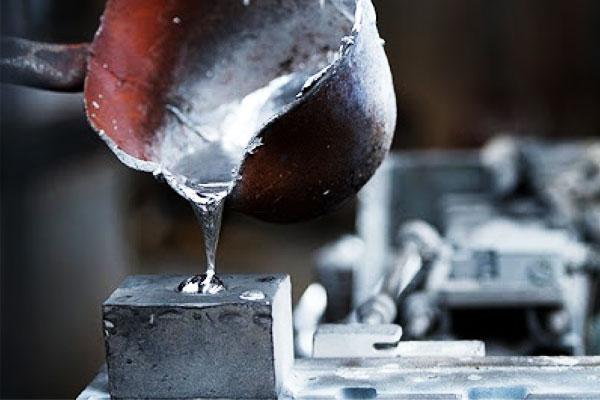
Permanent mold casting (also called gravity die casting when gravity fills the mold) is a family of processes in which a reusable, usually metallic mold (the “permanent” mold) is used to produce castings.
Unlike expendable-mold methods (sand, investment, lost-foam), the mold remains intact and is reused for many cycles. Molten metal is poured or forced into the mold cavity, solidifies, and the casting is removed; the same mold can then be used again.
Permanent mold casting occupies the manufacturing niche between low-volume expendable casting and high-volume high-pressure die casting: it delivers better surface finish and dimensional control than most sand processes while having lower tooling cost and complexity than high-pressure die casting.
1. Key Features of Permanent Mold Casting
- Reusable metal molds (steel, cast iron, bronze, or other alloys).
- Fill methods: gravity (top pour / tilt pour), low-pressure (bottom fill under controlled pressure), slush (for hollow skins).
- Typical alloys: aluminum and its alloys, magnesium, copper and bronzes, some zinc alloys; ferrous castings are less common in this family.
- Moderate to high repeatability and good surface finish compared with expendable molds.
- Limited geometric complexity relative to expendable molds — internal features typically require cores.
- Cycle times faster than sand casting but generally slower than high-pressure die casting.
2. Major Process Variants of Permanent Mold Casting
- Gravity (Top-pour) Permanent Mold Casting (GPM)
- Molten metal is poured from the ladle into the mold by gravity. Simple tooling and robust for medium volumes.
- Tilt-Pour Permanent Mold Casting
- Mold is tilted to let metal flow in progressively; reduces turbulence and improves fill for thin sections and complex shapes.
- Low-Pressure Permanent Mold Casting (LPM)
- Molten metal is forced into the mold from the bottom by applying low gas pressure (typically 0.01–0.1 MPa) to the furnace or ladle. Provides controlled filling, fewer oxides, and improved directional solidification.
- Slush Casting
- Only the outer skin of a hollow part is formed: liquid metal is poured into the mold and then poured out after a controlled interval to leave a shell. Used for decorative/hollow parts.
- Centrifugal Permanent Mold Casting (centrifugal die in some contexts)
- Less common: mold rotated so centrifugal force distributes metal, useful for cylindric symmetrical parts (pipes, rings).
3. Advantages of Permanent Mold Casting
- Reusable tooling: lower per-part tooling cost for medium production runs.
- Improved surface finish & dimensional accuracy versus sand casting — reduced machining allowance.
- Better mechanical properties (finer microstructure) due to faster, more uniform cooling of metal against a metal mold.
- Higher production rate than expendable molds for moderate volumes because molds are reused and there is less mold fabrication per part.
- Cleaner process: less molding waste compared to sand processes and fewer emissions from binder burnout.
4. Limitations of Permanent Mold Casting
- Geometry constraints: limited ability to form complex undercuts and internal cavities without cores; cores add cost and handling complexity.
- Mold life & thermal fatigue: repeated thermal cycling causes mold wear and cracking — mold life depends on material, alloy corrosivity, and process control.
- Upfront tooling cost: higher than expendable molds (patterns) but much lower than high-pressure die casting dies.
- Size limitations: very large parts are usually more economical as sand castings.
- Need for draft and machining: parts require draft angles and frequently need secondary machining to meet tight tolerances.
5. Typical Applications of Permanent Mold Casting
Permanent mold casting is widely used for medium-volume production of moderate complexity metal parts where improved surface finish, better mechanical properties, and low to moderate tooling cost are desirable.
Common examples include:
- Automotive components: wheels (certain high-quality wheels made by gravity or low-pressure permanent mold processes), pistons and small structural parts (depending on production strategy).
- Aerospace and defense: small to mid-size aluminum or magnesium components where soundness and repeatability are required.
- Industrial: pump housings, valve bodies, bushings and bearing components (bronze/copper alloys).
- Consumer & electronics: housings and connectors where improved finish reduces secondary machining.
- Decorative and architectural: ornamentation produced with slush casting or fine-finish gravity
6. When to Choose Permanent Mold Casting
Choose permanent mold casting when you need:
- Moderate to high repeatable quality and surface finish for medium production volumes.
- Improved mechanical properties over sand casting due to faster solidification.
- Lower tooling cost than high-pressure die casting but better economics than expendable molds at the intended volumes.
- Applications where mold reusability and reduced scrap from molding materials are operational advantages.
7. Conclusion
Permanent mold casting represents a balanced and highly effective casting solution between expendable mold processes and high-pressure die casting.
By utilizing reusable metal molds, it delivers improved dimensional accuracy, superior surface finish, and enhanced mechanical properties compared with sand-based methods, while avoiding the high tooling costs associated with die casting.
Although design freedom is more limited and initial mold investment is higher than expendable molds, permanent mold casting is particularly well suited for medium-volume production where consistency, quality, and cost control are critical.
When properly designed and thermally managed, it provides a reliable, repeatable, and economically sound manufacturing route for aluminum, magnesium, and copper alloy components across automotive, industrial, and consumer applications.
References: https://ygxpcasting.com/what-is-permanent-mold-casting/
 Italiano
 English
 Arabic
 French
 Spanish
 Portuguese
 Deutsch
 Turkish
 Dutch
Dutch
 Russian
 Romaian
 Portuguese (Brazil)
 Greek
Greek