


Storage Optimization Increases Data Value and Cuts Costs
Introduction
Enterprise data growth continues at an extraordinary pace. Organizations collect structured and unstructured data from applications, cloud platforms, IoT devices, analytics systems, and customer interactions. While this expanding data ecosystem fuels innovation, it also creates escalating infrastructure costs and operational complexity. Businesses can no longer afford inefficient storage strategies.
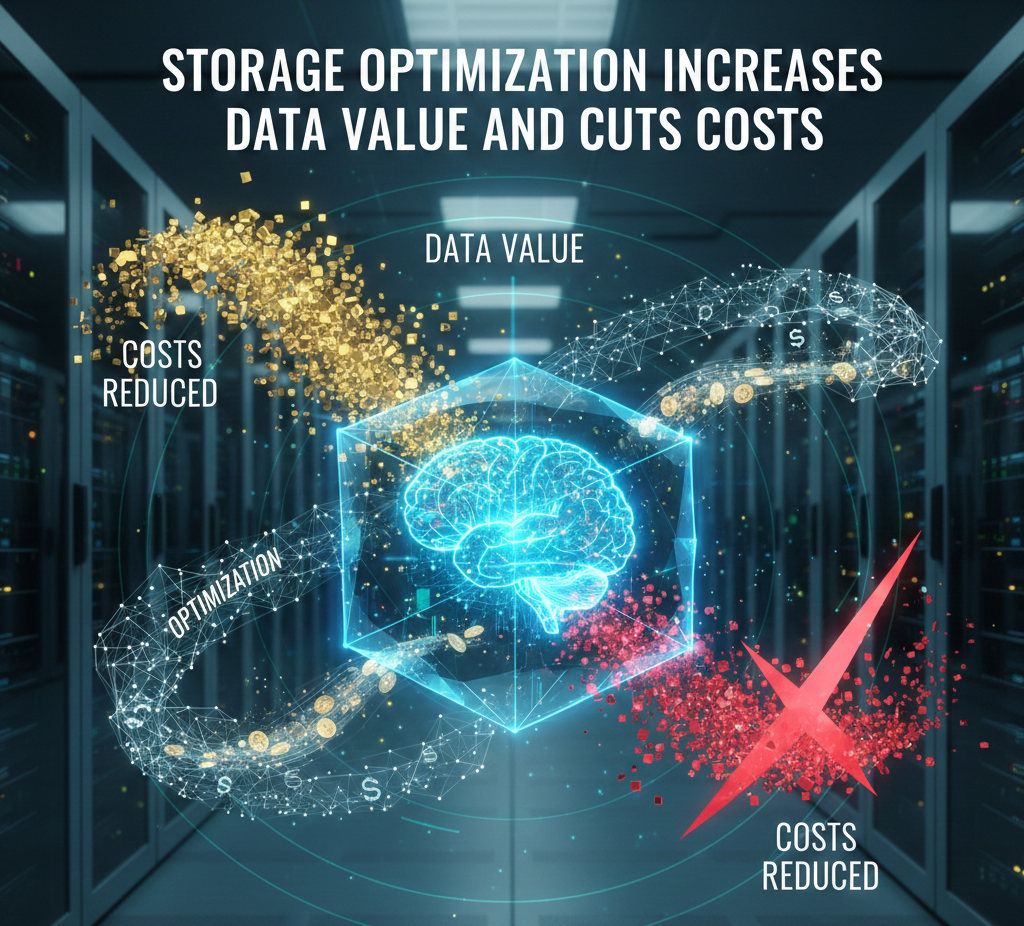
This is where storage optimization becomes a strategic priority. Rather than viewing storage as a passive repository, modern enterprises recognize it as a foundational element of data management, analytics performance, and cost control. When implemented effectively, storage optimization increases data value while driving down costs, enabling organizations to unlock measurable return on investment from their data assets.
The Strategic Importance of Storage Optimization
Data environments often evolve organically, resulting in fragmented systems, redundant files, and inconsistent governance policies. Over time, these inefficiencies inflate operational expenses and reduce visibility into valuable information. A proactive storage optimization strategy addresses these challenges by aligning storage architecture with business objectives.
By evaluating how data is ingested, accessed, and retained, organizations can design policies that ensure the right data resides in the right tier at the right time. This intelligent allocation is at the core of storage optimization. Frequently accessed datasets remain readily available for analytics, while archival information moves to lower cost storage tiers without sacrificing compliance or accessibility.
In addition, storage optimization supports long term scalability. As enterprises expand into hybrid and multi cloud environments, optimized storage ensures seamless integration and consistent performance across platforms.
Storage Optimization and Data Value Growth
Data only generates value when it can be accessed, trusted, and analyzed efficiently. Disorganized storage environments make it difficult for analytics teams to discover relevant datasets. Storage optimization enhances data accessibility by improving classification, metadata management, and lifecycle controls.
When storage systems are structured effectively, analytics queries execute more quickly and reliably. This performance improvement directly impacts business intelligence initiatives and advanced analytics programs. Through storage optimization, organizations empower decision makers with faster insights and more accurate reporting.
Furthermore, eliminating redundant and outdated data reduces noise within analytics workflows. Clean and well organized repositories enhance data quality, ensuring that dashboards and predictive models operate on consistent, trustworthy information. In this way, storage optimization contributes not only to cost savings but also to stronger strategic outcomes.
Reducing Costs While Maintaining Performance
Rising storage expenses represent a major concern for IT leaders. Many enterprises allocate premium storage resources to datasets that are rarely accessed. Without proper oversight, this approach leads to unnecessary spending.
Storage optimization addresses this issue through intelligent tiering and automated lifecycle management. Data is evaluated based on usage patterns and business relevance, allowing organizations to allocate resources more efficiently. Frequently accessed information remains in high performance storage, while inactive data transitions to cost effective tiers.
Automated retention policies also play a critical role in storage optimization. Outdated or redundant files can be archived or removed according to governance requirements. This reduces overall storage consumption and minimizes long term infrastructure costs.
Importantly, cost reduction does not require sacrificing performance. On the contrary, optimized environments often experience improved responsiveness because data is organized logically and indexed effectively. By embracing storage optimization, businesses achieve financial discipline without compromising operational excellence.
Enhancing Data Management and Governance
Strong governance frameworks depend on visibility and control across the data lifecycle. As organizations face increasing regulatory scrutiny, maintaining compliance becomes more complex. Storage optimization strengthens governance by enforcing consistent retention policies, access controls, and classification standards.
Optimized storage environments provide transparency into where data resides and how it moves across systems. This visibility supports audit readiness and reduces risk exposure. Through structured storage optimization, enterprises can demonstrate accountability and maintain compliance with industry regulations.
Additionally, centralized monitoring capabilities improve oversight of storage usage and performance metrics. IT teams can proactively identify inefficiencies and implement corrective actions before issues escalate. This governance alignment reinforces the strategic value of storage optimization within enterprise data management frameworks.
Supporting Analytics and Digital Transformation
Digital transformation initiatives rely heavily on scalable, reliable data infrastructure. Fragmented storage systems create bottlenecks that slow innovation and hinder collaboration. Storage optimization removes these obstacles by unifying data environments and streamlining integration processes.
When storage aligns with analytics platforms, organizations can process large datasets efficiently and support advanced technologies such as artificial intelligence and machine learning. The improved performance resulting from storage optimization accelerates experimentation and shortens time to insight.
Hybrid and cloud environments further highlight the importance of optimized storage strategies. As businesses distribute workloads across multiple platforms, consistent policies and efficient resource allocation become essential. Storage optimization ensures that data remains accessible and secure regardless of its physical location.
Building a Future Ready Data Infrastructure
The long-term sustainability of enterprise data strategies depends on proactive infrastructure planning. Reactive storage expansion leads to uncontrolled costs and operational inefficiencies. In contrast, storage optimization introduces discipline and foresight into infrastructure management.
By continuously analyzing usage patterns and aligning storage decisions with business goals, organizations transform storage from a cost center into a value generating asset. Storage optimization enables enterprises to scale confidently while maintaining predictable expenses and high-performance standards.
Looking ahead, data volumes will continue to expand as organizations adopt new technologies and digital business models. Companies that embed storage optimization into their strategic roadmap will be better positioned to adapt to change and maintain competitive advantage.
Conclusion
Enterprise success increasingly depends on the ability to manage data efficiently and strategically. Inefficient storage practices undermine analytics performance, inflate costs, and weaken governance efforts. A comprehensive storage optimization strategy addresses these challenges holistically.
By aligning storage architecture with data management, analytics, and compliance objectives, organizations increase data value while driving down costs. Storage optimization strengthens performance, enhances governance, and supports scalable digital transformation initiatives.
Businesses that prioritize storage optimization today will unlock greater agility, stronger insights, and sustainable growth tomorrow. In a data driven economy, optimized storage is not merely an operational improvement. It is a strategic imperative that fuels innovation and long term success.
 Italiano
 English
 Arabic
 French
 Spanish
 Portuguese
 Deutsch
 Turkish
 Dutch
Dutch
 Russian
 Romaian
 Portuguese (Brazil)
 Greek
Greek