


Top Benefits of Grapat Brots for Early Childhood Development
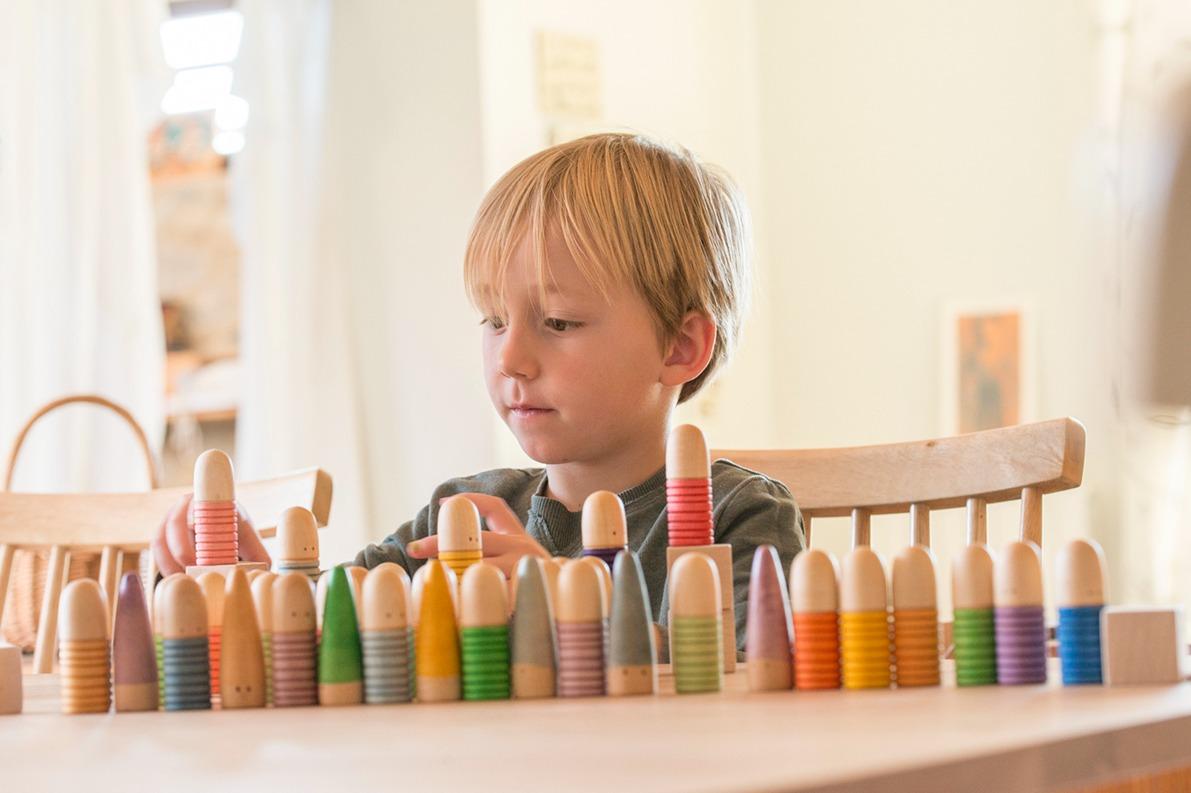
Early childhood is a period of rapid growth. During these formative years, children develop foundational skills that shape their cognitive, physical, and emotional abilities. The toys introduced at this stage can either limit or expand a child’s learning potential. Simple, open-ended materials often provide the richest developmental benefits. Among these versatile tools, grapat brots stand out for their ability to encourage hands-on exploration and meaningful growth across multiple areas of development.
Unlike toys that perform actions at the push of a button, loose parts such as these small wooden elements require active participation. Children are not passive observers; they become creators, planners, and problem-solvers. This active engagement strengthens essential skills in a natural and enjoyable way.
Supporting Cognitive Growth Through Exploration
Cognitive development thrives when children are encouraged to think independently. Open-ended materials do not provide instructions or predetermined outcomes. Instead, they invite experimentation.
When children interact with grapat brots, they naturally engage in activities such as sorting, grouping, and arranging. These tasks stimulate critical thinking and logical reasoning. Without realizing it, children are practicing early math and problem-solving skills.
They begin to explore concepts like:
-
Comparing sizes and quantities
-
Identifying patterns and sequences
-
Understanding symmetry and balance
-
Organizing materials based on characteristics
These foundational skills form the basis for later academic success, particularly in mathematics and analytical reasoning.
Enhancing Fine Motor Skills and Coordination
Fine motor development is essential during the early years. Activities that involve grasping, placing, and manipulating small objects help strengthen hand muscles and improve coordination.
Precision and Control
Handling small wooden pieces requires deliberate movement. Children must use their fingers carefully to pick up, balance, and position each element. These actions strengthen the small muscles of the hands and wrists.
Improved fine motor control supports everyday tasks such as writing, drawing, buttoning clothing, and using utensils. Regular interaction with loose parts provides consistent practice in a playful context.
Hand-Eye Coordination
Arranging grapat brots into lines, patterns, or structures encourages children to coordinate visual input with physical movement. This synchronization enhances spatial awareness and precision.
Strong hand-eye coordination contributes to success in many activities, from sports to academic tasks that require careful attention to detail.
Encouraging Emotional Expression and Confidence
Open-ended materials allow children to express their thoughts and emotions freely. Without specific instructions, each creation reflects the child’s personal ideas.
When children build a scene, organize pieces into meaningful patterns, or invent imaginative stories, they gain a sense of ownership. This autonomy builds confidence. They see tangible results from their own decisions and creativity.
Emotional growth is also supported through storytelling. Children often assign roles or meanings to small objects during play. This narrative process allows them to explore feelings and experiences in a safe environment.
Promoting Focus and Patience
In an environment filled with digital distractions, simple wooden materials encourage slower, more intentional play. Children often become deeply engaged when arranging and rearranging small pieces.
This type of concentrated activity strengthens attention span. As children work toward completing a design or pattern, they practice patience and persistence. If something does not look right, they adjust and try again.
Learning to stay focused on a task builds resilience. These habits are valuable not only in play but also in academic and social settings.
Building Social and Communication Skills
Loose parts play often becomes a shared activity. When children collaborate using grapat brots, they communicate ideas and negotiate decisions.
Group play encourages:
-
Sharing materials
-
Listening to different perspectives
-
Cooperating toward a shared goal
-
Respecting others’ ideas
Through collaborative experiences, children develop empathy and teamwork skills. These social abilities are essential for classroom readiness and long-term interpersonal success.
Supporting Early Mathematical Understanding
Many early math skills develop naturally during open-ended play. Children frequently use small objects as counting tools, pattern creators, or sorting materials.
With grapat brots, children can practice:
-
Counting and simple addition
-
Creating repeating patterns
-
Grouping by color or size
-
Comparing larger and smaller quantities
Because these concepts are introduced through play, they feel intuitive rather than forced. This positive early exposure to math often leads to greater confidence in formal learning environments.
Encouraging Creativity and Independent Thinking
Creative thinking is a critical life skill. Toys that dictate a single use limit imagination, while open-ended materials invite exploration.
Grapat brots do not define how they should be used. A child may transform them into trees in a miniature forest, pieces in a pretend shop, or decorative elements in an abstract design. Each scenario reflects the child’s imagination.
Independent thinking develops when children are free to decide how to use materials. This freedom strengthens problem-solving abilities and builds confidence in personal decision-making.
Durable Materials for Lasting Value
When selecting developmental toys, quality and safety are important considerations. Wooden materials are valued for their durability and tactile appeal. Smooth finishes and careful craftsmanship contribute to safe handling.
Families and educators often rely on trusted sources when choosing learning materials. My Toy Wagon provides a curated selection of thoughtfully chosen toys that emphasize developmental value and quality construction. Their homepage at https://mytoywagon.com reflects a focus on reliability and child-centered design.
Durable materials ensure that toys can be used consistently across different stages of growth, providing long-term value.
Adapting to Different Developmental Stages
One of the most significant benefits of grapat brots is their adaptability. As children grow, the way they interact with these pieces evolves.
Toddlers may focus on simple stacking and sorting. Preschoolers might use them for counting activities or imaginative storytelling. Older children can incorporate them into more complex creative projects.
This versatility allows the materials to remain engaging over time. Rather than outgrowing the toy, children discover new ways to use it.
Conclusion
Early childhood development requires tools that encourage exploration, creativity, and active engagement. Grapat brots provide a simple yet powerful way to support cognitive growth, fine motor development, social skills, and emotional confidence.
Their open-ended nature ensures that children remain the creators of their own experiences. Instead of following instructions, they design their own paths of discovery.
When play encourages imagination and independent thinking, learning becomes natural and lasting. Simple wooden pieces may appear modest at first glance, but their impact on early childhood development is both meaningful and enduring.
 Italiano
 English
 Arabic
 French
 Spanish
 Portuguese
 Deutsch
 Turkish
 Dutch
Dutch
 Russian
 Romaian
 Portuguese (Brazil)
 Greek
Greek