


Inert Gas Flash Dewaxing vs Traditional: Which Saves More? | Laxminarayan Technologies
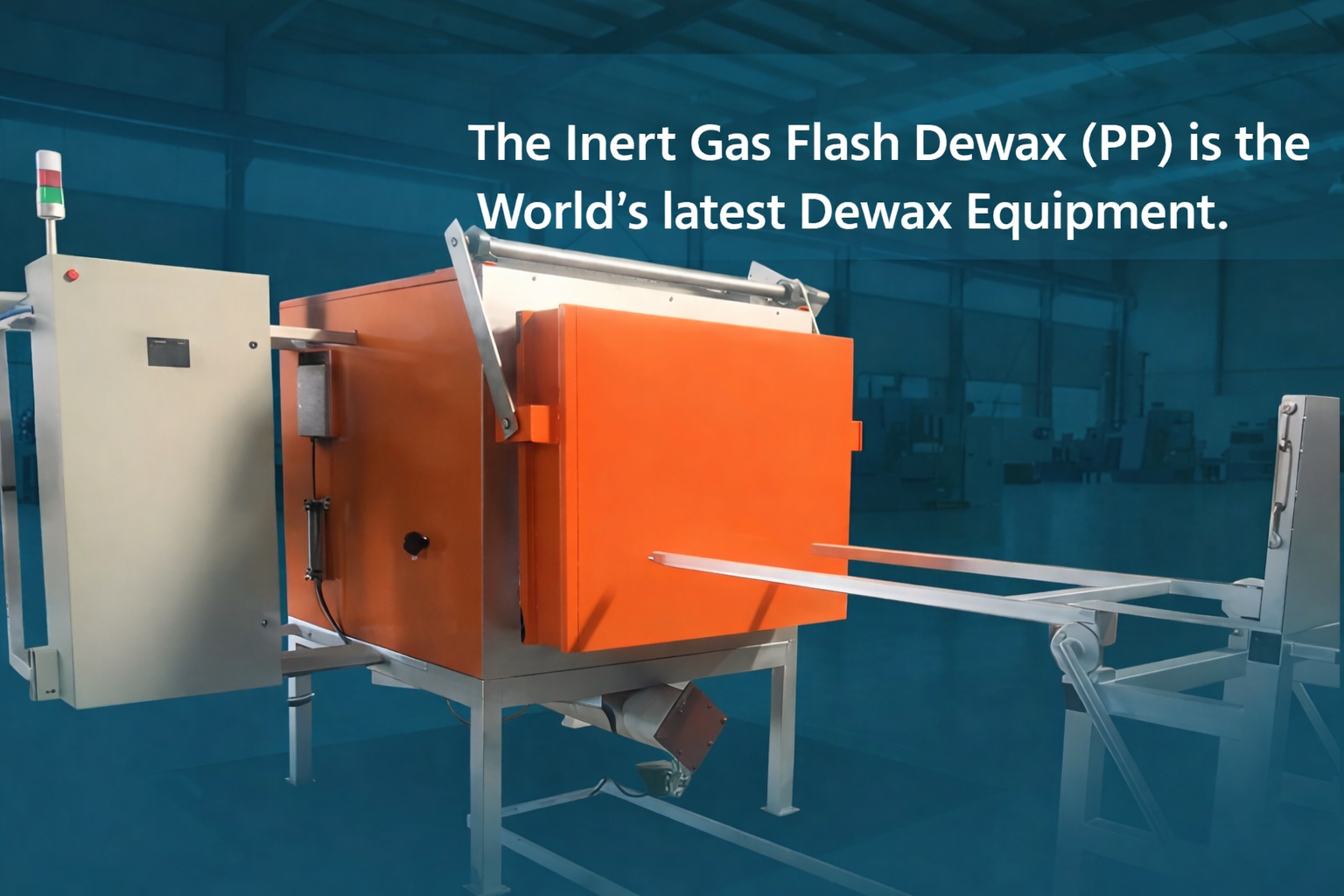
Inert Gas Flash Dewaxing vs. Traditional Dewaxing: Which Is Better?
Dewaxing is not simply an additional step in the detail-oriented process of using investment castings; it is the performance-transforming stage of the capital equipment investment casting process. In addition, the decision to utilize Inert Gas Flash Dewaxing versus Traditional Steam Dewaxing involves significant implications for foundries looking to minimize waste, reduce energy consumption and maintain tight dimensional tolerances. In addition, Laxminarayan Technologies utilizes decades of experience in the field to provide clients with evidence-based evidence and technical solutions to assist them with making the proper selection.
Understanding Traditional Steam Dewaxing
The conventional method for dewaxing a ceramic shell is to heat and melt the wax pattern using a high-pressure steam autoclave. This procedure has been in use for many years but has significant limitations. Steam dewaxing generally involves longer cycle times, large quantities of water, and manual methods of reclaiming the wet wax from the reclaimed wax. As indicated by the benchmarks established by Modern Casting and the Investment Casting Institute, moisture can contaminate the wax and require additional drying and filtration before it can be reused—resulting in additional labor, energy, and material costs to the casting manufacturer.
Your process adds water to a material that repels water and, therefore, adding water to a material already repelling water is illogical. "It's like trying to dry out a sponge by soaking it," said one foundry manager. Result? And? Lower wax recovery rates, inconsistent shell quality and higher operating costs.
The Innovation: Inert Gas Flash Dewaxing by Laxminarayan Technologies
The Laxminarayan Technologies has developed a patented technology called the Inert Gas Flash Dewax (PP) System since 1986 for use in investment casting foundries. This system combines three key processes: dewaxing, wax recovery, and ceramic shell burnout into one single closed loop system using inert gas (most often nitrogen) and controlled flash evaporation to remove waxes from the ceramic shell while avoiding any moisture or chemical reaction that would cause oxidation or thermal shock to the ceramic shell.
An operational case study provides evidence that 80 to 90% of wax can be recovered in a clean, moisture-free condition that can be reused directly in a pattern. As opposed to a steam-based system, there is no tedious separation, drying, or reconditioning required. An inert atmosphere helps prevent shell cracking and maintain dimensional fidelity, which is essential for aerospace, automotive, and medical parts where tolerances are non-negotiable.
Head-to-Head: Efficiency, Sustainability, and ROI
Moreover, in comparing technologies for wax recovery, three considerations are of the utmost importance: yield, energy usage, and compliance with environmental regulations.
Wax Recovery Rate
The traditional method (steam dewaxing) recovers approximately 60-75% of the wax, but it is generally contaminated with moisture and will require additional drying and filtering before it can be reused. Conversely, new technology (inert gas flash dewaxing) is able to recover between 80-90% of
the wax and the wax that is recovered is both moisture-free and ready to be reused in the production of a pattern with no additional reconditioning required.
Energy Consumption in Conventional Steam Dewaxing:
The conventional steam dewaxing process requires high amounts of energy for continuous steam production, with additional power consumed to dry the wax and manage the wastewater resulting from drying.
Energy Usage During the Inert Gas Flash Dewaxing Process:
The inert gas flash dewaxing process requires nearly 50% less energy than the conventional steam dewaxing process through the efficient process of flash evaporation and reusing the heat from the evaporation process in a closed-loop system.
The Labor Needs For Traditional Steam Dewaxing:
Relying on manually handling wax mining, filtration, and visual inspections. There is also an increased mystery of wax due to more operator participation and the understanding of what it takes to train an employee in this area.
The Labor Needs For Inert Gas Flash Dewaxing:
It is a fully automated process with little handling; implementations that are ISO9001 certified can experience as much as a 40% reduction in labor hours per batch.
Also, Environmental Impact Conventional Steam Dewaxing:
Produces waste water streams & volatile organic compounds (VOCs) which require additional abatement devices for compliance.
Inert Gas Flash Dewaxing: Uses a sealed, vacuum environment;
substantially less volume of VOC emitted and no process waste water generated; in accordance with EPA and ISO 14001 environmental management standards.
Cycle Time In a traditional cycle
steam dewax is divided into four phases: dewaxing, separating, drying, and recovering. This results in a much longer overall cycle time while limiting throughput and total cycle time. In contrast, inert gas flash dewaxing simplifies the dewaxing process by integrating dewaxing, wax recovery, and shell conditioning into one operation. This change not only reduces the total processing time associated with a cycle, but also allows for much quicker production schedules.
From a common-sense point of view, combining three operations into one means a smaller equipment footprint, fewer maintenance intervals, and fewer operator errors. Aside from the humor value of using one patented machine that performs the same functions (more cleanly, efficiently, and quicker than three machines), foundries using the inert gas flash dewax (from Laxminarayan Technologies) system have reported improved production turnaround time, lower operating costs, and increased consistency between subsequent high-precision casting runs.
Real-World Applicability Across Casting Methods
Additionally, The documented data showing 40% reduction in labor needs and 50% energy savings — for dewaxing, shelling, or recovering waxes — is a result of Laxminarayan’s is performance at ISO 9001 accredited manufacturing sites where the transition of foundries to flash dewax technology has occurred.
In addition, logically speaking, combining three different functions into one will result in decreased overall equipment footprint; less frequent maintenance intervals; lower risk of operator mistakes. Just in case anyone thought I was joking — it’s hard to believe the cost efficiency of having three machines to accomplish the same task, but, based on my experience, the patented process of cleaning, drying rapidly, and then using environmentally friendly methods post-cleansing can accomplish all these tasks, in addition to being faster and providing higher quality.
Making the Strategic Choice
Laxminarayan Technologies has worked in the foundry industry for over 4 decades helping to evaluate and implement foundries' completely new casting technologies. They offer turnkey support for companies transitioning from traditional foundries to a brand new type or style of foundry. This includes providing complete assistance with designing and building a new foundry (including machinery and plant layout), providing training to production employees, and providing management consulting services to support all aspects of successful operation (i.e., production, sales, marketing, customer service. etc).
Conclusion: Future-Proofing Your Foundry
Still, as a result of the current evolution of the investment casting industry due to consumer pressure for precision, sustainability and cost-efficiency, traditional steam dewaxing processes no longer fulfill the requirements of today's marketplace. As such, it has become necessary to replace traditional methods with up-to-date technologies to overcome the trials and tribulations faced by today’s foundries.
Inert Gas Flash Dewaxing, a process developed and endorsed by Laxminarayan Technologies, provides tangible benefits to the foundry by increasing yields, enhancing safety and making the processes more environmentally friendly. After completing this process, an ISO-certified foundry manager stated, "We did not just upgrade a machine; we improved the entire supply chain." Evidence-based engineering is the future, and as such will serve you well going forward.
 English
 Arabic
 French
 Spanish
 Portuguese
 Deutsch
 Turkish
 Dutch
Dutch
 Italiano
 Russian
 Romaian
 Portuguese (Brazil)
 Greek
Greek