


Best Practices for Enterprise Data Migration in 2026: Choosing the Right Database Migration Tool
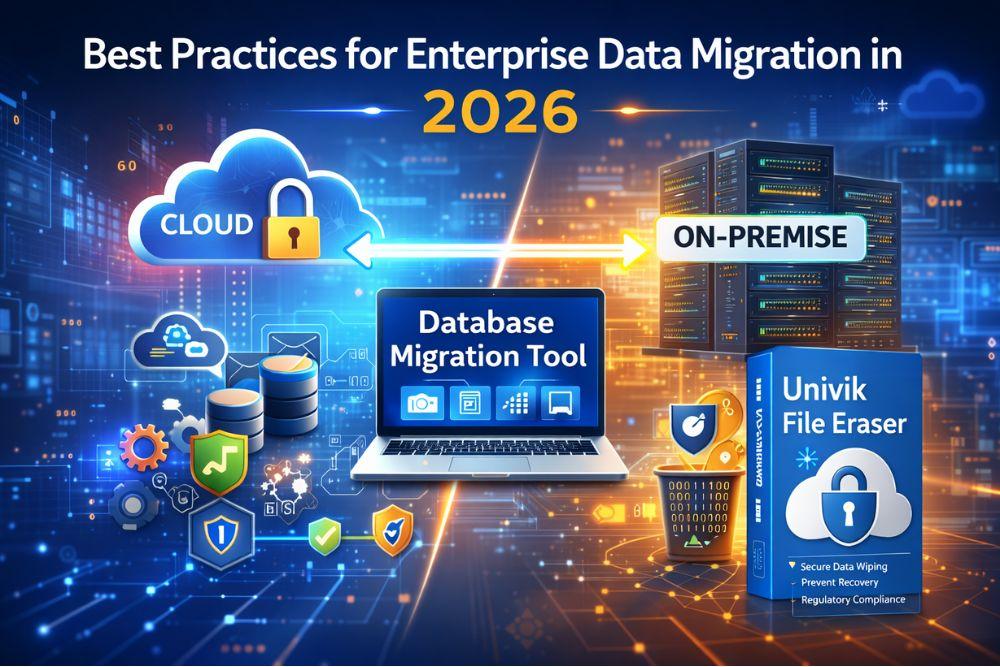
A Database migration tool plays a central role in enterprise data migration in 2026, where businesses handle massive datasets across hybrid and multi-cloud environments. As organisations modernise infrastructure, upgrade legacy systems, and adopt AI-driven platforms, data migration has become a strategic initiative rather than a technical task.
Enterprise data migration involves transferring structured and unstructured data between systems, databases, or cloud platforms while maintaining accuracy, security, and compliance. Poor execution can cause downtime, financial loss, and regulatory risks. Therefore, companies must follow structured best practices and use the right tools.
Why Enterprise Data Migration Matters in 2026
In 2026, enterprises rely on data for analytics, automation, customer insights, and operational decisions. However, many organisations still operate on outdated infrastructure.
Key drivers for migration include:
-
Cloud transformation initiatives
-
Data centre consolidation
-
Regulatory compliance requirements
-
AI and machine learning integration
-
Performance optimisation
A reliable Database migration tool ensures data moves efficiently while preserving schema, relationships, and integrity.
What Is Enterprise Data Migration?
Enterprise data migration refers to transferring large volumes of data between platforms, such as:
-
On-premise to cloud
-
Cloud to cloud
-
Legacy database to modern architecture
-
Structured database upgrades
Unlike small-scale transfers, enterprise migrations involve complex dependencies, multiple stakeholders, and compliance oversight.
Therefore, planning becomes just as important as execution.
Common Challenges in Large-Scale Data Migration
Even experienced IT teams face obstacles during enterprise migration.
1. Data Volume and Complexity
Enterprises manage terabytes or even petabytes of data. Without automation, migration becomes slow and error-prone.
2. Downtime Risk
Extended downtime disrupts operations. A modern Database migration tool reduces downtime through incremental and phased migration strategies.
3. Data Integrity Issues
Schema mismatches and compatibility errors can corrupt data. Therefore, validation and testing are critical.
4. Security and Compliance Risks
Sensitive data must remain protected during transfer. Regulations such as GDPR and industry-specific compliance standards demand strict safeguards.
The Role of a Database Migration Tool in Enterprise Success
A powerful Database migration tool simplifies migration through automation, validation, and monitoring.
Key capabilities to look for include:
-
Automated schema conversion
-
Real-time data synchronisation
-
Error reporting and logging
-
Rollback options
-
Compatibility with cloud platforms
In addition, the right tool reduces manual intervention and ensures accuracy across environments.
Organisations should also consider scalability. As data grows, the tool must handle future expansion without performance degradation.
Security and Compliance in Enterprise Data Migration
Security remains a top priority in 2026. Enterprises cannot afford data leaks or exposure during migration.
Best practices include:
-
Encrypting data in transit
-
Using secure authentication protocols
-
Restricting access to authorised personnel
-
Monitoring activity logs
However, migration security does not end after data transfer. Old systems must be cleaned securely to prevent residual data exposure.
Why Secure Data Deletion Matters: The Role of Univik File eraser
After migration, legacy systems often retain sensitive data. Simply deleting files does not guarantee permanent removal.
Univik File eraser helps organisations securely wipe residual data from outdated systems. This step prevents unauthorised recovery and strengthens compliance posture.
Using Univik File eraser, enterprises can:
-
Permanently delete confidential files
-
Ensure regulatory compliance
-
Reduce data breach risks
-
Prepare old systems for decommissioning
Therefore, secure deletion should form part of every enterprise migration strategy.
Step-by-Step Best Practices for Enterprise Data Migration
1. Conduct a Detailed Data Audit
Start with a full inventory of databases, storage systems, and dependencies. Identify redundant or outdated data.
2. Define Clear Objectives
Clarify whether the goal is cost reduction, performance improvement, scalability, or digital transformation.
3. Choose the Right Database Migration Tool
Select a Database migration tool that aligns with your infrastructure and compliance needs. Evaluate performance benchmarks and integration capabilities.
4. Create a Phased Migration Plan
Instead of moving everything at once, use incremental migration. This reduces downtime and allows controlled testing.
5. Test Before Full Deployment
Run pilot migrations to validate schema accuracy, performance, and data integrity.
6. Implement Secure Data Wiping
After successful migration, use solutions such as Univik File eraser to remove legacy data permanently.
7. Monitor and Optimise Post-Migration
Monitor performance metrics and system stability. Continuous monitoring ensures long-term success.
Cloud vs On-Premise Migration Strategy
In 2026, many enterprises adopt hybrid models. Therefore, migration strategies vary.
-
On-premise to cloud: Improves scalability and reduces infrastructure costs.
-
Cloud to cloud: Enhances performance and vendor flexibility.
-
Hybrid migration: Maintains control over sensitive workloads while leveraging cloud benefits.
Regardless of strategy, a capable Database migration tool ensures smooth data transition across platforms.
AI and Automation in Data Migration
Artificial intelligence now supports migration processes by:
-
Detecting schema inconsistencies
-
Predicting performance bottlenecks
-
Automating validation checks
-
Optimising data transfer paths
Automation reduces human error and improves migration efficiency. Enterprises that integrate AI-driven tools gain faster deployment cycles and better reliability.
Conclusion
Enterprise data migration in 2026 demands structured planning, robust security, and reliable automation. A modern Database migration tool enables efficient transfer while protecting data integrity and minimising downtime.
However, migration does not end with successful transfer. Organisations must also ensure secure deletion of legacy data using trusted solutions such as Univik File eraser. By combining structured planning, advanced tools, and compliance-focused practices, enterprises can modernise infrastructure confidently and securely.
FAQs
1. What is a Database migration tool?
It is software that automates and manages data transfer between databases while preserving structure and integrity.
2. Why is secure data deletion important after migration?
Old systems may retain sensitive data, which can create security and compliance risks.
3. Can enterprise data migration cause downtime?
Yes, but phased strategies and automation reduce disruption significantly.
4. Is cloud migration safer than on-premise migration?
Both can be secure if proper encryption and access controls are implemented.
5. How does Univik File eraser support compliance?
It permanently deletes sensitive files, preventing unauthorised recovery and ensuring regulatory alignment.
 Portuguese (Brazil)
 English
 Arabic
 French
 Spanish
 Portuguese
 Deutsch
 Turkish
 Dutch
Dutch
 Italiano
 Russian
 Romaian
 Greek
Greek