


Preparing Drill Crews for Managed Pressure Drilling Using Cyberchair Simulators
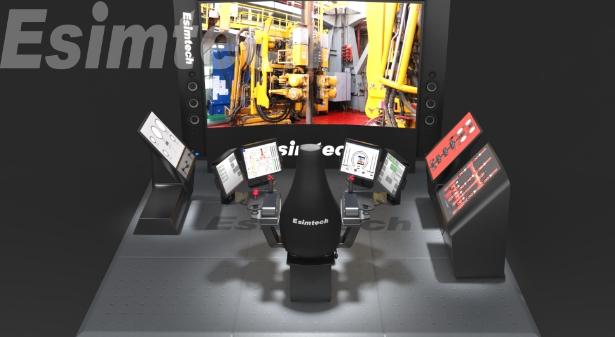
Managed Pressure Drilling (MPD) is a sophisticated technique that provides precise control of the wellbore pressure profile. It's a game-changer for drilling in narrow pressure windows, but it places immense cognitive load on the drill crew. Success demands an intimate understanding of dynamic systems and constant, precise adjustments. Cyberchair Drilling Simulators have emerged as the essential training ground to prepare crews for this complex discipline.
Why MPD Poses Unique Training Challenges
MPD turns conventional drilling practices on their head. Instead of maintaining a static mud weight, crews must actively manipulate surface backpressure, fluid density, and pumping rates in real-time to keep wellbore pressure within a tight "window." The relationship between cause and effect is dynamic and immediate. A misstep can quickly lead to an influx or formation damage. Traditional on-the-job training for MPD is inherently risky and slow. Cyberchair simulators solve this by providing a perfect digital twin of an MPD system, where every parameter can be controlled and every consequence safely experienced.
Simulating the Precise Dynamics of MPD Operations
The high-fidelity software within a cyberchair system accurately models the complex hydraulics and physics of an MPD operation.
Trainees learn to interact with the full suite of MPD equipment—the Rotating Control Device (RCD), backpressure pump, and automated choke manifold—all from their control chair. The simulator can replicate specific well designs and challenging geologic conditions, allowing crews to practice precise procedures like constant bottomhole pressure drilling or pressurizable mud cap drilling. They see real-time data on pore pressure, fracture gradient, and equivalent circulating density (ECD), learning to interpret trends and make proactive adjustments before a problem escalates.
Building Instincts for Critical MPD Scenarios
The true power of simulation lies in scenario-based training for high-consequence events.
Crews can repeatedly practice responding to a connection gas influx, learning to apply the correct amount of backpressure to safely circulate it out. They can experience a choke line blockage and execute the appropriate contingency procedure. They can even train for equipment failures, such as a malfunctioning automated choke, forcing them to troubleshoot and switch to manual control under pressure. This repeated exposure in a consequence-free environment builds the "gut feel" and ingrained reflexes needed to manage real-world MPD emergencies calmly and effectively, turning theoretical knowledge into dependable, instinctual competence.
 Italiano
 English
 Arabic
 French
 Spanish
 Portuguese
 Deutsch
 Turkish
 Dutch
Dutch
 Russian
 Romaian
 Portuguese (Brazil)
 Greek
Greek