


How Does Landscape Construction Improve Outdoor Spaces in Australia?
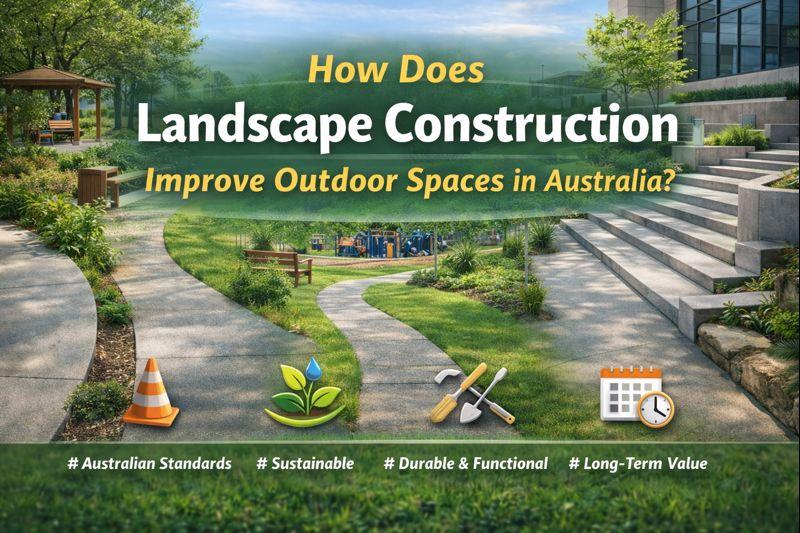
Landscape construction plays a vital role in shaping Australia’s outdoor environments. From public parks and school grounds to commercial precincts and residential developments, professional landscape construction services turn design concepts into durable, functional, and visually engaging outdoor spaces. In a country like Australia—where climate, soil conditions, and usage demands vary widely—expert landscape construction is essential for long-term performance and safety.
This blog explores how landscape construction in Australia enhances outdoor spaces, the processes involved, and why investing in professional construction delivers long-lasting value.
What Is Landscape Construction?
Landscape construction is the physical implementation of outdoor design plans. It includes site preparation, earthworks, hardscape installation, softscape planting, drainage systems, and finishing elements that bring landscapes to life. Unlike simple gardening, landscape construction involves technical expertise, project management, and compliance with Australian standards.
In Australia, professional landscape construction services are commonly used for schools, councils, infrastructure projects, commercial developments, and large residential sites. These projects require precision, durability, and an understanding of local environmental conditions.
Why Is Landscape Construction Important in Australia?
Australia’s climate ranges from hot and dry to coastal and high-rainfall zones. Poor construction can lead to erosion, drainage failure, or premature material breakdown. Professional landscape construction ensures outdoor spaces are built to withstand Australian conditions.
1. Creates Functional Outdoor Spaces
Landscape construction ensures outdoor areas are practical and user-friendly. Pathways, seating zones, access routes, and recreational spaces are built with purpose, improving usability for everyday activities.
2. Ensures Safety and Compliance
Professional construction follows Australian safety standards, accessibility requirements, and drainage regulations. This is particularly important for public spaces, schools, and commercial environments where safety is non-negotiable.
3. Enhances Visual Appeal
Well-constructed landscapes improve the appearance of outdoor environments. Clean finishes, structured layouts, and balanced use of materials create spaces that are inviting and professionally presented.
4. Supports Environmental Sustainability
Sustainable landscape construction incorporates native planting, water-efficient systems, and erosion control methods—helping landscapes thrive while reducing environmental impact.
5. Adds Long-Term Value
High-quality construction reduces maintenance costs and extends the lifespan of outdoor spaces, making it a smart long-term investment for Australian property owners and developers.
Key Components of Landscape Construction
Site Preparation and Earthworks
Proper grading, soil preparation, and drainage planning form the foundation of successful landscape construction. This stage is critical to prevent future issues such as pooling water or uneven surfaces.
Hardscape Construction
Hardscape elements include concrete paths, retaining walls, steps, seating, and paved areas. These features provide structure, durability, and accessibility within the landscape.
Softscape Installation
Softscape elements such as turf, trees, shrubs, and garden beds soften the built environment and contribute to visual appeal and environmental health.
Drainage and Irrigation Systems
In Australian conditions, effective water management is essential. Landscape construction integrates drainage and irrigation systems that support plant health while preventing erosion or flooding.
Project Management
Professional landscape construction relies on coordinated project management to ensure timelines, safety standards, and design intent are met efficiently.
Feature & Benefit Table
| Landscape Construction Feature | Benefit |
|---|---|
| Site Preparation & Earthworks | Creates a stable, long-lasting foundation |
| Hardscape Construction | Provides durable, accessible surfaces |
| Softscape Installation | Enhances aesthetics and environmental value |
| Drainage & Irrigation Systems | Manages water efficiently in Australian climates |
| Integrated Project Management | Ensures smooth, on-time project delivery |
| Safety & Accessibility Compliance | Meets Australian standards and regulations |
| Sustainable Construction Methods | Reduces environmental impact and maintenance |
How the Landscape Construction Process Works
1. Initial Consultation and Assessment
Landscape construction begins with a detailed site assessment, considering soil conditions, climate, usage requirements, and design objectives.
2. Design Coordination
Design plans are reviewed and refined to ensure constructability, compliance, and alignment with the project vision.
3. Civil and Structural Works
Earthworks, retaining walls, drainage systems, and foundational elements are installed to support long-term stability.
4. Hardscape and Softscape Installation
Once the foundation is complete, hardscape elements are installed, followed by planting and turf to bring the space together.
5. Finishing and Handover
Final inspections, safety checks, and finishing touches ensure the landscape is ready for use and built to specification.
Benefits of Professional Landscape Construction
Choosing professional landscape construction services in Australia ensures:
-
Long-lasting and weather-resistant outdoor spaces
-
Compliance with safety and accessibility standards
-
Efficient project delivery and coordination
-
Reduced future maintenance and repair costs
-
High-quality finishes and workmanship
Professional construction turns outdoor areas into assets that perform well and look great for years.
Conclusion
Landscape construction is essential for creating outdoor spaces that are functional, safe, and visually appealing across Australia. By combining technical expertise, quality materials, and thoughtful design execution, professional landscape construction delivers environments that stand up to Australian conditions while enhancing usability and value. Whether for public spaces, schools, commercial developments, or residential projects, investing in expert landscape construction ensures outdoor areas perform well for the long term.
Frequently Asked Questions (FAQ)
1. What does landscape construction include?
Landscape construction includes earthworks, paving, retaining walls, planting, drainage, irrigation, and installation of outdoor features.
2. Is landscape construction suitable for commercial projects?
Yes. Landscape construction is widely used for commercial, public, educational, and residential developments across Australia.
3. How long does landscape construction take?
Project timelines depend on size, complexity, and weather conditions, but professional planning ensures efficient delivery.
4. Why is drainage important in Australian landscapes?
Proper drainage prevents water damage, erosion, and plant failure—especially during heavy rainfall events.
5. Can landscape construction support sustainability goals?
Yes. Sustainable materials, native plants, and water-efficient systems are commonly used in modern projects.
6. Is landscape construction a long-term investment?
Absolutely. Quality construction increases property value and reduces maintenance costs over time.
7. Do landscape construction services include maintenance?
Maintenance is usually offered as a separate service after construction is completed.
 English
 Arabic
 French
 Spanish
 Portuguese
 Deutsch
 Turkish
 Dutch
Dutch
 Italiano
 Russian
 Romaian
 Portuguese (Brazil)
 Greek
Greek