


Everything You Need to Know About 3D Printer Filament — A Complete Guide
The 3D printing technology has transformed how the ideas, prototypes, and finished products are created - whether it is hobbyists creating miniature models at their homes or engineers creating industrial parts. The most important component of every successful 3D print is 3D printer filament. Whether this is your first attempt at printing, or you are an experienced maker and pushing yourself to the extremes of innovation, knowledge of the types of filament, its characteristics, and the ability of how to select the right one can greatly influence your output.
What Is 3D Printer Filament?
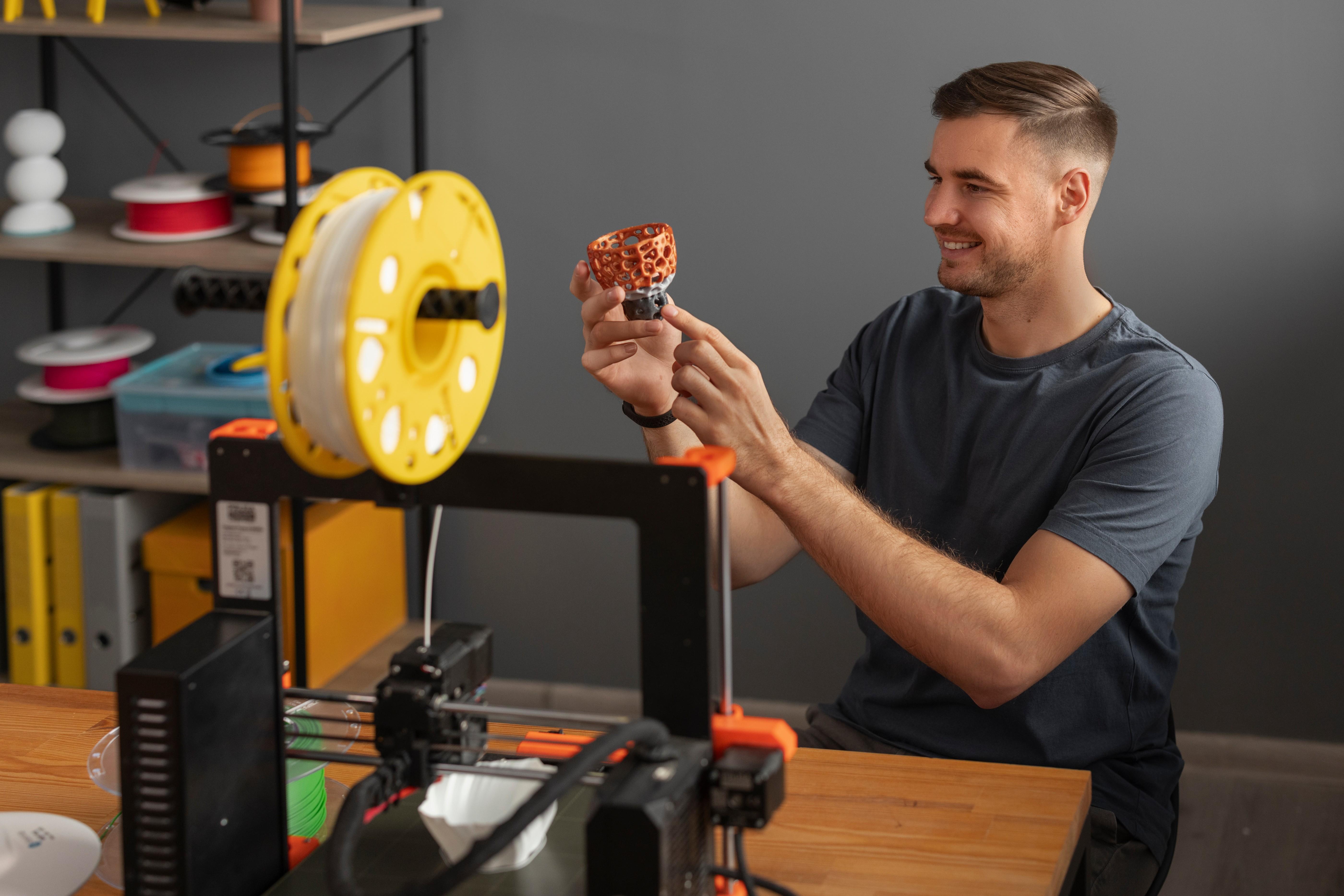
Fused Deposition Modeling (FDM) printers are the most widespread type of 3D printers consumed and used by professionals alike: the material input into printers is 3D printer filament. It is an item that comes in spools of thermoplastic material that can be melted and solidified to construct objects in a layer by layer manner. The filament comes in various diameters, the most popular being 1.75mm as it is compatible with the huge majority of desktop FDM machines. They differ in the mechanical, visual finishes, and degrees of difficulty in the printing.
Common forms of Filaments and Applications.
Even the current 3D printing ecosystems can accommodate a large selection of filament materials - each has its purpose.
1. PLA (Polylactic Acid)
The most common filament that is used in 3D printing is arguably PLA. This biodegradable alternative is made of renewable materials such as corn starch or sugar cane, and its ability to be easily used, not warp, user-friendly, and compatible with the majority of printers are adored. The qualities that enable the PLA to come out as a good option to beginners, educators, and even prototype designers. It can be printed at fairly low temperatures and can be used to create smooth and bright surfaces - perfect on decorative objects, learning models, and simple prototyping.
2. PLA+ and Silk PLA
PLA+ is an improved version of standard PLA that is tougher and has better print quality, and is forgiving in complicated builds. Silk PLA, however, introduces a shiny, sleek and high end finish ideal to print artistic works and display models. These lamps find a middle ground between beauty and utility and thus they are popular in hobby, design and professional circles.
3. PETG (Polyethylene Terephthalate Glycol)
PETG is a powerful and somewhat flexible material, which serves as a strong alternative to PLA, should your project require more solid parts than PLA is generally capable of providing. It is a mixture of PLA and ABS because it is strong yet easy to print. PETG is a useful material because of its superior chemical resistance and food-safe versions useful as functional parts, containers, and mechanical components.
4. ABS (Acrylonitrile Butadiene Styrene).
ABS is an old engineering plastic, which has a high impact strength and temperature. Nonetheless, it needs a hot bed and adequate ventilation when printing so as to reduce the incidence of warping and fumes. It is best used in projects where mechanical robustness and resistance to heat are important, e.g. technical prototypes or automotive components.
5. TPU and Flexible Filaments
Flexible filaments, such as Thermoplastic Polyurethane (TPU), add elasticity to 3D printing. These are excellent materials to use in printing things that are bend or stretchable such as phone cases, wearable components, gaskets, and custom grips although they also require more experience and correct printer configuration.
6. Specialty Materials
More than fundamental, are engineered filaments, such as carbon-fiber infused blends,wood or metal composites, flame-resistant, even filaments to be used in industrial or challenging prototypes. These have properties that are specific to high-level engineering and design.
Selection of the appropriate Filament.
The selection of an appropriate filament will be determined by the purpose of printing and level of experience. In the following are some mere hints:
Entry Level & Learning: Use standard PLA. It is easy to learn because of its forgiveness and low temperature printing.
Artistic or Display Pieces: Silk and PLA+ types are with high-end finishes and appearance and display your designs professionally.
Functional Prototypes: PETG is strong and does not dissolve, and is comparatively simple to print.
Hardy Parts & Technical Prints: ABS, carbon-fiber blends, and engineering filaments are more rugged with a stronger mechanical property.
Flexible and Wearable Parts TPU or other elastomers can be used to produce flexible, bendable components to enable opportunities beyond rigid objects.
Know what you want to achieve: aesthetics to strength needs, and so on can assist you in refining the best material. Another thing to keep in mind is to set the printer parameters such as temperature, cooling and speed according to the filament you choose.
Printing Hacks to Improve Your Printing.
Handling and storage These are in addition to selecting the appropriate filament:
Keep it Dry: Filaments are hygroscopic - most of them absorb the moisture of the air. Wet filament may result in bubbling, stringing, and bad layering especially during a humid weather. Desiccants used to seal the spools assist in maintaining quality.
Calibration of your printer: Every material is printed well in a certain temperature range. Optimization of your printer allows accuracy and the best mechanical characteristics.
Test Finishes: certain filaments like matte or silk types automatically give some texture to the surface. Experimenting with finishes opens up the creativity.
Conclusion
The 3D printers filament contributes to the background of the printing success - how easily you can print, how strong, and how attractive the end product would be. You are developing sophisticated artworks, making prototypes that are functional, and in the construction of parts that are industrial grade, it is better to know the types of filaments and their application in decision making. As the materials and the finishes keep growing in innovative ways, the flexibility of filament makes it possible to have an infinite amount of creative possibilities among hobbyists, professionals, or even teachers.
 Turkish
 English
 Arabic
 French
 Spanish
 Portuguese
 Deutsch
 Dutch
Dutch
 Italiano
 Russian
 Romaian
 Portuguese (Brazil)
 Greek
Greek