


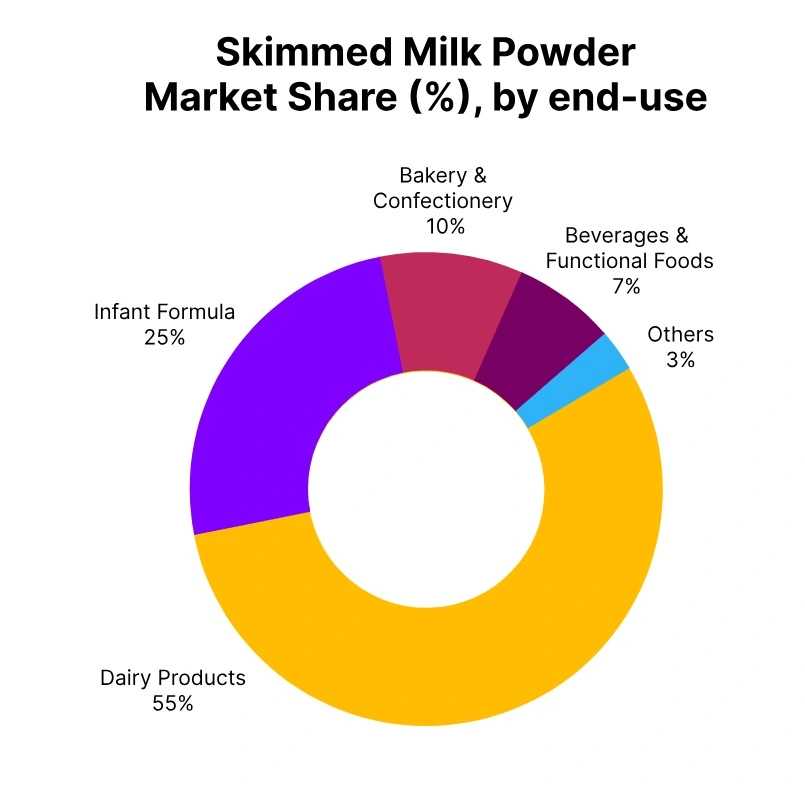
Skimmed Milk Powder, often referred to as SMP, is a widely used dairy product across the world. It is used in baby food, bakery products, confectionery, beverages, and nutritional supplements. Because it is made from milk after removing most of the fat, its price is closely linked to milk supply, consumer demand, export activity, and global economic conditions. The SMP Price Trend helps explain how all these factors come together and influence the market.
During the third quarter of 2025, the global skimmed milk powder market experienced moderate price declines across major producing and exporting regions. Prices generally fell between 2% and 4%, reflecting cautious buyer behavior, improved milk supply, and ongoing economic uncertainty. While the market showed signs of pressure for most of the quarter, a few regions saw small signs of stabilization toward the end.
Global Overview of the SMP Market
The SMP Price Trend in Q3 2025 reflected a market under pressure from both supply and demand sides. On the supply side, milk production increased seasonally in several regions, leading to higher availability of skimmed milk powder. On the demand side, buyers remained cautious due to inflation, high interest rates, and uncertain economic conditions.
Many buyers avoided long-term commitments and preferred short-term or just-in-time purchases. This buying pattern limited price support and kept sellers under pressure. Export competition also increased, as major producing countries competed for market share in price-sensitive international markets.
Despite these challenges, the market did not collapse. Instead, prices moved gradually lower, showing a controlled adjustment rather than a sharp correction. This suggested that while demand was weak, it was still present, and supply was manageable.
Please Submit Your Query For Skimmed Milk Powder Price Trend, Market Analysis and Forecast: https://www.price-watch.ai/book-a-demo/
Germany: Weak Buyer Interest and Seasonal Supply Pressure
Germany experienced a noticeable decline in skimmed milk powder prices during Q3 2025. The SMP Price Trend in Germany showed a drop of just under 2.5% over the quarter, with a sharper decline occurring in September.
Several factors contributed to this weakness. Buyer interest declined as domestic processors reduced order volumes. Inflationary pressures affected consumer spending, leading food manufacturers to become more cautious with procurement. This reduced demand translated directly into lower SMP prices.
At the same time, competition from alternative global suppliers increased. Buyers had more options and were able to negotiate lower prices. Alternative protein products also gained popularity due to health and lifestyle trends, slightly reducing demand for traditional dairy ingredients.
Seasonal recovery in milk supply further added pressure. As milk output increased, more skimmed milk powder became available, adding to market supply. Sellers faced difficulty moving volumes at previous price levels, which resulted in price adjustments.
Overall, the German market highlighted how quickly SMP prices can weaken when demand slows and supply improves at the same time.
New Zealand: Export Market Pressure and Inventory Adjustments
New Zealand saw a sharper decline in skimmed milk powder prices compared to other regions. The SMP Price Trend in New Zealand fell by more than 3% during Q3 2025, with an even steeper drop in September.
As a major exporter, New Zealand’s SMP market is heavily influenced by international demand. During the quarter, global buying interest softened, especially from price-sensitive markets. Buyers delayed purchases, adjusted inventories, and became more selective in sourcing.
Economic uncertainty and currency volatility also affected buyer confidence. Many importers preferred to wait and see how prices developed before committing to large volumes. This hesitation reduced export momentum and weakened sellers’ pricing power.
Competition from other global suppliers intensified, forcing New Zealand exporters to adjust prices to remain competitive. Inventory management became a key focus, as suppliers worked to balance production levels with slower demand.
The quarter demonstrated how exposed export-driven markets can be to shifts in global sentiment. For New Zealand, the experience emphasized the importance of supply management and diversifying export destinations to reduce reliance on a few markets.
India: Volatility with Signs of Stabilization
India’s skimmed milk powder market also faced challenges during Q3 2025. The SMP Price Trend in India declined by nearly 4% during July and August, reflecting cautious buyer sentiment and ongoing competition from imports.
Buyers in India remained price-sensitive and cautious, placing smaller and more frequent orders rather than committing to large volumes. Economic uncertainty and inflation influenced purchasing decisions, keeping demand uneven throughout the quarter.
However, September brought a small but notable price increase. This uptick suggested some localized improvement in demand, supported by restocking activity and just-in-time buying. Buyers who had delayed purchases earlier in the quarter began to re-enter the market cautiously.
Despite this slight improvement, overall market conditions remained fragile. Competition from imported SMP continued to pressure domestic suppliers, and buyers remained highly selective. While demand showed minor signs of recovery, growth remained uncertain.
India’s experience during the quarter reflected a market trying to find balance between cautious optimism and persistent headwinds.
Buyer Behavior and Market Sentiment
Across all regions, buyer behavior during Q3 2025 played a significant role in shaping the SMP Price Trend. Buyers focused on controlling costs, managing inventory carefully, and avoiding overstocking. Long-term contracts were less common, and spot purchases became more frequent.
This cautious approach limited upward price movement and increased price sensitivity. Sellers were often forced to adjust offers to close deals, especially in competitive export markets.
Market sentiment remained uncertain throughout the quarter. Inflation, economic volatility, and changing consumer preferences all contributed to a wait-and-see approach among buyers.
Supply Dynamics and Milk Production
Milk supply played an important role in shaping SMP prices during the quarter. Seasonal rebounds in milk production increased availability of raw material, leading to higher SMP output in several regions.
With supply improving and demand remaining cautious, the market naturally moved toward lower prices. Producers had limited ability to hold prices firm, especially when inventory levels increased.
This situation highlighted the close link between milk production cycles and SMP pricing, reminding market participants of the importance of aligning production with demand.
Overall Market Outlook
The SMP Price Trend in Q3 2025 reflected a market under pressure but not in crisis. Moderate price declines across major regions showed that supply and demand were adjusting gradually.
Germany and New Zealand faced clear challenges from weak demand and increased competition, while India showed mixed signals with slight stabilization toward the end of the quarter. Across all markets, cautious buyer behavior and improved supply shaped pricing outcomes.
Looking ahead, SMP prices will depend on how demand recovers, how milk production develops, and how global economic conditions evolve. Improved consumer confidence, stronger food industry demand, or supply disruptions could support prices. For now, the market remains fragile, requiring flexibility and careful planning from both buyers and sellers.
In simple terms, Q3 2025 showed that the SMP Price Trend is highly sensitive to economic sentiment, supply levels, and buyer confidence. The quarter served as a reminder that balance and timing are crucial in the global dairy market.

 English
 Arabic
 French
 Spanish
 Portuguese
 Deutsch
 Turkish
 Dutch
Dutch
 Russian
 Romaian
 Portuguese (Brazil)
 Greek
Greek