


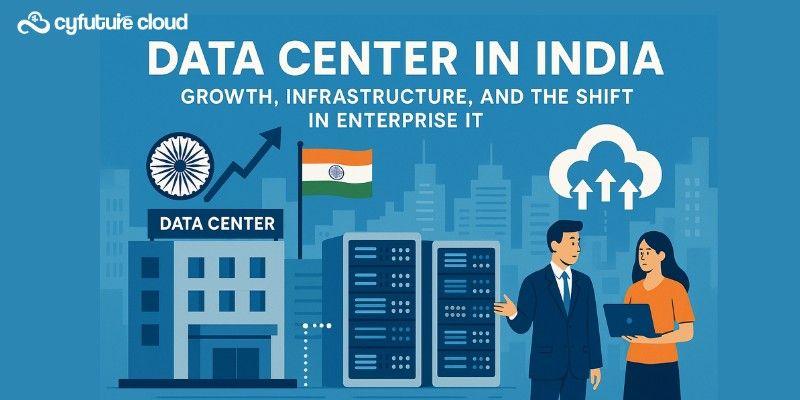
The rapid expansion of digital services has made the data center in India a critical component of the country’s technology ecosystem. From cloud computing and financial platforms to e-commerce, streaming, and government services, data centers provide the infrastructure needed to store, process, and transmit vast amounts of data securely. As India continues its shift toward a digital-first economy, the role of data centers has become more strategic than ever.
Growth of Data Centers in India
India is one of the fastest-growing data center markets globally. Rising internet penetration, affordable mobile data, and increasing smartphone usage have led to an explosion in data consumption. Businesses across sectors are adopting cloud platforms to improve agility, reduce costs, and support remote operations. This shift has significantly increased demand for reliable and scalable data infrastructure within the country.
Government-led initiatives such as Digital India, online public services, and financial inclusion programs have further accelerated this demand. Additionally, data localization requirements encourage organizations to store and process sensitive data within national borders, strengthening the need for domestic data center capacity.
Key Data Center Hubs
Certain cities have emerged as major hubs for data center development in India. Mumbai remains a leading location due to its proximity to international submarine cable landing stations, which enable strong global connectivity and low latency. Chennai has also gained importance for similar reasons and continues to attract large-scale investments.
Other cities such as Bengaluru, Hyderabad, Pune, and Delhi-NCR are experiencing steady growth. These regions benefit from strong technology ecosystems, skilled talent pools, and growing enterprise demand. Together, these hubs form the backbone of the data center in India landscape.
Infrastructure Requirements and Design
Modern data centers are complex facilities designed for continuous operation. Reliable power supply is a top priority, with multiple layers of redundancy to prevent downtime. Cooling systems are equally important, especially in India’s warm climate, as they help maintain optimal performance and reduce energy consumption.
Network connectivity is another critical factor. High-speed fiber networks, multiple carrier options, and redundant paths ensure consistent performance and availability. Physical security measures such as surveillance, access controls, and monitoring systems are combined with cybersecurity frameworks to protect sensitive data and maintain compliance with industry standards.
Role of VPS Hosting in Data Centers
Within the broader data center ecosystem, VPS hosting plays an important role for businesses seeking flexibility and cost efficiency. VPS hosting provides virtualized server environments with dedicated resources, making it suitable for websites, applications, development environments, and moderate workloads.
When VPS hosting is deployed within a data center in India, it offers advantages such as reduced latency for local users and better alignment with data residency requirements. This makes it a practical choice for startups, small and mid-sized enterprises, and developers who need reliable performance without investing in dedicated physical servers.
Regulatory and Compliance Landscape
Regulatory considerations significantly influence the growth and operation of data centers in India. Data protection frameworks and sector-specific guidelines require certain categories of data to be stored securely within the country. Industries such as banking, insurance, healthcare, and government services are particularly affected by these requirements.
To support industry growth, several state governments have introduced data center policies that offer incentives, streamlined approvals, and infrastructure support. These policies aim to attract investment while ensuring compliance with environmental, operational, and security standards.
Sustainability and Energy Efficiency
As data center capacity expands, sustainability has become a major focus area. Data centers are energy-intensive facilities, and managing their environmental impact is a key challenge. Operators are increasingly adopting energy-efficient hardware, advanced cooling technologies, and renewable energy sources to reduce carbon emissions.
Green data center practices not only support environmental goals but also help improve long-term operational efficiency. For enterprises selecting a data center in India, sustainability is becoming an important decision-making factor alongside performance and security.
Emerging Trends in the Indian Data Center Market
The data center industry in India continues to evolve in response to changing technology demands. Edge data centers are gaining attention as organizations seek to process data closer to end users, reducing latency for applications such as online gaming, video streaming, and real-time analytics.
Automation and remote monitoring tools are also being adopted to improve operational efficiency and reliability. At the same time, the rise of artificial intelligence and high-performance computing is influencing data center design, with higher power density and advanced cooling solutions becoming more common.
Future Outlook
The future of the data center in India remains strong as digital adoption continues across industries. While challenges such as power availability, land acquisition, and sustainability persist, ongoing investments and supportive policies are helping address these issues. From large hyperscale facilities to flexible solutions like VPS hosting, data centers will continue to support a wide range of business and technology needs.
Conclusion
Data centers have become foundational to India’s digital growth, enabling secure, scalable, and high-performance computing environments. As demand for cloud services, data-driven applications, and regulatory compliance increases, the importance of a robust data center in India will only grow. By supporting diverse workloads and deployment models, data centers will remain central to the country’s evolving digital infrastructure.

 English
 French
 Spanish
 Portuguese
 Deutsch
 Turkish
 Dutch
Dutch
 Italiano
 Russian
 Romaian
 Portuguese (Brazil)
 Greek
Greek