


Quantum Communication Secures Future Networks With Physics Based Cryptographic Trust
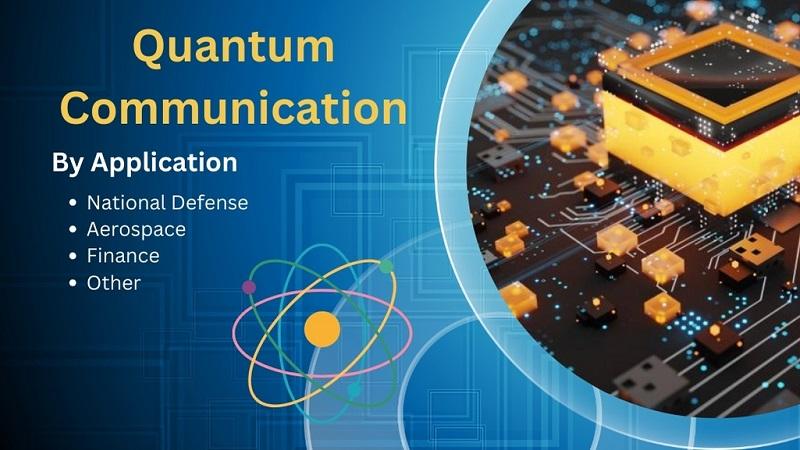
The Quantum Communication market is emerging as governments and enterprises prepare for a post-quantum security era. Quantum communication uses quantum states—often photons—to transmit information in ways that can reveal eavesdropping attempts, enabling high-assurance key exchange. The best-known application is quantum key distribution (QKD), which helps two parties create shared encryption keys with security grounded in physical laws rather than computational hardness assumptions. Interest is rising because future large-scale quantum computers could threaten widely used public-key cryptography. In response, organizations explore layered security approaches that combine post-quantum cryptography with quantum-safe key management. Quantum communication also supports secure timing and synchronization use cases in critical infrastructure. Early deployments typically connect high-value sites such as data centers, government facilities, and financial hubs where security requirements justify the cost and engineering complexity today.
Most current implementations rely on fiber-based QKD networks and trusted-node architectures. Fiber links can be integrated into existing metro and long-haul infrastructure but face distance constraints due to photon loss and noise. Trusted nodes extend reach by relaying keys through secured intermediate points, though this introduces operational trust assumptions. Research and pilot projects also explore entanglement-based networks, which could eventually enable end-to-end security without trusting intermediate nodes. Satellite QKD is another route, enabling key exchange over very long distances by transmitting photons through space to reduce attenuation. Each approach requires specialized hardware: single-photon sources, detectors, random number generators, and precise timing systems. Alongside the physics layer, strong classical control planes are required for authentication, key management, and integration with existing encryption tools like IPsec, TLS, and optical transport encryption. Interoperability with conventional networks is therefore a central engineering challenge.
Standardization and interoperability efforts are accelerating. Buyers want assurance that equipment from different vendors can work together and that security claims are independently validated. Industry groups and national labs are developing test methods, certification approaches, and reference architectures. Integration into telecom operations is also critical: quantum links need monitoring, fault management, and service assurance comparable to traditional networks. Another challenge is cost and deployment complexity, particularly for detector cooling, calibration, and sensitivity to environmental conditions. Vendors are working to reduce footprint and improve stability through photonic integration and better packaging. Quantum random number generation is often adopted earlier because it can be integrated into existing security products with less network redesign. Over time, the ecosystem will likely include quantum-enabled secure services bundled with managed network offerings from telecom providers and specialized security integrators.
In the longer term, quantum communication could become a key building block for a “quantum internet,” enabling distributed quantum computing and new sensing applications. Nearer term, the most realistic growth is in securing high-value communications and protecting critical infrastructure. Organizations evaluating quantum communication should clarify goals: compliance-driven confidentiality, long-term key protection, or strategic resilience against future cryptographic disruption. A pragmatic approach often combines post-quantum algorithms for broad coverage with quantum key distribution for selected high-risk links. Success also depends on operational readiness, including skilled personnel, vendor support, and integration into security policies. As technology matures, improvements in range, stability, and cost will expand addressable use cases. The result is a gradual transition from pilots to scalable deployments in finance, defense, telecom, and government networks worldwide.
Top Trending Reports:

 English
 French
 Spanish
 Portuguese
 Deutsch
 Turkish
 Dutch
Dutch
 Italiano
 Russian
 Romaian
 Portuguese (Brazil)
 Greek
Greek