


ITIL in Remote and Hybrid Work Environments
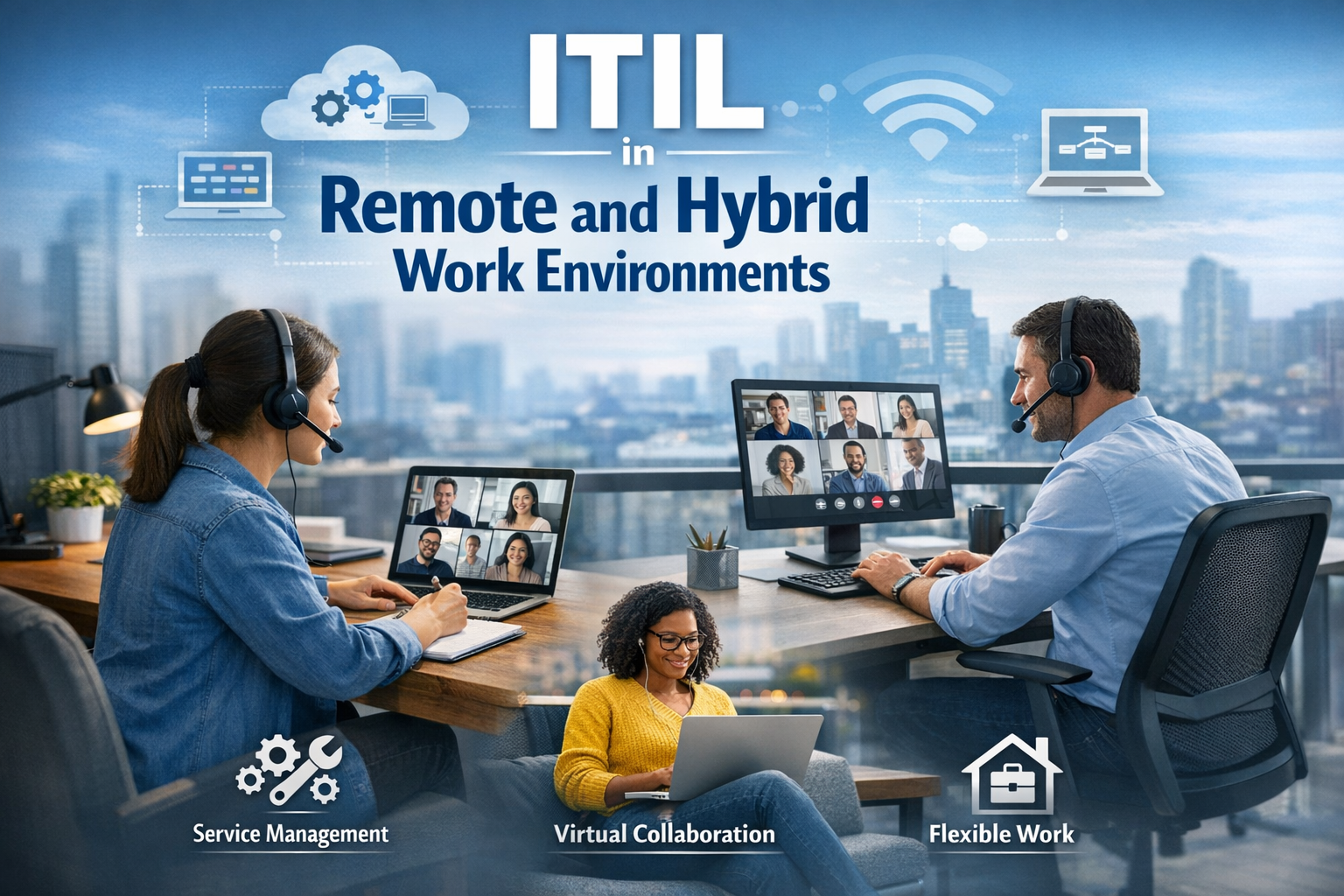
The shift to remote and hybrid work has permanently changed how organizations deliver and manage IT services. Distributed teams, cloud-based tools, and increased reliance on digital platforms demand a structured yet flexible approach to service management. This is where ITIL proves highly relevant, enabling organizations to maintain service quality, control costs, and create value in modern work environments.
Why ITIL Matters in Remote and Hybrid Work
Remote and hybrid models introduce challenges such as inconsistent service delivery, limited visibility into IT costs, and increased dependency on third-party tools. ITIL provides a standardized framework that aligns IT services with business needs, regardless of where employees are located. By focusing on value co-creation, ITIL ensures that services remain reliable, secure, and user-centric across distributed teams.
The ITIL 4 Foundation introduces the Service Value System (SVS), which is especially useful in hybrid environments. It connects governance, practices, and continual improvement, enabling organizations to adapt quickly to changing work patterns while maintaining control and accountability.
Role of ITIL Financial Management
One of the most critical aspects of remote work is managing IT spending. Cloud subscriptions, collaboration tools, cybersecurity solutions, and remote support services can quickly increase costs if not monitored effectively. ITIL Financial Management helps organizations plan, budget, and optimize IT expenditures while ensuring transparency.
Through proper financial management practices, IT teams can:
-
Track costs associated with remote infrastructure and tools
-
Justify investments based on business value
-
Optimize resource allocation across on-site and remote users
This structured approach allows decision-makers to balance cost efficiency with service quality, a key requirement in hybrid work models.
Enhancing Service Experience for Distributed Teams
ITIL emphasizes practices such as Incident Management, Service Request Management, and Continual Improvement, all of which are vital for remote teams. With employees working across locations and time zones, standardized processes ensure faster issue resolution and consistent service experiences. Self-service portals, automated workflows, and clear service catalogs help reduce dependency on physical IT support.
Building Skills with ITIL Certification
As organizations adapt to new ways of working, professionals skilled in IT service management are in high demand. An ITIL Certification equips IT and service professionals with the knowledge to manage modern, digitally enabled services effectively. It provides a common language and best practices that improve collaboration between IT, business teams, and external service providers.
For individuals, ITIL certification enhances career relevance in roles such as IT service manager, operations lead, and digital transformation consultant. For organizations, it ensures teams are aligned with global best practices, even in fully remote setups.
Conclusion
Remote and hybrid work environments are here to stay, and organizations must evolve their IT service management approach accordingly. ITIL offers a practical, flexible framework to manage complexity, control costs through ITIL Financial Management, and deliver consistent value. With a strong foundation in ITIL principles and certified professionals, businesses can confidently support a modern, distributed workforce.
 Russian
 English
 Arabic
 French
 Spanish
 Portuguese
 Deutsch
 Turkish
 Dutch
Dutch
 Italiano
 Romaian
 Portuguese (Brazil)
 Greek
Greek