


Stablecoin Governance and Liquidity: Redefining Trust in Digital Money Systems
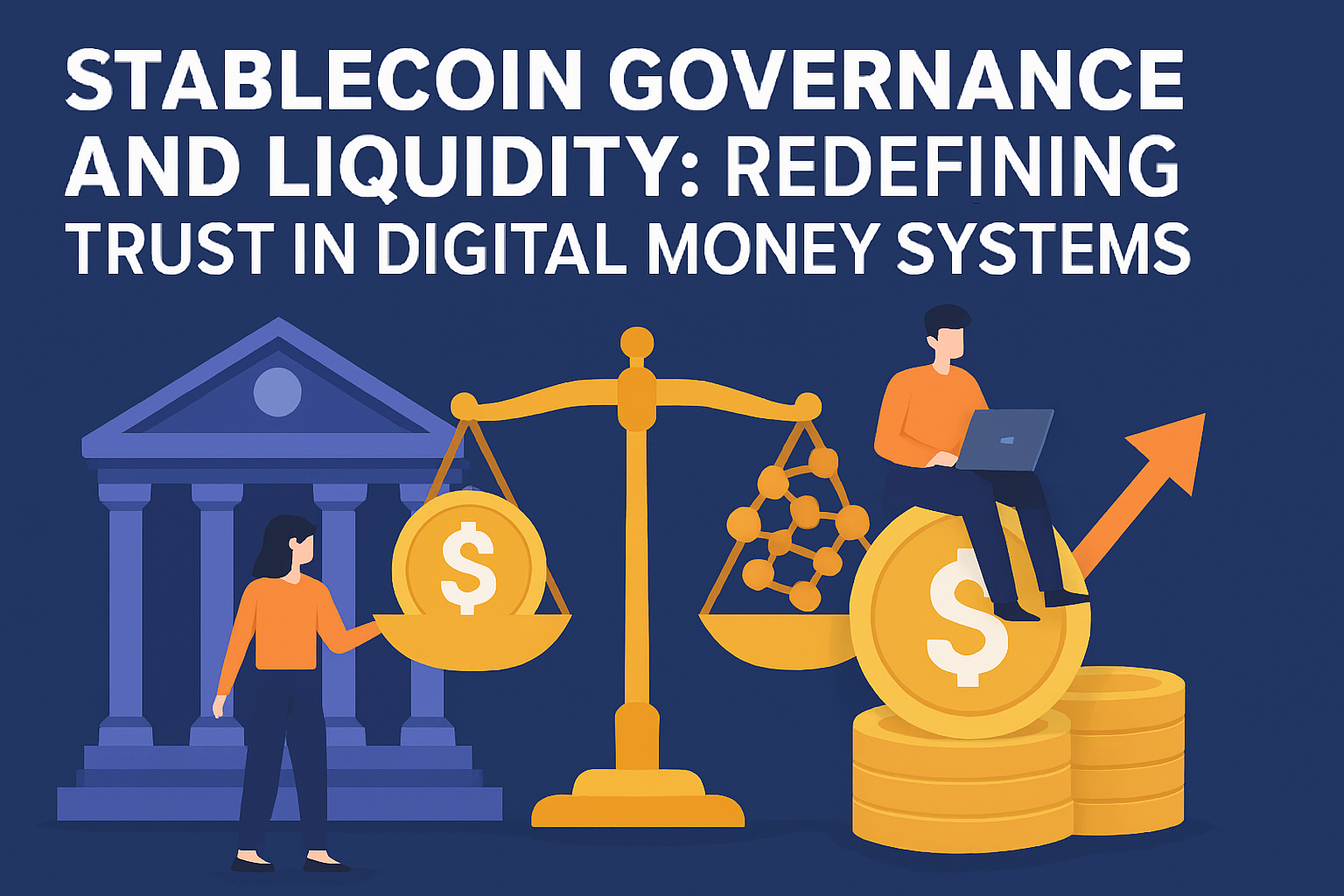
The evolution of digital finance has reached a point where stablecoin systems are no longer judged solely by price stability. Today, governance design and liquidity mechanics determine whether a stablecoin can survive market stress, regulatory scrutiny, and enterprise-scale adoption. As digital economies mature, stablecoins are becoming governed financial instruments rather than experimental tokens.
The Shift From Issuance to Governance-Centric Design
Early stablecoin models prioritized issuance speed and peg maintenance. However, recent market disruptions exposed a critical gap: weak governance structures. Modern stablecoin frameworks now emphasize decentralized decision-making, transparent control mechanisms, and predefined risk responses.
Governance defines who can modify parameters, how emergency actions are triggered, and how conflicts are resolved. Well-designed governance models reduce human intervention risk while maintaining adaptability. This balance is essential for sustaining long-term confidence among users, enterprises, and regulators.
Liquidity as the Backbone of Stablecoin Stability
Liquidity is the invisible force that keeps a stablecoin functional during volatility. Without sufficient on-chain and off-chain liquidity, even well-collateralized stablecoins can experience price deviations. Liquidity pools, redemption mechanisms, and market-maker incentives are now core architectural components rather than optional enhancements.
Advanced stablecoin ecosystems use dynamic liquidity provisioning, where capital is reallocated automatically based on demand signals. This ensures redemption efficiency while minimizing reserve depletion. Liquidity stress testing has become standard practice in robust stablecoin design.
Algorithmic Controls and Risk Mitigation
Modern stablecoin systems increasingly rely on algorithmic controls to manage supply elasticity and liquidity pressure. These controls adjust minting, burning, or collateral ratios in response to real-time market conditions.
Risk mitigation strategies include circuit breakers, delayed withdrawals during extreme volatility, and automated collateral rebalancing. These mechanisms help preserve peg integrity without relying on centralized intervention. A resilient stablecoin must operate predictably even when market sentiment turns irrational.
Enterprise Adoption and Operational Trust
Enterprises evaluating stablecoin adoption focus less on yield and more on operational trust. They require predictable settlement behavior, transparent governance rules, and audit-ready infrastructure. Stablecoins used for payroll, vendor settlements, or treasury operations must behave like programmable cash rather than speculative assets.
This is where enterprise-grade stablecoin development solutions become essential. These solutions enable businesses to deploy governance-aware stablecoin systems with compliance hooks, permissioned access layers, and reserve transparency aligned with corporate risk frameworks.
Wallet-Level Governance Enforcement
Wallets are no longer neutral endpoints in the stablecoin ecosystem. They now enforce governance policies, transaction limits, and compliance logic at the user level. Wallet-based controls can restrict unauthorized transfers, enforce multi-signature approvals, and integrate regulatory reporting workflows.
Professional Stablecoin Wallet Development ensures that governance rules are enforced consistently across users and platforms. This reduces operational risk and strengthens trust among institutional participants who demand strict financial controls.
Regulatory Alignment Without Innovation Loss
Contrary to common assumptions, governance-heavy stablecoin systems do not hinder innovation. Instead, they enable scalable growth by aligning technological flexibility with regulatory expectations. Transparent governance models simplify regulatory audits and reduce uncertainty for institutional stakeholders.
As global regulators move toward clearer digital asset frameworks, governance-first stablecoin designs are better positioned to adapt without disruptive redesigns.
The Future of Stablecoin Ecosystems
The next phase of stablecoin evolution will focus on composability, where governance modules, liquidity engines, and compliance layers can be upgraded independently. This modular approach allows stablecoins to evolve alongside market needs without compromising stability.
In this future, stablecoin networks will function as autonomous financial infrastructure—trusted, adaptable, and deeply integrated into the global digital economy.
 Russian
 English
 Arabic
 French
 Spanish
 Portuguese
 Deutsch
 Turkish
 Dutch
Dutch
 Italiano
 Romaian
 Portuguese (Brazil)
 Greek
Greek