


What Does Anne Sexton Reveal About the Human Condition?
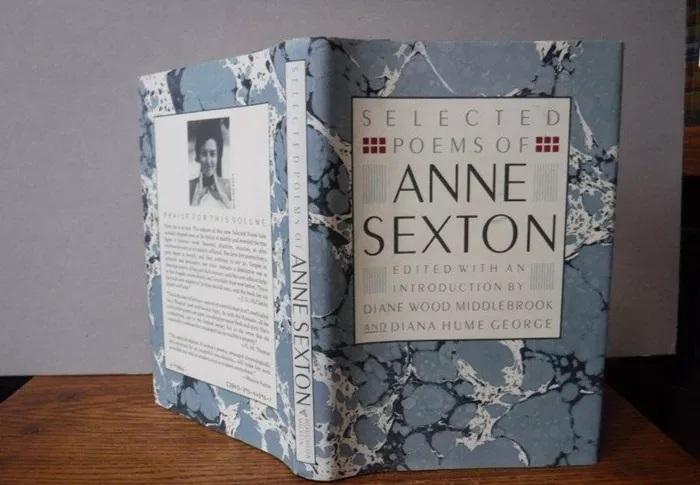
Anne Sexton stands as one of the most arresting and controversial voices in twentieth-century American poetry. As a poet and poetry researcher, approaching her work means engaging with verse that is intimate, unsettling, lyrical, and brutally honest. Anne Sexton did not merely write poems; she exposed psychic wounds, interrogated social norms, and transformed personal anguish into a shared human language. Through her exploration of mental illness, femininity, spirituality, sexuality, and mortality, Sexton reveals the human condition as fragile, conflicted, and persistently yearning for connection and meaning.
Anne Sexton and the Confessional Mode
Anne Sexton is most often associated with confessional poetry, a movement that emerged in the mid-twentieth century and emphasized autobiographical material, emotional intensity, and psychological realism. Alongside poets such as Sylvia Plath and Robert Lowell, Sexton rejected the idea that poetry should remain emotionally restrained or impersonally symbolic.
For Sexton, the poem was a site of exposure. Her work suggests that the human condition cannot be understood without confronting pain directly. She believed that silence around trauma only deepened suffering. By transforming private experiences into public art, Sexton revealed how deeply personal struggles resonate across individual boundaries.
The Personal as Universal
Although Sexton’s poems draw heavily from her own life, including her battles with depression and hospitalization, they never remain confined to autobiography. Instead, they dramatize emotions that are widely shared yet often hidden. Fear, shame, desire, envy, and despair emerge as fundamental human experiences.
Through this approach, Anne Sexton reveals that the human condition is defined not by perfection or control, but by vulnerability. Her poetry insists that to be human is to struggle internally, often in ways that defy polite conversation or social expectation.
Mental Illness and Inner Conflict
Madness as Lived Reality
One of Sexton’s most significant contributions is her unflinching portrayal of mental illness. In poems such as those found in To Bedlam and Part Way Back, she depicts psychiatric institutions, suicidal ideation, and emotional disintegration with startling clarity.
Rather than romanticizing madness, Sexton presents it as a lived, exhausting reality. She reveals the human condition as one in which the mind can become both a refuge and a prison. These poems challenge the notion that rationality is stable or guaranteed, showing instead how easily psychological balance can fracture.
The Search for Language in Suffering
Sexton’s work suggests that suffering demands language, even when words seem inadequate. Her poems wrestle with articulation itself, asking whether pain can ever be fully expressed. In doing so, she reveals a core human dilemma: the need to communicate inner experience despite the limitations of language.
This struggle to speak becomes an ethical act. Sexton’s willingness to name despair allows readers to recognize their own silent fears. The human condition, in her poetry, includes the responsibility to bear witness to one’s own interior life.
Femininity, the Body, and Social Constraint
Anne Sexton’s poetry is deeply concerned with what it means to inhabit a female body within restrictive social structures. She writes about menstruation, motherhood, abortion, marriage, and aging, subjects that were often considered inappropriate or taboo at the time.
Her work exposes how cultural expectations shape identity and suffering. Sexton reveals that the human condition is not experienced in abstraction, but through bodies marked by gender, sexuality, and social roles.
Motherhood and Ambivalence
In poems such as “The Double Image” and others, Sexton portrays motherhood not as pure fulfillment but as a complex emotional terrain filled with love, guilt, resentment, and fear. She refuses idealization, presenting maternal experience as deeply human rather than sanctified.
This honesty reveals a broader truth about the human condition: love and ambivalence often coexist. Sexton shows that emotional contradictions do not signify failure but reflect the complexity of human attachment.
Sexuality and Desire
Sexton also explores female sexuality with a directness that was radical for her era. Desire in her poetry is powerful, unsettling, and often intertwined with shame or longing. She reveals how sexuality can be both liberating and destructive.
Through this lens, Anne Sexton presents the human condition as a tension between instinct and regulation. Desire pushes against social boundaries, revealing how much of human suffering arises from the repression or misinterpretation of bodily experience.
Spiritual Longing and Existential Questions
God, Death, and the Search for Meaning
Spiritual inquiry runs throughout Sexton’s work, particularly in later collections such as The Awful Rowing Toward God. Her poems grapple with faith, doubt, and the possibility of transcendence. She approaches God not with certainty but with desperation, curiosity, and anger.
This spiritual struggle reveals another dimension of the human condition: the longing for meaning in the face of mortality. Sexton’s poems do not offer clear answers, but they insist on the importance of questioning. To be human, in her vision, is to confront death while still yearning for connection beyond the self.
Death as Obsession and Release
Death appears frequently in Sexton’s poetry, sometimes as a threat and sometimes as a seduction. Her treatment of death reflects both fear and fascination, mirroring the human impulse to understand what lies beyond life.
Rather than treating death as an abstract concept, Sexton personalizes it. She reveals how awareness of mortality shapes daily existence, intensifying emotion and sharpening self-awareness. The human condition, in her work, is defined by living under the constant shadow of impermanence.
Language, Myth, and Transformation
In collections such as Transformations, Anne Sexton reimagines fairy tales to expose their psychological and cultural underpinnings. By rewriting familiar narratives, she reveals how myths shape human expectations, particularly around gender and morality.
These poems demonstrate that the human condition is inherited as much as it is lived. Stories passed down through culture influence how individuals understand love, success, and failure. Sexton’s revisions uncover the violence and repression hidden beneath idealized narratives.
Her use of myth also reflects a desire for transformation. Even in despair, Sexton’s poetry seeks change, suggesting that self-awareness can lead to renewal, however fragile.
Anne Sexton’s Poetic Legacy
Anne Sexton reveals the human condition as raw, contradictory, and deeply emotional. Her poetry refuses consolation in the traditional sense, but it offers recognition. Readers find themselves mirrored in her fears and longings, even when her experiences differ from their own.
Her work has influenced generations of poets who see confession not as indulgence but as courage. Sexton demonstrates that to speak honestly about pain is not to glorify it, but to humanize it.
Conclusion: What Anne Sexton Teaches Us About Being Human
Anne Sexton reveals that the human condition is defined by exposure rather than concealment. Through her fearless engagement with mental illness, femininity, desire, spirituality, and death, she shows that suffering and beauty often coexist. Her poetry insists that truth, even when uncomfortable, is a form of connection.
As a poet and poetry researcher, one recognizes that Anne Sexton’s work endures because it speaks to what remains unresolved in human life. She does not offer redemption as certainty, but she offers language as survival. In doing so, she affirms that to be human is to feel deeply, question relentlessly, and continue speaking even when silence feels safer.
 Italiano
 English
 Arabic
 French
 Spanish
 Portuguese
 Deutsch
 Turkish
 Dutch
Dutch
 Russian
 Romaian
 Portuguese (Brazil)
 Greek
Greek