


What Does Deuteronomy Teach About Caring for the Poor?
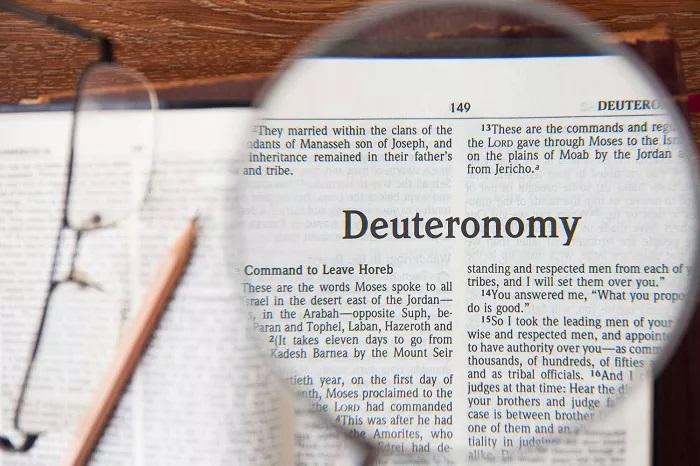
The book of Deuteronomy occupies a central place in the Hebrew Bible as both a legal and moral text. Presented as Moses’ final address to the Israelites before they enter the Promised Land, Deuteronomy restates and deepens earlier laws while emphasizing ethical responsibility, communal solidarity, and covenant faithfulness. Among its most striking and enduring themes is the obligation to care for the poor, the vulnerable, and the marginalized. Far from treating poverty as a peripheral concern, Deuteronomy integrates care for the poor into its vision of justice, worship, and national identity.
The Theological Foundation of Care for the Poor in Deuteronomy
Covenant and Social Responsibility
In Deuteronomy, care for the poor is rooted in covenant theology. Israel’s relationship with God is not merely spiritual but social and economic. The covenant binds the people to a way of life that reflects God’s character, particularly God’s justice and compassion. Poverty is not viewed simply as an unfortunate social condition but as a test of covenant faithfulness.
Deuteronomy repeatedly reminds Israel that they were once poor and oppressed in Egypt. This historical memory functions as a moral lens through which social obligations are understood. Compassion toward the poor is not optional generosity but a required response to divine deliverance.
God’s Ownership of the Land and Resources
A foundational teaching in Deuteronomy is that the land ultimately belongs to God. Israel holds it as a trust, not as absolute owners. This belief shapes economic ethics by limiting unchecked accumulation and encouraging redistribution. Wealth is portrayed as a blessing from God, but one that carries responsibility toward those who lack resources.
Because God is depicted as the defender of the vulnerable, economic systems that ignore or exploit the poor are incompatible with covenant loyalty.
Legal Provisions That Protect the Poor
Debt, Lending, and Compassionate Economics
One of the most explicit teachings in Deuteronomy concerns lending to the poor. The text warns against hard-heartedness and reluctance to help those in need, even when lending appears financially risky. Charging interest to fellow Israelites in distress is forbidden, emphasizing that economic transactions must not deepen suffering.
Deuteronomy reframes lending as an act of solidarity rather than profit. The poor are not to be treated as burdens or threats but as members of the covenant community whose dignity must be preserved.
The Year of Debt Release
Deuteronomy introduces the concept of periodic debt release, in which debts are forgiven at set intervals. This practice prevents generational poverty and economic entrapment. It reflects a vision of economic balance in which inequality does not become permanent.
This system reveals that poverty is not treated as a moral failure of individuals but as a social condition requiring collective responsibility. The community is accountable for ensuring that economic hardship does not destroy families or undermine social cohesion.
Care for the Poor Through Agricultural Practices
Gleaning Laws and Access to Food
Agriculture forms the backbone of Deuteronomy’s economic worldview. The text mandates that farmers leave portions of their harvest for the poor, the widow, the orphan, and the foreigner. These gleaning laws ensure access to food without stripping individuals of dignity.
Rather than direct charity alone, Deuteronomy promotes participatory provision. The poor are given the opportunity to gather food themselves, reinforcing agency while still guaranteeing survival. This approach balances compassion with respect.
Tithes and Community Support
Another major teaching in Deuteronomy involves the use of tithes. Certain tithes are specifically designated for the poor, including widows, orphans, and resident foreigners. These resources are distributed locally, reinforcing the idea that care for the poor begins within one’s own community.
The act of sharing is framed as worship. Feeding the poor is not separate from devotion to God; it is an expression of it. Economic generosity becomes a visible sign of spiritual faithfulness.
Ethical Attitudes Toward Poverty
The Command Not to Harden the Heart
Deuteronomy places strong emphasis on internal attitudes, not just external actions. The text warns against closing one’s heart or tightening one’s hand against the poor. This language highlights that neglect often begins in thought and intention before it manifests in behavior.
Caring for the poor is therefore both an ethical and spiritual discipline. It requires cultivating empathy, humility, and generosity, not merely compliance with laws.
Poverty as a Persistent Reality
One of the most quoted lines in Deuteronomy acknowledges that “there will always be poor people in the land.” This statement is not an excuse for inaction but a call to sustained responsibility. The presence of poverty demands ongoing compassion rather than one-time solutions.
The text balances realism with hope. While poverty is recognized as persistent, the community is instructed never to stop responding to it with generosity and justice.
Justice, Leadership, and the Poor
Leaders as Guardians of the Vulnerable
Deuteronomy assigns particular responsibility to leaders, judges, and kings to protect the poor. Leadership is measured not by power or wealth but by commitment to justice. Bribery, favoritism, and exploitation are condemned because they harm the most vulnerable members of society.
Justice in Deuteronomy is not abstract. It has concrete implications for how cases involving the poor are handled. Equality before the law is presented as a divine mandate, not a human invention.
The Poor and Legal Protection
The text emphasizes fair treatment in courts and warns against perverting justice for personal gain. The poor are especially vulnerable to legal manipulation, and Deuteronomy insists that their rights be protected.
By integrating legal fairness with moral responsibility, Deuteronomy presents a holistic vision in which social justice reflects divine order.
Spiritual Meaning of Caring for the Poor
Obedience as an Expression of Love
In Deuteronomy, obedience to God’s commands is repeatedly linked to love for God. Caring for the poor becomes a tangible expression of that love. Ethical behavior is not divorced from spirituality but is its natural outcome.
This teaching challenges purely ritualistic religion. Sacrifices, festivals, and prayers are insufficient if they are not accompanied by compassion and justice.
Blessing and Responsibility
Deuteronomy frequently links obedience with blessing, but this is not a transactional promise. Blessing is portrayed as the flourishing of the entire community, not just individuals. When the poor are cared for, the whole society reflects divine harmony.
Neglecting the poor, on the other hand, leads to social fragmentation and spiritual decay. Deuteronomy frames economic injustice as a threat to covenant life itself.
Contemporary Relevance of Deuteronomy’s Teachings
A Model for Ethical Economics
Although written in an ancient context, the principles found in Deuteronomy continue to shape ethical discussions today. Its emphasis on shared responsibility, debt relief, and dignified provision challenges modern societies to reconsider how they address poverty.
Rather than offering technical economic solutions, Deuteronomy provides moral foundations that prioritize human dignity over profit and community well-being over individual accumulation.
Faith, Justice, and Social Action
For religious communities, Deuteronomy remains a powerful call to integrate faith with social action. It insists that belief must be reflected in how societies treat their most vulnerable members.
Caring for the poor is not presented as an optional act of charity but as a core requirement of covenant faithfulness.
Conclusion
The book of Deuteronomy offers a profound and comprehensive vision of caring for the poor. Through laws, ethical teachings, and theological reflection, it presents poverty as a communal responsibility rooted in covenant relationship with God. Deuteronomy teaches that justice, compassion, and generosity are inseparable from worship and faith. By grounding economic care in memory, humility, and divine ownership, the text challenges individuals and communities to create societies where dignity is protected and no one is forgotten.
 Russian
 English
 Arabic
 French
 Spanish
 Portuguese
 Deutsch
 Turkish
 Dutch
Dutch
 Italiano
 Romaian
 Portuguese (Brazil)
 Greek
Greek