


How does Walt Whitman’s poetry engage with the American experience?
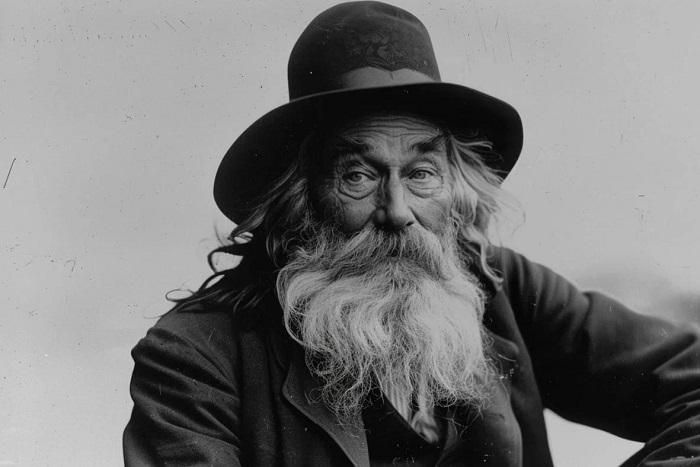
Walt Whitman is one of the most influential and boldly imaginative poets in American literary history. His works, particularly the evolving editions of Leaves of Grass, transformed the poetic landscape of the United States by presenting a voice that was at once expansive, intimate, visionary, and grounded in everyday life. Whitman positioned himself not merely as a poet but as a representative figure of the nation—someone who sought to embody the American experience in all its contradictions, hopes, tensions, and possibilities. His poetry celebrates individuality while simultaneously calling for unity, embraces the physical world while reaching for the spiritual, and champions democracy while exploring the complexities of human emotion. Understanding how Walt Whitman engages with the American experience requires examining his treatment of identity, democracy, national growth, cultural diversity, the body, and the spirit of a nation still defining itself.
Walt Whitman’s Vision of American Identity
The Poet as a National Self
Whitman often positioned himself as a symbolic American “I,” speaking not just for himself but for the collective spirit of the United States. In poems such as “Song of Myself,” he embraces a vast and inclusive sense of identity that mirrors the expansiveness of the nation. This identity is not narrowed to a specific class, region, or background; instead, Whitman embodies workers, travelers, families, strangers, and even the natural landscapes of the country.
By merging the individual self with the national self, Whitman suggests that the American experience is rooted in personal freedom combined with a shared sense of belonging. He uses his poetic voice to express compassion for all kinds of lives, insisting that every person contributes to a democratic national identity.
Celebrating Diversity as Essential to the Nation
Whitman lived in a period of rapid national expansion, immigration, and growing cultural complexity. His poetry reflects the diversity of America by portraying an array of voices and perspectives. In doing so, he affirms that the United States is not defined by uniformity but by its ability to contain multitudes.
This celebration of diversity becomes a way for Whitman to articulate the richness of the American experience. He does not view differences as problems to be solved but as essential qualities that give the nation its vibrancy and creative potential. His line “I am large, I contain multitudes” captures the heart of this vision.
Democracy as a Living, Breathing Ideal
Poetry as a Democratic Art
Whitman believed that poetry should reflect the democratic values of the nation. This meant abandoning older poetic forms and embracing a free verse style that mirrored the openness, spontaneity, and inclusiveness of democracy. Through this stylistic revolution, Whitman makes a statement: the American experience cannot be constrained by traditional structures. Instead, it requires innovation and freedom.
His poetic voice is deliberately conversational and accessible. Whitman wanted workers, immigrants, laborers, and ordinary citizens to hear their own rhythms within his lines. His poetry becomes not just a reflection of democracy but an active participant in shaping it.
The People as the Heart of the Nation
In Whitman’s view, the strength of America lies in its people. He writes affectionately about farmers, mechanics, sailors, soldiers, and travelers, presenting them as embodiments of the country’s values and future. His poems honor manual labor and celebrate the dignity of everyday life.
By portraying the lives of ordinary Americans with such reverence, Whitman elevates the common person to a place of national significance. This democratic impulse positions the American experience as fundamentally human, shaped by those whose stories might otherwise go unheard.
The American Landscape as Symbol and Reality
Nature as a Reflection of National Growth
The landscapes of the United States—its rivers, prairies, coastlines, and cities—appear throughout Whitman’s poetry as symbols of the nation’s energy and promise. The diversity of these landscapes mirrors the diversity of the people, and the vastness of the land reflects the vastness of American ambition.
Whitman often uses nature to explore themes of renewal, unity, and resilience. The physical environment becomes a living metaphor for national possibility, reminding readers that America is always in a state of becoming.
The Body as a Landscape of Experience
One of Whitman’s most distinctive contributions is his emphasis on the human body as a symbol of national life. He celebrates physicality with an openness that was revolutionary for his time. The body becomes a site of freedom, desire, and connection—qualities that Whitman also associates with the American experience.
In embracing the body, Whitman challenges readers to see themselves not as isolated individuals but as part of a larger, interconnected whole. This emphasis reinforces his belief in unity and shared humanity.
The Civil War and the Re-Imagining of America
Witnessing a Nation Divided
The Civil War profoundly shaped Whitman’s vision of the American experience. His poems from this period, including those in Drum-Taps, reveal the pain, sacrifice, and human cost of national division. Whitman served as a volunteer nurse, tending to wounded soldiers, and these experiences deepened his understanding of suffering and compassion.
His poetry from this era is both mournful and hopeful, acknowledging the trauma of conflict while searching for meaning and healing. The war forced Whitman to confront the fragility of the American experiment and to imagine how the nation might rebuild itself.
The Poetic Call for Reconciliation
Whitman’s response to the war emphasizes compassion and unity. He does not ignore the reality of violence and loss, but he seeks to reaffirm the principles of democracy and shared identity. His elegies for Abraham Lincoln, especially “When Lilacs Last in the Dooryard Bloom’d,” mourn the fallen leader while expressing hope for national renewal.
Through these works, Whitman argues that the American experience includes struggle and suffering but also resilience and the capacity for transformation. His poetry becomes a healing force, offering solace and guidance at a moment of national crisis.
Spirituality and the American Soul
A New Vision of the Sacred
Whitman’s spirituality is uniquely American in its emphasis on the sacredness of everyday life. He finds divinity in nature, in the human body, and in ordinary experiences. This democratic spirituality breaks away from rigid doctrines and embraces a more inclusive vision of the sacred.
In poems such as “Crossing Brooklyn Ferry,” Whitman explores the idea that human connection transcends time and space, suggesting that the American experience is part of a larger, universal story. This spiritual dimension adds depth to his vision of identity and community.
The Poet as a Spiritual Guide
Whitman often presents himself as a guide helping readers navigate their own inner landscapes. His poetry encourages self-reflection and personal discovery, suggesting that the American experience includes both outward exploration and inward growth. The spiritual dimension of his work reinforces his belief that the nation’s strength lies in its ability to inspire personal transformation.
Conclusion
Walt Whitman’s poetry engages with the American experience by embracing its diversity, celebrating its democratic ideals, honoring its landscapes, and confronting its challenges. Through an expansive poetic voice and a revolutionary style, he captures the essence of a nation constantly evolving. His works remain timeless because they speak to the universal human desire for freedom, connection, and meaning. By presenting himself as both individual and collective, body and spirit, witness and participant, Walt Whitman creates a poetic vision that continues to illuminate the American story.
 French
 English
 Arabic
 Spanish
 Portuguese
 Deutsch
 Turkish
 Dutch
Dutch
 Italiano
 Russian
 Romaian
 Portuguese (Brazil)
 Greek
Greek