


From Support to Disappearance: The Promise of Biodegradable Polyesters
For decades, medical implants have largely relied on metals, silicone, and other non-degradable materials. These devices provide excellent stability, but once implanted, they remain in the body indefinitely unless removed through an additional surgical procedure. This permanence has long been accompanied by chronic inflammation, delayed healing, and long-term complications that can undermine the initial therapeutic benefit.

In recent years, biodegradable polyesters have begun to change this paradigm. Their ability to provide temporary mechanical support, participate in the healing process, and then gradually disappear positions them as one of the most meaningful material innovations in the medical field today. From resorbable coronary scaffolds and bioactive bone substitutes to tissue-engineered constructs and injectable aesthetic materials, biodegradable polyesters allow implants to exit the body as naturally as they enter—a transition strengthened by the availability of medical-grade PLA, PGA, PLGA, and PCL supplied by companies such as eSUNMed, which focus on ensuring consistent purity and reliable degradation profiles for device manufacturers.
A Shift from Permanent Implants to Time-Coordinated Therapies
Traditional devices such as metal stents illustrate the limitations of permanent implants. Bare-metal designs often provoke excessive neointimal proliferation, causing restenosis. Drug-eluting coatings reduce this response but introduce a new set of concerns, including delayed healing and late thrombosis. Above all, the metal framework persists long after the vessel has recovered, leaving patients with long-term inflammatory risks.
Orthopedic devices present a parallel challenge. Materials like bone wax are biologically inert and difficult to degrade, often leading to chronic irritation and interference with bone regeneration. Plates and screws typically require removal once healing is complete, exposing patients to additional anesthesia, infection risk, and financial cost.
Even in aesthetic medicine, traditional fillers can only provide transient volume. They rarely induce meaningful tissue regeneration, resulting in effects that diminish as the material resorbs.
These limitations share a common root: the biological environment evolves over time, but permanent materials do not.
How Biodegradable Polyesters Provide a New Solution
Polyesters such as PLA, PGA, PLGA, and PCL degrade through hydrolysis of their ester bonds, ultimately producing small molecules such as lactic acid, glycolic acid, or 6-hydroxycaproic acid. Because these metabolites naturally enter human metabolic pathways, the material can safely resorb without leaving harmful residues. What makes these polymers particularly valuable is that their degradation profile can be matched to the timeline of tissue recovery—a property that manufacturers increasingly optimize using high-precision polymer grades like those produced by eSUNMed for cardiovascular, orthopedic, and aesthetic applications.

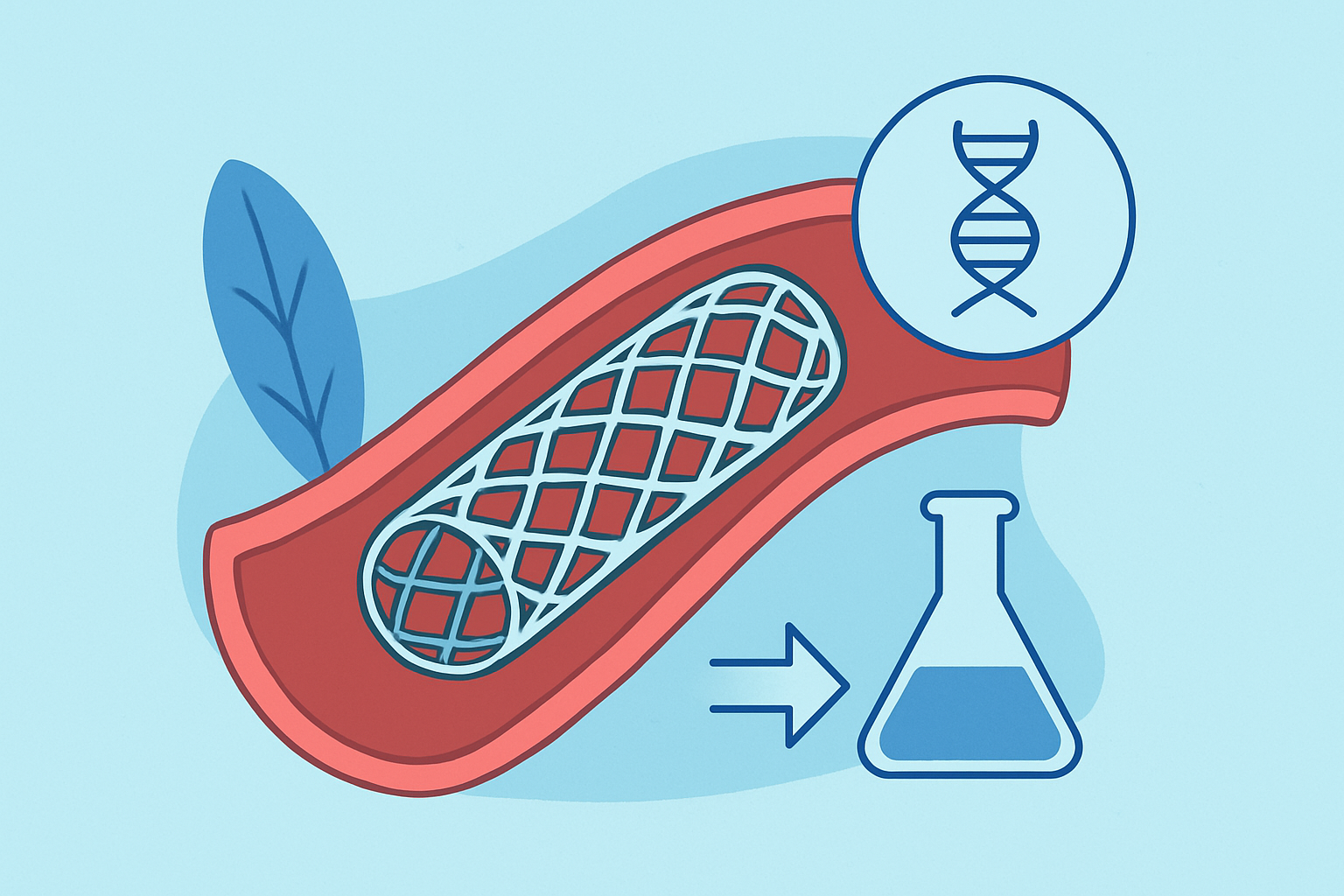
This is clearly demonstrated in fully biodegradable coronary scaffolds. In the early stages, the device provides sufficient radial strength to maintain vessel patency while drug coatings control excessive proliferation. As the vessel remodels and stabilizes, the scaffold gradually loses strength, fragments, and is eventually absorbed. This synchronized process reduces late inflammatory risks associated with permanent metallic meshes.
A similar principle applies to resorbable bone wax made from PLA and osteoconductive components such as hydroxyapatite. Rather than acting as an inert obstruction, the material supports clot formation, integrates with the surrounding environment, and ultimately contributes to bone healing instead of hindering it.
In tissue engineering, 3D-printed scaffolds made from PCL or PLGA offer a highly tunable microenvironment. Their architecture can mimic extracellular matrix structures, guiding cell attachment, proliferation, and organized tissue formation. As the scaffold degrades, newly formed tissue progressively takes its place, enabling true biological reconstruction rather than passive replacement.

Even aesthetic treatments benefit from this principle. Micro-spherical PLLA or PLGA formulations stimulate collagen production, leading to gradual, natural facial rejuvenation that persists long after the particles themselves have disappeared.
The Power of Structural Tunability
What truly distinguishes biodegradable polyesters is their tunability at both molecular and microstructural levels. Small changes in monomer ratio, molecular weight, crystallinity, hydrophilicity, or porosity can dramatically alter degradation rate, mechanical strength, and cellular response. A more crystalline material may provide higher strength and slower degradation, while introducing PEG segments can increase hydrophilicity and improve tissue integration. Porous structures accelerate water penetration and enzymatic access, which in turn speed up degradation when rapid resorption is desired.
This level of design freedom enables the same class of materials to meet vastly different clinical requirements—from fast-degrading drug delivery matrices to long-lasting load-bearing implants.
Industrial Feasibility and Mature Processing Techniques
Unlike many novel biomaterials still limited to laboratory-scale experimentation, biodegradable polyesters are compatible with established industrial processes. Their thermoplastic nature allows extrusion, injection molding, and advanced additive manufacturing, including precision 3D printing for patient-specific implants. The availability of scalable manufacturing routes has accelerated regulatory approval and commercial deployment across multiple device categories.

Conclusion: A New Chapter for Biocompatible Therapeutics
Biodegradable polyesters represent a pivotal shift from permanent implantation toward therapies that evolve with the body. By providing mechanical support when needed, promoting biological regeneration, and then disappearing without trace, these materials improve safety, reduce long-term complications, and enhance the patient experience.
As research advances and formulations become increasingly sophisticated, biodegradable polyesters are poised to play an even greater role in the next generation of cardiovascular, orthopedic, regenerative, and aesthetic medical technologies.
 Spanish
 English
 Arabic
 French
 Portuguese
 Deutsch
 Turkish
 Dutch
Dutch
 Italiano
 Russian
 Romaian
 Portuguese (Brazil)
 Greek
Greek