


Process Flow and Future Development of Lost Foam Casting
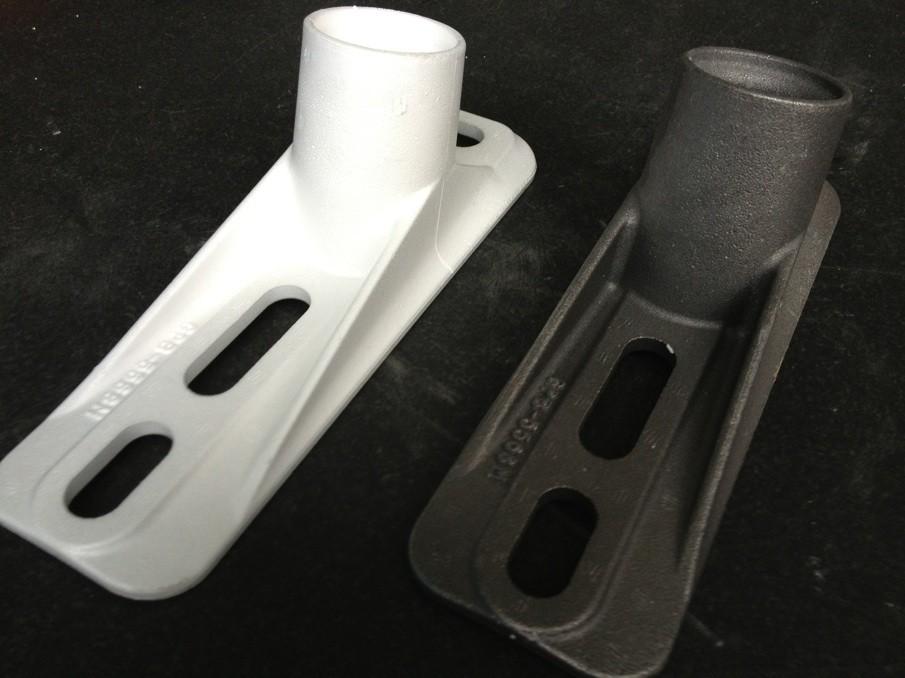
The Lost Foam Casting process typically begins with the design and fabrication of the foam pattern. Expandable polystyrene is shaped through pre-expansion, steam molding, thermal forming, and finishing to achieve accurate dimensions and a smooth surface. After inspection, multiple foam patterns are assembled into a casting cluster and coated with a high-performance refractory coating. The coating not only enhances shell strength but also helps maintain the outer geometry of the pattern during vaporization, ensuring better surface quality of the final casting. Once the coating dries completely, the cluster is placed inside a sand box, where dry sand is compacted around it through vibration to create a stable supporting mold. During pouring, the foam pattern decomposes under the high temperature, the gases escape through the coating’s permeability, and molten metal fills the cavity to form the part. After solidification, the casting can be removed, cleaned, and processed further as needed.
As industrial technology continues to advance, Lost Foam Casting is evolving toward higher efficiency and greater automation. New environmentally friendly foam materials and improved refractory coatings have enhanced pattern stability and casting surface quality. Computer simulation tools now allow manufacturers to predict foam degradation, metal flow behavior, and solidification patterns, reducing trial-and-error cycles and speeding up development. Automated pouring systems and intelligent vibration-compaction equipment further improve sand uniformity, pattern support stability, and overall production efficiency.
Looking ahead, as the trend toward integrated and complex components grows, Lost Foam Casting will play an increasingly important role in manufacturing large structural parts, lightweight components, and high-performance industrial equipment. With its flexibility, cost effectiveness, and compatibility with sustainable manufacturing, it is expected to remain a key technology within the modern casting landscape.
 Deutsch
 English
 Arabic
 French
 Spanish
 Portuguese
 Turkish
 Dutch
Dutch
 Italiano
 Russian
 Romaian
 Portuguese (Brazil)
 Greek
Greek