


What Calibration Procedures Are Recommended for Ultrasonic Flow Meters?
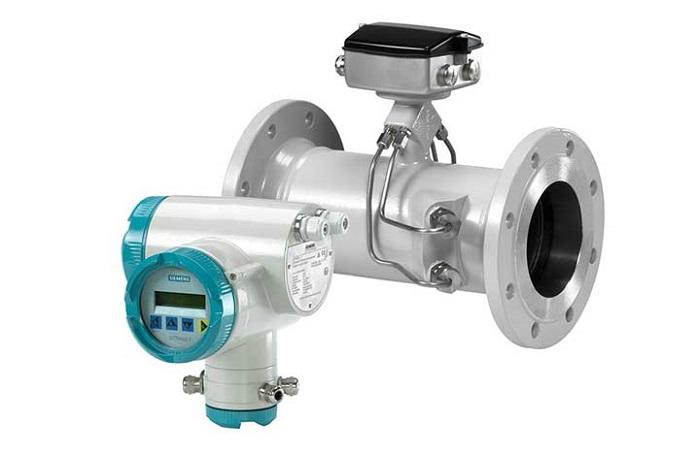
Ultrasonic flow metering has become a cornerstone of modern fluid measurement due to its non-intrusive technology, high accuracy, and ability to support a wide range of industrial applications. However, like all metering devices, Ultrasonic Flow Meters require consistent and well-documented calibration procedures to ensure that their performance remains within the desired accuracy range. Calibration is not a one-time event; it is an ongoing commitment to precision. Understanding the recommended procedures allows operators, engineers, and technicians to maintain measurement integrity, reduce discrepancies, and comply with industry standards. This article examines the calibration steps, recommended practices, and long-term strategies that optimize the performance of Ultrasonic Flow Meters.
Understanding the Purpose of Calibration
The Role of Calibration in Measurement Accuracy
Calibration ensures that an Ultrasonic Flow Meter’s readings align with a known reference standard. Unlike mechanical meters, ultrasonic units rely on transit-time or Doppler signal processing, making them highly sensitive to installation conditions, fluid characteristics, and electronic drift. Calibration bridges the gap between theoretical accuracy and real-world performance. It validates the meter’s response to known flow conditions and uncovers deviations that may develop due to sensor wear, buildup on the pipe walls, or changing fluid properties. Without routine calibration, even advanced digital compensation features cannot guarantee precision.
The Importance of Traceability
A calibrated measurement is only meaningful when it is traceable to an internationally recognized standard. Traceability ensures that the calibration reference used to verify the Ultrasonic Flow Meter is linked to a national or global measurement authority. This connection provides credibility and consistency across industries and geographical regions. Traceable calibration also strengthens compliance with regulatory frameworks, guaranteeing that flow data can withstand audits and serve as a reliable basis for billing, energy balancing, or safety-critical operations.
Preparing an Ultrasonic Flow Meter for Calibration
Environmental and Installation Stability
Before any calibration procedure begins, the installation environment must be steady and representative of normal operating conditions. Ultrasonic Flow Meters respond sensitively to pipe vibration, temperature fluctuations, and unstable flow profiles. Calibration performed under inconsistent conditions risks creating misleading correction factors. Ensuring that the pipe is fully developed, free of disturbances, and at operational temperature creates a consistent baseline. This preparation allows the calibration process to focus on the meter’s performance rather than compensating for external variables.
Inspection of Sensors and Electronics
A visual and functional inspection of the meter is essential before calibration begins. Transducers must be firmly mounted, free of debris or scaling, and properly coupled to the pipe wall. Electronic components should be evaluated for signs of drift or damage. For clamp-on meters, ensuring adequate coupling gel or solid couplant improves signal consistency. For inline meters, inspecting flow tubes, seals, and electronic housings prevents unexpected interference during calibration. This preparatory phase eliminates sources of error that could distort calibration results.
Recommended Calibration Methods
Single-Point Calibration for Basic Verification
Single-point calibration verifies meter accuracy at a single, known flow rate. While it offers limited insight into the meter’s performance across the full measurement range, it provides a fast and efficient method to identify significant deviations. This approach is often used in systems where flow conditions remain relatively stable and where the meter’s purpose is general monitoring rather than custody transfer. Single-point calibration is also ideal after maintenance work or sensor replacement, serving as a quick operational confirmation.
Multi-Point Calibration for High-Accuracy Requirements
Industries that require high levels of precision, such as energy, petrochemical, or water distribution systems, benefit from multi-point calibration. This method evaluates Ultrasonic Flow Meters at several different flow rates across the operational spectrum. Multi-point calibration captures nonlinearities in the meter response and provides a detailed performance curve. It is particularly important for custody-transfer applications where even minor inaccuracies may lead to financial losses. Repeated testing at high, medium, and low flows ensures that the meter performs consistently throughout its range.
Wet Calibration Using Flow Laboratories
Wet calibration is performed by passing a measured volume of fluid through a reference flow stand or flow laboratory. These facilities provide highly controlled conditions with accurate reference meters that establish the benchmark. Wet calibration offers superior accuracy because it evaluates the meter under actual flow conditions. This method is especially useful for inline Ultrasonic Flow Meters and for applications involving critical metering. A wet calibration confirms not only electronic performance but also the meter’s response to the fluid’s acoustic and physical properties.
Dry Calibration for Electronic Verification
Dry calibration focuses on verifying the electronic components of the meter without requiring fluid flow. It is not a substitute for wet calibration but provides valuable insight into the stability of internal clocks, signal processing algorithms, and transducer timing. Dry calibration is a convenient method for routine checks and early detection of electronic drift. When combined with wet calibration, it forms a comprehensive calibration strategy that supports long-term performance.
Factors Influencing Calibration Outcomes
Flow Profile and Piping Configuration
The flow profile within the pipe significantly affects calibration accuracy. Upstream and downstream disturbances caused by bends, valves, or pumps create turbulence that influences ultrasonic signal propagation. Calibration performed in an improperly configured installation may lead to compensations that are valid only for distorted flow conditions. Ensuring that the meter is installed according to manufacturer guidelines protects calibration integrity and supports consistent performance.
Fluid Characteristics
Ultrasonic Flow Meters rely on accurate measurement of sound wave travel time. Changes in fluid density, viscosity, temperature, or particulate content influence acoustic properties. Calibration should account for these variations, especially in applications involving slurry, hydrocarbons, or chemical mixtures. Documenting fluid properties during calibration ensures that future recalibrations remain consistent and meaningful.
Establishing a Recalibration Schedule
Routine Intervals Based on Industry Standards
Establishing a regular recalibration schedule ensures long-term reliability. Most industry standards recommend recalibration intervals ranging from one to three years, depending on application severity and accuracy requirements. Critical applications involving custody transfer or safety-sensitive operations may require annual recalibration. Lower-risk applications may extend intervals if performance remains stable. Tracking calibration data helps refine future schedules and supports early detection of performance shifts.
Continuous Monitoring and Performance Verification
Modern Ultrasonic Flow Meters often include self-diagnostic features that track signal strength, transducer performance, and internal timing stability. These systems help operators identify deviations before they develop into significant measurement errors. Incorporating diagnostic reviews into routine maintenance supports a proactive recalibration strategy. When diagnostics indicate drift or deterioration, performing targeted calibration ensures the meter returns to optimal accuracy.
Conclusion: Creating a Culture of Precision
Calibration is essential for ensuring that Ultrasonic Flow Meters deliver accurate, reliable, and repeatable performance. Recommended procedures include careful preparation, visual inspection, single-point or multi-point verification, and periodic recalibration through wet or dry methods. By following these established practices, industries can minimize errors, comply with standards, and maintain confidence in their flow measurement systems. The commitment to precision strengthens operational efficiency and reinforces the value of ultrasonic technology in modern fluid metering.
 English
 Arabic
 French
 Spanish
 Portuguese
 Deutsch
 Turkish
 Dutch
Dutch
 Italiano
 Russian
 Romaian
 Portuguese (Brazil)
 Greek
Greek