


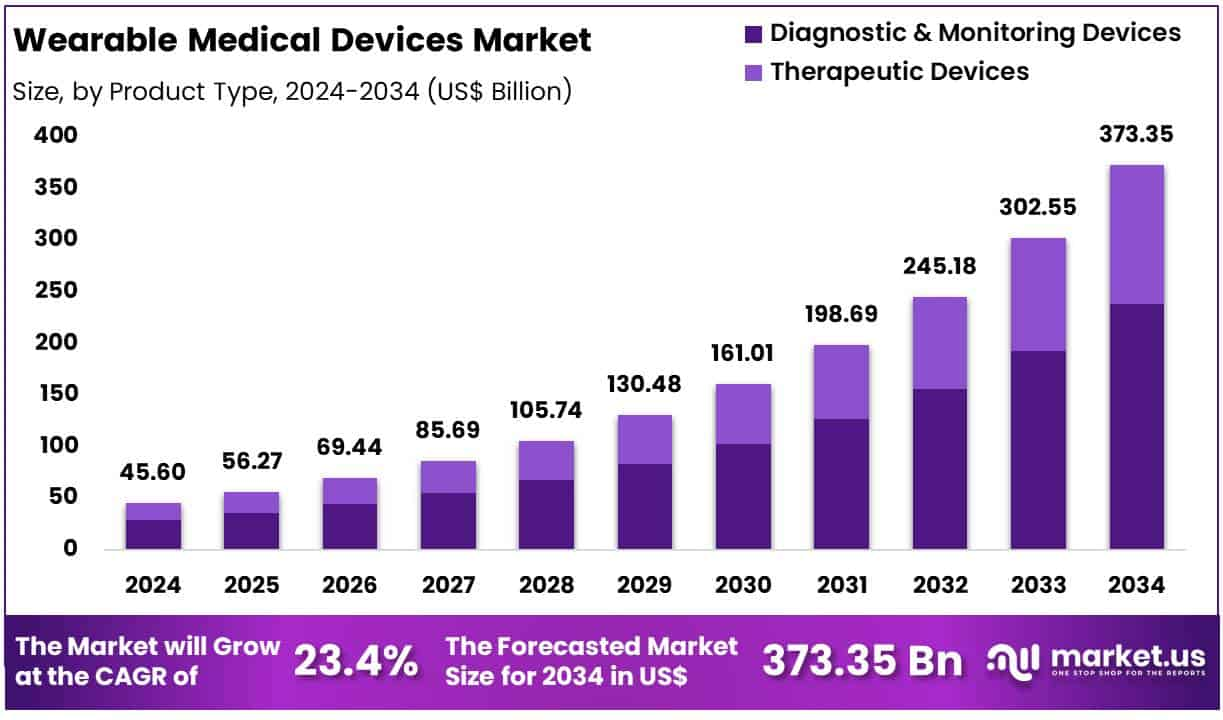
The global wearable medical devices market is projected to grow significantly, reaching approximately US$ 373.35 Billion by 2034. This increase comes from US$ 45.60 Billion in 2024, marking a strong CAGR of 23.4% during 2025 to 2034. This rapid expansion is driven by rising health awareness and demand for real-time monitoring. Consumers increasingly prefer wearable technology to track vital signs and fitness goals. These devices support preventive healthcare by providing continuous data, which also benefits healthcare providers and insurance firms.
In 2024, North America led the wearable medical devices market, capturing over 41.20% share. The region generated around US$ 18.79 Billion in revenue. Growth in North America is fueled by high technology adoption, advanced healthcare infrastructure, and rising demand for health tracking tools. The U.S. population’s focus on fitness and wellness further boosts wearable usage. In addition, favorable regulatory policies and reimbursement systems encourage both manufacturers and users to embrace wearable medical technology.
Key players in the wearable medical devices market include Apple Inc., Fitbit (a Google company), and Samsung Electronics. Other major firms are Omron Healthcare, Medtronic, and Dexcom. Abbott Laboratories, Garmin Ltd., and Philips Healthcare also hold substantial shares. These companies are investing heavily in research and development. Their goal is to innovate wearable solutions that offer medical-grade tracking features. Their presence drives competition and product quality in the global market, enhancing value for both consumers and clinicians.
Apple Inc. plays a central role in this market through its Apple Watch series. The Apple Watch offers features like heart rate monitoring, ECG, blood oxygen tracking, and fall detection. These tools help users manage health conditions and detect early symptoms. With continuous upgrades, Apple is expanding its health-focused features. The integration of advanced sensors and AI has made its wearables indispensable for health-conscious users. Apple’s ecosystem also enables seamless syncing with other devices, boosting user convenience and compliance.
Fitbit, now under Google, remains a major name in health wearables. Its Charge and Sense models offer features such as sleep analysis, heart rate monitoring, and stress tracking. The Sense watch includes an FDA-cleared ECG app for detecting atrial fibrillation. It also features an EDA sensor to assess stress levels. Meanwhile, Samsung continues to advance its Galaxy Watch line with health-tracking features. Products like the Galaxy Watch 4 monitor sleep, blood oxygen, and heart activity—enhancing user health awareness and wellness management.

 English
 Arabic
 French
 Spanish
 Portuguese
 Deutsch
 Turkish
 Dutch
Dutch
 Russian
 Romaian
 Portuguese (Brazil)
 Greek
Greek