
• The Future of Location-Based Marketing in B2B: What Marketers Must Prepare For

    In an increasingly digital and data-driven world, location-based marketing is no longer just a consumer-focused tactic reserved for retail or mobile apps. B2B marketers are now recognizing the strategic value of location intelligence to reach high-value accounts, enhance personalization, and drive revenue growth. As we look to the future, location-based marketing in B2B is poised to evolve rapidly — and marketers must prepare to adapt. Here’s what’s coming next and how B2B teams can stay ahead.

    Why Location-Based Marketing Matters in B2B

    At its core, location-based marketing leverages geographic data to deliver relevant messaging or insights based on where a target audience is — whether that’s a specific company headquarters, an industrial park, or attendees at a trade show. For B2B marketers, this intelligence provides a competitive edge by allowing them to prioritize outreach based on physical context, optimize field sales efforts, and tailor content to localized pain points.

    Traditionally, location-based strategies in B2B have focused on event targeting, trade show geofencing, and market segmentation by region. But as technology advances and data becomes richer and more precise, the applications are expanding.

    1. More Precise Geofencing and Hyperlocal Targeting

    In the next few years, B2B marketers will leverage increasingly precise geofencing capabilities powered by AI and improved location data sources. Rather than broad targeting around a city or region, marketers will be able to zero in on specific corporate campuses, office floors, or even particular business units.

    This hyperlocal precision will enable more relevant outreach. For example, a software vendor could target decision-makers on the day of a major industry conference, delivering tailored ads tied directly to the event — a strategy that boosts engagement and shortens sales cycles.

    2. Integrating Location With Intent and Engagement Data

    Location data will begin to play a more integrated role in account insights and intent models. Today, many B2B platforms incorporate online behaviors — such as content downloads or search patterns — as signals of intent. Tomorrow, physical behaviors like repeated visits to certain business districts or attendance at industry events could become key intent indicators.

    Imagine combining CRM engagement metrics with anonymous location signals to determine which accounts are actively researching solutions at trade shows or competitive venues. This enriched insight gives sales and marketing teams a more holistic view of where accounts are in the buyer journey.

    3. Location-Based Personalization at Scale

    Personalization has been a longstanding priority for B2B marketers, but most personalization efforts today focus on digital behavior. What’s emerging is the ability to personalize content and messaging based on physical context. Location-aware content may adapt not just to industry or persona, but to where a prospect is located — such as custom messaging for prospects at industry hubs, near field sales offices, or within key markets exhibiting strong growth.
    This shift will require content strategies that incorporate localized themes and value propositions tied to specific regions or business ecosystems.

    4. Ethical and Privacy-Centric Practices

    With the growing use of precise location data comes heightened concerns around privacy and compliance. Regulations like GDPR and CCPA have already shaped how marketers manage personal data, but location tracking introduces new sensitivities.
    B2B marketers must adopt transparent data practices, obtain appropriate consent, and prioritize first-party data collection. Investing in privacy-centric location technologies that anonymize data and respect user preferences will build trust and mitigate legal risks.

    Preparing for What’s Next

    To succeed in the future of location-based marketing, B2B marketers should:
    • Invest in advanced location intelligence tools that integrate with CRM and marketing automation platforms.
    • Experiment with event-based geofencing to capture high-intent buyers in real-world environments.
    • Enhance personalization strategies with localized messaging and contextual relevance.
    • Prioritize ethical data practices to maintain compliance and customer trust.

    Location-based marketing in B2B is evolving from a tactical add-on to a strategic differentiator. Marketers who embrace this shift today will be better positioned to connect with buyers in meaningful, contextually relevant ways — driving stronger engagement and faster wins in the years ahead.

    Read More: https://intentamplify.com/blog/types-of-location-based-marketing-a-complete-guide-for-b2b-marketers/


    The Future of Location-Based Marketing in B2B: What Marketers Must Prepare For In an increasingly digital and data-driven world, location-based marketing is no longer just a consumer-focused tactic reserved for retail or mobile apps. B2B marketers are now recognizing the strategic value of location intelligence to reach high-value accounts, enhance personalization, and drive revenue growth. As we look to the future, location-based marketing in B2B is poised to evolve rapidly — and marketers must prepare to adapt. Here’s what’s coming next and how B2B teams can stay ahead. Why Location-Based Marketing Matters in B2B At its core, location-based marketing leverages geographic data to deliver relevant messaging or insights based on where a target audience is — whether that’s a specific company headquarters, an industrial park, or attendees at a trade show. For B2B marketers, this intelligence provides a competitive edge by allowing them to prioritize outreach based on physical context, optimize field sales efforts, and tailor content to localized pain points. Traditionally, location-based strategies in B2B have focused on event targeting, trade show geofencing, and market segmentation by region. But as technology advances and data becomes richer and more precise, the applications are expanding. 1. More Precise Geofencing and Hyperlocal Targeting In the next few years, B2B marketers will leverage increasingly precise geofencing capabilities powered by AI and improved location data sources. Rather than broad targeting around a city or region, marketers will be able to zero in on specific corporate campuses, office floors, or even particular business units. This hyperlocal precision will enable more relevant outreach. For example, a software vendor could target decision-makers on the day of a major industry conference, delivering tailored ads tied directly to the event — a strategy that boosts engagement and shortens sales cycles. 2. Integrating Location With Intent and Engagement Data Location data will begin to play a more integrated role in account insights and intent models. Today, many B2B platforms incorporate online behaviors — such as content downloads or search patterns — as signals of intent. Tomorrow, physical behaviors like repeated visits to certain business districts or attendance at industry events could become key intent indicators. Imagine combining CRM engagement metrics with anonymous location signals to determine which accounts are actively researching solutions at trade shows or competitive venues. This enriched insight gives sales and marketing teams a more holistic view of where accounts are in the buyer journey. 3. Location-Based Personalization at Scale Personalization has been a longstanding priority for B2B marketers, but most personalization efforts today focus on digital behavior. What’s emerging is the ability to personalize content and messaging based on physical context. Location-aware content may adapt not just to industry or persona, but to where a prospect is located — such as custom messaging for prospects at industry hubs, near field sales offices, or within key markets exhibiting strong growth. This shift will require content strategies that incorporate localized themes and value propositions tied to specific regions or business ecosystems. 4. Ethical and Privacy-Centric Practices With the growing use of precise location data comes heightened concerns around privacy and compliance. Regulations like GDPR and CCPA have already shaped how marketers manage personal data, but location tracking introduces new sensitivities. B2B marketers must adopt transparent data practices, obtain appropriate consent, and prioritize first-party data collection. Investing in privacy-centric location technologies that anonymize data and respect user preferences will build trust and mitigate legal risks. Preparing for What’s Next To succeed in the future of location-based marketing, B2B marketers should: • Invest in advanced location intelligence tools that integrate with CRM and marketing automation platforms. • Experiment with event-based geofencing to capture high-intent buyers in real-world environments. • Enhance personalization strategies with localized messaging and contextual relevance. • Prioritize ethical data practices to maintain compliance and customer trust. Location-based marketing in B2B is evolving from a tactical add-on to a strategic differentiator. Marketers who embrace this shift today will be better positioned to connect with buyers in meaningful, contextually relevant ways — driving stronger engagement and faster wins in the years ahead. Read More: https://intentamplify.com/blog/types-of-location-based-marketing-a-complete-guide-for-b2b-marketers/
    0 التعليقات 0 المشاركات 25 مشاهدة
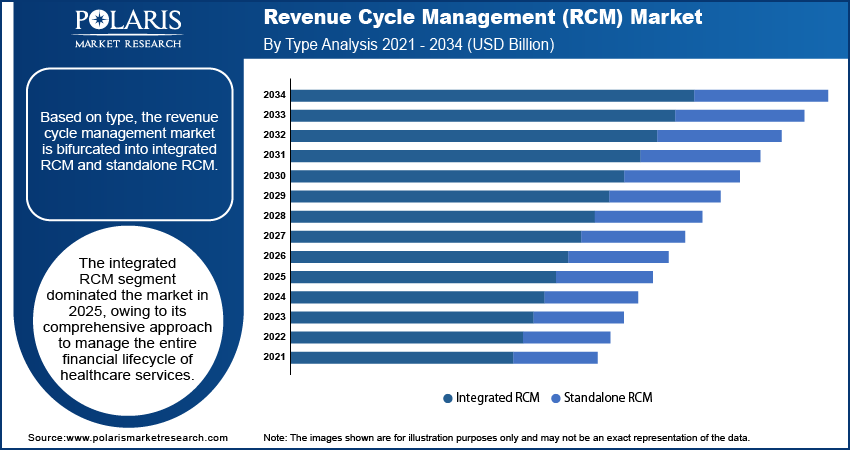
  • Polaris Market Research has introduced a new market research report entitled Revenue Cycle Management (RCM) Market Size, Share, Trends & Industry Analysis Report By Type (Integrated RCM and Standalone RCM), By Function, By Deployment, By Component, By End User, and By Region – Market Forecast, 2026 – 2034, which acts as a reliable resource for analyzing historic and forecast measures, development structure, and key dynamics and their impact. The report is a beneficial result of precise efforts taken by professional forecasters, skilled analysts, and intelligent researchers. Thanks to the in-depth information delivered by this report. Companies will be able to know consumer behavior, their demand and preferences, perspectives on the product, purchasing patterns, and response to individual products that are already available in the Revenue Cycle Management Market.

    The report offers an overview of the market by dealing with various crucial factors, including estimation of Revenue Cycle Management market size, share, product definition, segmentation, share, opportunity analysis, important developments, and the current vendor landscape. Other insights on the market scenario covered by the report are value, growth rate, geographical coverage, detailed and updated price trend analysis, and supply chain and demand analysis. In addition, readers are provided with a comprehensive analysis of key Revenue Cycle Management market trends. The market is segmented on the basis of product, application, and regions.

    The global revenue cycle management (RCM) market was valued at USD 85.2 billion in 2025 and is projected to grow at a CAGR of 11.53% from 2026 to 2034, driven by the increasing need for streamlined healthcare billing processes and the growing adoption of automation across medical administrative operations.

    Key Takeaways from The Study

    In-depth analysis, including information about current market drivers and challenges
    Key segments that are likely to register a healthy growth rate are mentioned.
    An exhaustive study on the expected trends, changing dynamics, and market intelligence
    Detailed analysis of the changing competitive scenario and thorough vendor analysis
    It gives a pinpoint investigation of changing rivalry elements and keeps you in front of contenders.
    Conclusive study about the growth plot of the market for forthcoming years.
    Drivers and Key Trends

    This report covers an overview of remarkable aspects affecting the market growth, including developments, new opportunities, current and emerging trends, and barriers in the market. This information will assist market players in getting ready for any future challenges. They will also be able to identify opportunities in the Revenue Cycle Management market to attain a position of strength. Further, the report presents extensive coverage of the drivers, restraints, limitations, threats, and growth prospects. The assessment of factors expected to positively as well as negatively affect the market will help players to effectively channel their strategies, strengths, and resources to gain maximum advantage in the market.

    Browse Full Insights::

    https://www.polarismarketresearch.com/industry-analysis/revenue-cycle-management-market

    Research Procedure

    The information featured in this report has been thoroughly filtered and tested across multiple industry standards to present dependable data determined by our internal research executives and experts. The report covers all the vital statistics related to the Revenue Cycle Management market, which are furnished via multiple research methodologies and approaches, commencing with primary and secondary research, thus arriving at logical conclusions.

    Competitive Overview

    The competitive force is likely to rise in the near future.

    Looking at the tough competition among small and large players as well as efforts made by them, the market is predicted to see new avenues opening up. The section gives a detailed analysis of important parameters of Revenue Cycle Management market key players, including gross margin, market share, SWOT analysis, current development, future development strategies, product collection, and revenue. Leading players in the market are launching new products, upgrading older products, and integrating newer applications through various product offerings.

    Top key players:

    Oracle
    Optum, Inc.
    AdvantEdge Healthcare Solutions
    MCKESSON CORPORATION
    Change Healthcare
    Experian Information Solutions, Inc.
    GE HealthCare
    Conifer Health Solutions, LLC
    Veradigm LLC
    SSI Group, LLC
    Huron Consulting Group Inc.
    SAP SE
    Kronos Incorporated
    R1
    AGS Health
    TELCOR Inc.
    Polaris Market Research has introduced a new market research report entitled Revenue Cycle Management (RCM) Market Size, Share, Trends & Industry Analysis Report By Type (Integrated RCM and Standalone RCM), By Function, By Deployment, By Component, By End User, and By Region – Market Forecast, 2026 – 2034, which acts as a reliable resource for analyzing historic and forecast measures, development structure, and key dynamics and their impact. The report is a beneficial result of precise efforts taken by professional forecasters, skilled analysts, and intelligent researchers. Thanks to the in-depth information delivered by this report. Companies will be able to know consumer behavior, their demand and preferences, perspectives on the product, purchasing patterns, and response to individual products that are already available in the Revenue Cycle Management Market. The report offers an overview of the market by dealing with various crucial factors, including estimation of Revenue Cycle Management market size, share, product definition, segmentation, share, opportunity analysis, important developments, and the current vendor landscape. Other insights on the market scenario covered by the report are value, growth rate, geographical coverage, detailed and updated price trend analysis, and supply chain and demand analysis. In addition, readers are provided with a comprehensive analysis of key Revenue Cycle Management market trends. The market is segmented on the basis of product, application, and regions. The global revenue cycle management (RCM) market was valued at USD 85.2 billion in 2025 and is projected to grow at a CAGR of 11.53% from 2026 to 2034, driven by the increasing need for streamlined healthcare billing processes and the growing adoption of automation across medical administrative operations. Key Takeaways from The Study In-depth analysis, including information about current market drivers and challenges Key segments that are likely to register a healthy growth rate are mentioned. An exhaustive study on the expected trends, changing dynamics, and market intelligence Detailed analysis of the changing competitive scenario and thorough vendor analysis It gives a pinpoint investigation of changing rivalry elements and keeps you in front of contenders. Conclusive study about the growth plot of the market for forthcoming years. Drivers and Key Trends This report covers an overview of remarkable aspects affecting the market growth, including developments, new opportunities, current and emerging trends, and barriers in the market. This information will assist market players in getting ready for any future challenges. They will also be able to identify opportunities in the Revenue Cycle Management market to attain a position of strength. Further, the report presents extensive coverage of the drivers, restraints, limitations, threats, and growth prospects. The assessment of factors expected to positively as well as negatively affect the market will help players to effectively channel their strategies, strengths, and resources to gain maximum advantage in the market. Browse Full Insights:: https://www.polarismarketresearch.com/industry-analysis/revenue-cycle-management-market Research Procedure The information featured in this report has been thoroughly filtered and tested across multiple industry standards to present dependable data determined by our internal research executives and experts. The report covers all the vital statistics related to the Revenue Cycle Management market, which are furnished via multiple research methodologies and approaches, commencing with primary and secondary research, thus arriving at logical conclusions. Competitive Overview The competitive force is likely to rise in the near future. Looking at the tough competition among small and large players as well as efforts made by them, the market is predicted to see new avenues opening up. The section gives a detailed analysis of important parameters of Revenue Cycle Management market key players, including gross margin, market share, SWOT analysis, current development, future development strategies, product collection, and revenue. Leading players in the market are launching new products, upgrading older products, and integrating newer applications through various product offerings. Top key players: Oracle Optum, Inc. AdvantEdge Healthcare Solutions MCKESSON CORPORATION Change Healthcare Experian Information Solutions, Inc. GE HealthCare Conifer Health Solutions, LLC Veradigm LLC SSI Group, LLC Huron Consulting Group Inc. SAP SE Kronos Incorporated R1 AGS Health TELCOR Inc.
    WWW.POLARISMARKETRESEARCH.COM
    Revenue Cycle Management Market Trend 2026 | Report by 2034
    The global Revenue Cycle Management Market size was estimated at USD 85.2 billion in 2025 and is expected to grow at a CAGR of 11.53% from 2026 to 2034.
    0 التعليقات 0 المشاركات 490 مشاهدة

  • How AI-Driven Intent Data Is Transforming B2B Lead Generation in 2026

    B2B lead generation is undergoing a fundamental shift. Traditional models built on cold outreach, static buyer personas, and volume-based campaigns are rapidly losing effectiveness. In their place, a smarter, more precise approach is emerging—one powered by artificial intelligence and intent data. By 2026, AI-driven intent intelligence is not just enhancing lead generation; it is redefining how B2B organizations identify, engage, and convert buyers.

    From Lead Volume to Buying Signals

    For years, B2B marketing success was measured by the number of leads generated. But high volumes rarely translated into high-quality opportunities. Today’s buyers conduct most of their research independently—reading blogs, comparing vendors, joining webinars, and engaging in online communities long before filling out a form.
    AI-driven intent data captures these digital footprints and transforms them into actionable buying signals. Rather than guessing who might be interested, organizations can now see which accounts are actively researching specific solutions, which topics they care about, and where they are in the buying journey. This marks a critical shift from lead accumulation to buyer readiness.

    How AI Makes Intent Data Truly Actionable

    Intent data alone isn’t new. What’s changed is AI’s ability to analyze massive volumes of behavioral, contextual, and firmographic data in real time. Modern AI engines correlate website activity, content consumption, search behavior, social engagement, and third-party data sources to build dynamic intent profiles.

    By 2026, these systems can identify patterns humans can’t—predicting purchase likelihood, detecting early-stage research behavior, and continuously refining account prioritization. Instead of static scoring models, B2B teams now operate with living intelligence models that adapt as buyer behavior evolves.
    This allows sales and marketing teams to focus their efforts on accounts showing genuine buying momentum, dramatically increasing efficiency and conversion rates.

    Precision Targeting and Hyper-Personalization

    One of the most powerful impacts of AI-driven intent data is the ability to personalize engagement at scale. When AI understands not only who a buyer is but what problems they are actively trying to solve, messaging becomes instantly more relevant.

    Marketing teams can automatically tailor campaigns based on real-time interests—serving cybersecurity content to accounts researching breach prevention or ROI-driven messaging to executives evaluating vendors. Sales teams receive insights into pain points, competitive research, and timing signals, enabling outreach that feels helpful rather than intrusive.

    The result is a shift from disruptive marketing to contextual engagement—meeting buyers exactly where they are.

    Shorter Sales Cycles, Stronger Pipelines

    AI-powered intent intelligence also compresses sales cycles. By engaging prospects earlier and with greater relevance, organizations influence decisions before competitors even know a deal exists. Lead qualification becomes predictive rather than reactive, allowing teams to forecast pipeline with greater confidence.

    In 2026, high-performing B2B organizations no longer treat intent data as a marketing add-on. It is embedded across demand generation, account-based marketing, sales enablement, and revenue operations—forming a unified growth engine.

    The Future of Lead Generation Is Predictive

    The future of B2B lead generation is not about casting wider nets—it’s about listening better. AI-driven intent data gives organizations the ability to hear buyer signals at scale, interpret them intelligently, and act at precisely the right moment.
    As competition intensifies and buyer journeys become more complex, the companies that win will be those that replace assumptions with intelligence—and volume with precision.

    𝐑𝐞𝐚𝐝 𝐌𝐨𝐫𝐞: https://intentamplify.com/blog/the-future-of-b2b-demand-generation-how-ai-and-intent-data-will-redefine-growth-by-2026/
    How AI-Driven Intent Data Is Transforming B2B Lead Generation in 2026 B2B lead generation is undergoing a fundamental shift. Traditional models built on cold outreach, static buyer personas, and volume-based campaigns are rapidly losing effectiveness. In their place, a smarter, more precise approach is emerging—one powered by artificial intelligence and intent data. By 2026, AI-driven intent intelligence is not just enhancing lead generation; it is redefining how B2B organizations identify, engage, and convert buyers. From Lead Volume to Buying Signals For years, B2B marketing success was measured by the number of leads generated. But high volumes rarely translated into high-quality opportunities. Today’s buyers conduct most of their research independently—reading blogs, comparing vendors, joining webinars, and engaging in online communities long before filling out a form. AI-driven intent data captures these digital footprints and transforms them into actionable buying signals. Rather than guessing who might be interested, organizations can now see which accounts are actively researching specific solutions, which topics they care about, and where they are in the buying journey. This marks a critical shift from lead accumulation to buyer readiness. How AI Makes Intent Data Truly Actionable Intent data alone isn’t new. What’s changed is AI’s ability to analyze massive volumes of behavioral, contextual, and firmographic data in real time. Modern AI engines correlate website activity, content consumption, search behavior, social engagement, and third-party data sources to build dynamic intent profiles. By 2026, these systems can identify patterns humans can’t—predicting purchase likelihood, detecting early-stage research behavior, and continuously refining account prioritization. Instead of static scoring models, B2B teams now operate with living intelligence models that adapt as buyer behavior evolves. This allows sales and marketing teams to focus their efforts on accounts showing genuine buying momentum, dramatically increasing efficiency and conversion rates. Precision Targeting and Hyper-Personalization One of the most powerful impacts of AI-driven intent data is the ability to personalize engagement at scale. When AI understands not only who a buyer is but what problems they are actively trying to solve, messaging becomes instantly more relevant. Marketing teams can automatically tailor campaigns based on real-time interests—serving cybersecurity content to accounts researching breach prevention or ROI-driven messaging to executives evaluating vendors. Sales teams receive insights into pain points, competitive research, and timing signals, enabling outreach that feels helpful rather than intrusive. The result is a shift from disruptive marketing to contextual engagement—meeting buyers exactly where they are. Shorter Sales Cycles, Stronger Pipelines AI-powered intent intelligence also compresses sales cycles. By engaging prospects earlier and with greater relevance, organizations influence decisions before competitors even know a deal exists. Lead qualification becomes predictive rather than reactive, allowing teams to forecast pipeline with greater confidence. In 2026, high-performing B2B organizations no longer treat intent data as a marketing add-on. It is embedded across demand generation, account-based marketing, sales enablement, and revenue operations—forming a unified growth engine. The Future of Lead Generation Is Predictive The future of B2B lead generation is not about casting wider nets—it’s about listening better. AI-driven intent data gives organizations the ability to hear buyer signals at scale, interpret them intelligently, and act at precisely the right moment. As competition intensifies and buyer journeys become more complex, the companies that win will be those that replace assumptions with intelligence—and volume with precision. 𝐑𝐞𝐚𝐝 𝐌𝐨𝐫𝐞: https://intentamplify.com/blog/the-future-of-b2b-demand-generation-how-ai-and-intent-data-will-redefine-growth-by-2026/
    0 التعليقات 0 المشاركات 491 مشاهدة
  • Electronics Advanced Materials Market investment opportunities analysis highlighting high-growth regions and emerging trends


    Download FREE Sample Report: https://www.24chemicalresearch.com/download-sample/277311/global-electronics-advanced-materials-market
    Electronics Advanced Materials Market investment opportunities analysis highlighting high-growth regions and emerging trends Download FREE Sample Report: https://www.24chemicalresearch.com/download-sample/277311/global-electronics-advanced-materials-market
    Sample Report: Global Electronics Advanced Materials Market Research Report 2026(Status and Outlook)
    Download Sample Report PDF : Global Electronics Advanced Materials market was valued at USD million in 2023 and is projected to reach USD million by 2030, at a CAGR of % during the forecast period.
    0 التعليقات 0 المشاركات 271 مشاهدة
  • Emerging Dynamics of the Jasmine Flavor Market Size, Share & Forecast

    Global Jasmine Flavor Market is experiencing significant growth, with its valuation reaching US$ 234.5 million in 2024. According to industry analysts, the market is projected to expand at a CAGR of 6.7%, reaching approximately US$ 345.6 million by 2030.

    Download FREE Sample Report: https://www.24chemicalresearch.com/download-sample/281792/global-jasmine-flavor-market-2024-880
    Emerging Dynamics of the Jasmine Flavor Market Size, Share & Forecast Global Jasmine Flavor Market is experiencing significant growth, with its valuation reaching US$ 234.5 million in 2024. According to industry analysts, the market is projected to expand at a CAGR of 6.7%, reaching approximately US$ 345.6 million by 2030. Download FREE Sample Report: https://www.24chemicalresearch.com/download-sample/281792/global-jasmine-flavor-market-2024-880
    Sample Report: Global Jasmine Flavor Market Research Report 2026(Status and Outlook)
    Download Sample Report PDF : Global Jasmine Flavor market was valued at USD 234.5M in 2024 and is projected to reach USD 345.6M by 2030, at 6.7% CAGR.
    0 التعليقات 0 المشاركات 229 مشاهدة
  • How Top Online BCA Programs in India Are Integrating AI, Cloud & Cybersecurity Trends (2026 Guide)


    Technology is changing the way the world works—and the way students learn. From artificial intelligence to cloud computing and cybersecurity, today’s digital economy needs professionals who are not just degree holders but skilled problem solvers. Understanding this shift, Marwadi University’s Online BCA program is designed to prepare students for the realities of the modern IT industry.
    At Marwadi University, online education goes beyond recorded lectures. The Online BCA curriculum focuses on core computer application concepts while gradually introducing students to emerging technologies that are shaping the future of IT careers. The program blends academic fundamentals with practical exposure, helping learners stay relevant in a competitive job market.
    The university emphasizes industry-aligned learning, project-based understanding, and skill development, so students don’t just learn what technology is—but how it is used in real-world applications. Whether a student comes from a science or non-science background, the structured learning approach helps build confidence step by step.
    An online degree from Marwadi University does not limit growth. Instead, it offers flexibility, affordability, and access to quality education—especially for working professionals, students from smaller cities, or those who want to balance studies with other responsibilities.
    Latest Tech Trends Shaping Top Online BCA Programs in India (2026)
    Today’s top online BCA programs in India are no longer limited to basic programming or theory-based computer applications. To meet industry demands in 2026 and beyond, universities are actively integrating AI, Cloud Computing, Cybersecurity, and emerging digital technologies into their curriculum.
    These upgrades ensure that students don’t just earn a degree—but graduate with job-ready, future-proof skills.
    Below are the key technology trends transforming Online BCA programs in India:

    1. Cloud Computing Integration
    Cloud technology has become the backbone of modern IT infrastructure. Recognising this shift, many top online BCA programs now include cloud computing modules that help students understand:
    Cloud architecture and deployment models


    Cloud security fundamentals


    Real-world usage of platforms like AWS, Google Cloud, and Microsoft Azure


    Why this matters:
    By learning cloud tools during their BCA, students gain hands-on exposure that directly aligns with roles like Cloud Support Engineer, DevOps Associate, and Cloud Administrator—highly in demand in 2026.

    2. Artificial Intelligence (AI) & Machine Learning (ML)
    Artificial Intelligence is no longer optional—it’s shaping every major industry. Online BCA programs are now embedding AI and ML concepts to help students:
    Build AI-powered applications


    Understand data-driven decision-making


    Work with self-learning algorithms and automation tools


    Students are also introduced to AI chatbots, predictive analytics, robotics basics, and intelligent systems.
    Emotional connect:
    Learning AI during your BCA gives you the confidence that your skills won’t become outdated, even as technology evolves rapidly.

    3. Cybersecurity & Ethical Hacking
    With cyber threats increasing globally, cybersecurity skills are critical. Many online BCA programs now offer dedicated subjects on:
    Network and information security


    Ethical hacking fundamentals


    Cyber risk assessment and prevention techniques


    Students are trained to think like both attackers and defenders, preparing them for real-world challenges.
    Career impact:
    This knowledge opens doors to careers such as Cybersecurity Analyst, Ethical Hacker, and Information Security Executive, roles expected to grow significantly by 2026.

    4. Data Analytics & Big Data
    Data is driving every business decision today. To match this demand, Online BCA curricula now include data analytics and big data concepts, where students learn:
    Data collection, cleaning, and analysis


    Tools like Python, R, and SQL


    Data visualisation and business intelligence techniques


    Why students love this:
    These skills help students transition smoothly into roles like Data Analyst, Business Analyst, and Junior Data Engineer—even without prior experience.

    5. Web & Mobile App Development
    Modern Online BCA programs are placing strong emphasis on full-stack development. Students gain practical exposure to:
    Programming languages such as JavaScript, Python, Kotlin, and Swift


    Frameworks like React, Angular, and Flutter


    Building responsive web and mobile applications


    Real-world relevance:
    These skills allow students to build real projects, freelance, or even launch startups while still studying.

    6. Emerging Specialisations in Online BCA (2026 Focus)
    To stay ahead of technological change, top universities are introducing new-age specialisations within Online BCA programs, including:
    Blockchain Technology – Secure, decentralised application development

    How Top Online BCA Programs in India Are Integrating AI, Cloud & Cybersecurity Trends (2026 Guide) Technology is changing the way the world works—and the way students learn. From artificial intelligence to cloud computing and cybersecurity, today’s digital economy needs professionals who are not just degree holders but skilled problem solvers. Understanding this shift, Marwadi University’s Online BCA program is designed to prepare students for the realities of the modern IT industry. At Marwadi University, online education goes beyond recorded lectures. The Online BCA curriculum focuses on core computer application concepts while gradually introducing students to emerging technologies that are shaping the future of IT careers. The program blends academic fundamentals with practical exposure, helping learners stay relevant in a competitive job market. The university emphasizes industry-aligned learning, project-based understanding, and skill development, so students don’t just learn what technology is—but how it is used in real-world applications. Whether a student comes from a science or non-science background, the structured learning approach helps build confidence step by step. An online degree from Marwadi University does not limit growth. Instead, it offers flexibility, affordability, and access to quality education—especially for working professionals, students from smaller cities, or those who want to balance studies with other responsibilities. Latest Tech Trends Shaping Top Online BCA Programs in India (2026) Today’s top online BCA programs in India are no longer limited to basic programming or theory-based computer applications. To meet industry demands in 2026 and beyond, universities are actively integrating AI, Cloud Computing, Cybersecurity, and emerging digital technologies into their curriculum. These upgrades ensure that students don’t just earn a degree—but graduate with job-ready, future-proof skills. Below are the key technology trends transforming Online BCA programs in India: 1. Cloud Computing Integration Cloud technology has become the backbone of modern IT infrastructure. Recognising this shift, many top online BCA programs now include cloud computing modules that help students understand: Cloud architecture and deployment models Cloud security fundamentals Real-world usage of platforms like AWS, Google Cloud, and Microsoft Azure 💡 Why this matters: By learning cloud tools during their BCA, students gain hands-on exposure that directly aligns with roles like Cloud Support Engineer, DevOps Associate, and Cloud Administrator—highly in demand in 2026. 2. Artificial Intelligence (AI) & Machine Learning (ML) Artificial Intelligence is no longer optional—it’s shaping every major industry. Online BCA programs are now embedding AI and ML concepts to help students: Build AI-powered applications Understand data-driven decision-making Work with self-learning algorithms and automation tools Students are also introduced to AI chatbots, predictive analytics, robotics basics, and intelligent systems. 💡 Emotional connect: Learning AI during your BCA gives you the confidence that your skills won’t become outdated, even as technology evolves rapidly. 3. Cybersecurity & Ethical Hacking With cyber threats increasing globally, cybersecurity skills are critical. Many online BCA programs now offer dedicated subjects on: Network and information security Ethical hacking fundamentals Cyber risk assessment and prevention techniques Students are trained to think like both attackers and defenders, preparing them for real-world challenges. 💡 Career impact: This knowledge opens doors to careers such as Cybersecurity Analyst, Ethical Hacker, and Information Security Executive, roles expected to grow significantly by 2026. 4. Data Analytics & Big Data Data is driving every business decision today. To match this demand, Online BCA curricula now include data analytics and big data concepts, where students learn: Data collection, cleaning, and analysis Tools like Python, R, and SQL Data visualisation and business intelligence techniques 💡 Why students love this: These skills help students transition smoothly into roles like Data Analyst, Business Analyst, and Junior Data Engineer—even without prior experience. 5. Web & Mobile App Development Modern Online BCA programs are placing strong emphasis on full-stack development. Students gain practical exposure to: Programming languages such as JavaScript, Python, Kotlin, and Swift Frameworks like React, Angular, and Flutter Building responsive web and mobile applications 💡 Real-world relevance: These skills allow students to build real projects, freelance, or even launch startups while still studying. 6. Emerging Specialisations in Online BCA (2026 Focus) To stay ahead of technological change, top universities are introducing new-age specialisations within Online BCA programs, including: Blockchain Technology – Secure, decentralised application development
    0 التعليقات 0 المشاركات 2كيلو بايت مشاهدة
  • Safe Fragile Goods Transport in Emerging Cities

    TCI Express ensures secure movement of fragile goods in emerging Tier-2 and Tier-3 cities. Our Top Express Logistics Services and top logistics solutions make us one of the Largest Logistics Companies trusted for careful packaging, trained handling, and on-time delivery.
    1800-123-1999
    info@tciexpress.in

    https://www.tciexpress.in/

    #FragileDelivery #EmergingCities #TopExpressLogisticsServices #TCIExpress
    Safe Fragile Goods Transport in Emerging Cities TCI Express ensures secure movement of fragile goods in emerging Tier-2 and Tier-3 cities. Our Top Express Logistics Services and top logistics solutions make us one of the Largest Logistics Companies trusted for careful packaging, trained handling, and on-time delivery. 📞 1800-123-1999 📧 info@tciexpress.in 🌐 https://www.tciexpress.in/ #FragileDelivery #EmergingCities #TopExpressLogisticsServices #TCIExpress
    0 التعليقات 0 المشاركات 269 مشاهدة
  • https://khetigaadi.com/new-tractor-brand/kubota/en


    Kubota Tractors Go the Extra Mile While Kubota is a global market leader in several equipment categories, including compact tractors and utility tractors, there's a tractor for most every buyer. A world class leader of farm reengineering the World over, Kubota has got it right in introducing Modern farming to suit Indian Agricultural requirements. Emerging kubota tractor price demand in India is a reflection of the fact that the kubota brand has carved its niche with a commitment to quality, innovation and riding on goodwill from across the globe for overall performance in tough farming conditions, anytime!
    https://khetigaadi.com/new-tractor-brand/kubota/en Kubota Tractors Go the Extra Mile While Kubota is a global market leader in several equipment categories, including compact tractors and utility tractors, there's a tractor for most every buyer. A world class leader of farm reengineering the World over, Kubota has got it right in introducing Modern farming to suit Indian Agricultural requirements. Emerging kubota tractor price demand in India is a reflection of the fact that the kubota brand has carved its niche with a commitment to quality, innovation and riding on goodwill from across the globe for overall performance in tough farming conditions, anytime!
    0 التعليقات 0 المشاركات 437 مشاهدة
  • Why Corporate Photography in Dubai Is the New Business Imperative in 2025

    In the fast-moving business environment of the UAE, and especially in Dubai, where competition is intense and perception matters, investing in professional imagery has become more than an option—it’s a necessity. Corporate photography in Dubai is emerging as a strategic asset for businesses that want to stand out, communicate credibility, and connect with global audiences.

    https://www.buddymagazine.org/business/why-corporate-photography-in-dubai-is-the-new-business-imperative-in-2025
    Why Corporate Photography in Dubai Is the New Business Imperative in 2025 In the fast-moving business environment of the UAE, and especially in Dubai, where competition is intense and perception matters, investing in professional imagery has become more than an option—it’s a necessity. Corporate photography in Dubai is emerging as a strategic asset for businesses that want to stand out, communicate credibility, and connect with global audiences. https://www.buddymagazine.org/business/why-corporate-photography-in-dubai-is-the-new-business-imperative-in-2025
    0 التعليقات 0 المشاركات 611 مشاهدة
  • Emerging Dynamics of the Composite Tooling Materials Market: Size, Share & Forecast

    Global Composite Tooling Materials Market continues to demonstrate robust growth patterns, fueled by increasing adoption across aerospace, defense, and industrial sectors.
    Top Key Players
    • Base Materials
    • Formaplex
    • Hexcel Corporation
    • HP Composites
    • Janicki Industries

    Download FREE Sample Report: https://www.24chemicalresearch.com/download-sample/270268/global-composite-tooling-materials-forecast-market-2024-2030-401
    Emerging Dynamics of the Composite Tooling Materials Market: Size, Share & Forecast Global Composite Tooling Materials Market continues to demonstrate robust growth patterns, fueled by increasing adoption across aerospace, defense, and industrial sectors. Top Key Players • Base Materials • Formaplex • Hexcel Corporation • HP Composites • Janicki Industries Download FREE Sample Report: https://www.24chemicalresearch.com/download-sample/270268/global-composite-tooling-materials-forecast-market-2024-2030-401
    Sample Report: Composite Tooling Materials Market, Global Outlook and Forecast 2026-2033
    Download Sample Report PDF : Global Composite Tooling Materials market was valued at USD 1.8 billion in 2024 and is projected to reach USD 3.2 billion by 2032, at a CAGR of 7.1% during the forecast period.
    0 التعليقات 0 المشاركات 298 مشاهدة
الصفحات المعززة