• How Top Online BCA Programs in India Are Integrating AI, Cloud & Cybersecurity Trends (2026 Guide)


    Technology is changing the way the world works—and the way students learn. From artificial intelligence to cloud computing and cybersecurity, today’s digital economy needs professionals who are not just degree holders but skilled problem solvers. Understanding this shift, Marwadi University’s Online BCA program is designed to prepare students for the realities of the modern IT industry.
    At Marwadi University, online education goes beyond recorded lectures. The Online BCA curriculum focuses on core computer application concepts while gradually introducing students to emerging technologies that are shaping the future of IT careers. The program blends academic fundamentals with practical exposure, helping learners stay relevant in a competitive job market.
    The university emphasizes industry-aligned learning, project-based understanding, and skill development, so students don’t just learn what technology is—but how it is used in real-world applications. Whether a student comes from a science or non-science background, the structured learning approach helps build confidence step by step.
    An online degree from Marwadi University does not limit growth. Instead, it offers flexibility, affordability, and access to quality education—especially for working professionals, students from smaller cities, or those who want to balance studies with other responsibilities.
    Latest Tech Trends Shaping Top Online BCA Programs in India (2026)
    Today’s top online BCA programs in India are no longer limited to basic programming or theory-based computer applications. To meet industry demands in 2026 and beyond, universities are actively integrating AI, Cloud Computing, Cybersecurity, and emerging digital technologies into their curriculum.
    These upgrades ensure that students don’t just earn a degree—but graduate with job-ready, future-proof skills.
    Below are the key technology trends transforming Online BCA programs in India:

    1. Cloud Computing Integration
    Cloud technology has become the backbone of modern IT infrastructure. Recognising this shift, many top online BCA programs now include cloud computing modules that help students understand:
    Cloud architecture and deployment models


    Cloud security fundamentals


    Real-world usage of platforms like AWS, Google Cloud, and Microsoft Azure


    Why this matters:
    By learning cloud tools during their BCA, students gain hands-on exposure that directly aligns with roles like Cloud Support Engineer, DevOps Associate, and Cloud Administrator—highly in demand in 2026.

    2. Artificial Intelligence (AI) & Machine Learning (ML)
    Artificial Intelligence is no longer optional—it’s shaping every major industry. Online BCA programs are now embedding AI and ML concepts to help students:
    Build AI-powered applications


    Understand data-driven decision-making


    Work with self-learning algorithms and automation tools


    Students are also introduced to AI chatbots, predictive analytics, robotics basics, and intelligent systems.
    Emotional connect:
    Learning AI during your BCA gives you the confidence that your skills won’t become outdated, even as technology evolves rapidly.

    3. Cybersecurity & Ethical Hacking
    With cyber threats increasing globally, cybersecurity skills are critical. Many online BCA programs now offer dedicated subjects on:
    Network and information security


    Ethical hacking fundamentals


    Cyber risk assessment and prevention techniques


    Students are trained to think like both attackers and defenders, preparing them for real-world challenges.
    Career impact:
    This knowledge opens doors to careers such as Cybersecurity Analyst, Ethical Hacker, and Information Security Executive, roles expected to grow significantly by 2026.

    4. Data Analytics & Big Data
    Data is driving every business decision today. To match this demand, Online BCA curricula now include data analytics and big data concepts, where students learn:
    Data collection, cleaning, and analysis


    Tools like Python, R, and SQL


    Data visualisation and business intelligence techniques


    Why students love this:
    These skills help students transition smoothly into roles like Data Analyst, Business Analyst, and Junior Data Engineer—even without prior experience.

    5. Web & Mobile App Development
    Modern Online BCA programs are placing strong emphasis on full-stack development. Students gain practical exposure to:
    Programming languages such as JavaScript, Python, Kotlin, and Swift


    Frameworks like React, Angular, and Flutter


    Building responsive web and mobile applications


    Real-world relevance:
    These skills allow students to build real projects, freelance, or even launch startups while still studying.

    6. Emerging Specialisations in Online BCA (2026 Focus)
    To stay ahead of technological change, top universities are introducing new-age specialisations within Online BCA programs, including:
    Blockchain Technology – Secure, decentralised application development

    How Top Online BCA Programs in India Are Integrating AI, Cloud & Cybersecurity Trends (2026 Guide) Technology is changing the way the world works—and the way students learn. From artificial intelligence to cloud computing and cybersecurity, today’s digital economy needs professionals who are not just degree holders but skilled problem solvers. Understanding this shift, Marwadi University’s Online BCA program is designed to prepare students for the realities of the modern IT industry. At Marwadi University, online education goes beyond recorded lectures. The Online BCA curriculum focuses on core computer application concepts while gradually introducing students to emerging technologies that are shaping the future of IT careers. The program blends academic fundamentals with practical exposure, helping learners stay relevant in a competitive job market. The university emphasizes industry-aligned learning, project-based understanding, and skill development, so students don’t just learn what technology is—but how it is used in real-world applications. Whether a student comes from a science or non-science background, the structured learning approach helps build confidence step by step. An online degree from Marwadi University does not limit growth. Instead, it offers flexibility, affordability, and access to quality education—especially for working professionals, students from smaller cities, or those who want to balance studies with other responsibilities. Latest Tech Trends Shaping Top Online BCA Programs in India (2026) Today’s top online BCA programs in India are no longer limited to basic programming or theory-based computer applications. To meet industry demands in 2026 and beyond, universities are actively integrating AI, Cloud Computing, Cybersecurity, and emerging digital technologies into their curriculum. These upgrades ensure that students don’t just earn a degree—but graduate with job-ready, future-proof skills. Below are the key technology trends transforming Online BCA programs in India: 1. Cloud Computing Integration Cloud technology has become the backbone of modern IT infrastructure. Recognising this shift, many top online BCA programs now include cloud computing modules that help students understand: Cloud architecture and deployment models Cloud security fundamentals Real-world usage of platforms like AWS, Google Cloud, and Microsoft Azure 💡 Why this matters: By learning cloud tools during their BCA, students gain hands-on exposure that directly aligns with roles like Cloud Support Engineer, DevOps Associate, and Cloud Administrator—highly in demand in 2026. 2. Artificial Intelligence (AI) & Machine Learning (ML) Artificial Intelligence is no longer optional—it’s shaping every major industry. Online BCA programs are now embedding AI and ML concepts to help students: Build AI-powered applications Understand data-driven decision-making Work with self-learning algorithms and automation tools Students are also introduced to AI chatbots, predictive analytics, robotics basics, and intelligent systems. 💡 Emotional connect: Learning AI during your BCA gives you the confidence that your skills won’t become outdated, even as technology evolves rapidly. 3. Cybersecurity & Ethical Hacking With cyber threats increasing globally, cybersecurity skills are critical. Many online BCA programs now offer dedicated subjects on: Network and information security Ethical hacking fundamentals Cyber risk assessment and prevention techniques Students are trained to think like both attackers and defenders, preparing them for real-world challenges. 💡 Career impact: This knowledge opens doors to careers such as Cybersecurity Analyst, Ethical Hacker, and Information Security Executive, roles expected to grow significantly by 2026. 4. Data Analytics & Big Data Data is driving every business decision today. To match this demand, Online BCA curricula now include data analytics and big data concepts, where students learn: Data collection, cleaning, and analysis Tools like Python, R, and SQL Data visualisation and business intelligence techniques 💡 Why students love this: These skills help students transition smoothly into roles like Data Analyst, Business Analyst, and Junior Data Engineer—even without prior experience. 5. Web & Mobile App Development Modern Online BCA programs are placing strong emphasis on full-stack development. Students gain practical exposure to: Programming languages such as JavaScript, Python, Kotlin, and Swift Frameworks like React, Angular, and Flutter Building responsive web and mobile applications 💡 Real-world relevance: These skills allow students to build real projects, freelance, or even launch startups while still studying. 6. Emerging Specialisations in Online BCA (2026 Focus) To stay ahead of technological change, top universities are introducing new-age specialisations within Online BCA programs, including: Blockchain Technology – Secure, decentralised application development
    0 Commentarii 0 Distribuiri 2K Views
  • Multi-Cloud Management Market Revenue Expected to Reach $40.35 Billion by 2029

    Grab 20% Off With Code ONLINE20 On Global market Reports – Evaluate Global Trends, Market Risks, and Competitive Intelligence

    How Has the Multi-Cloud Management Market Evolved in Terms of Size and Value From 2025 to 2029?
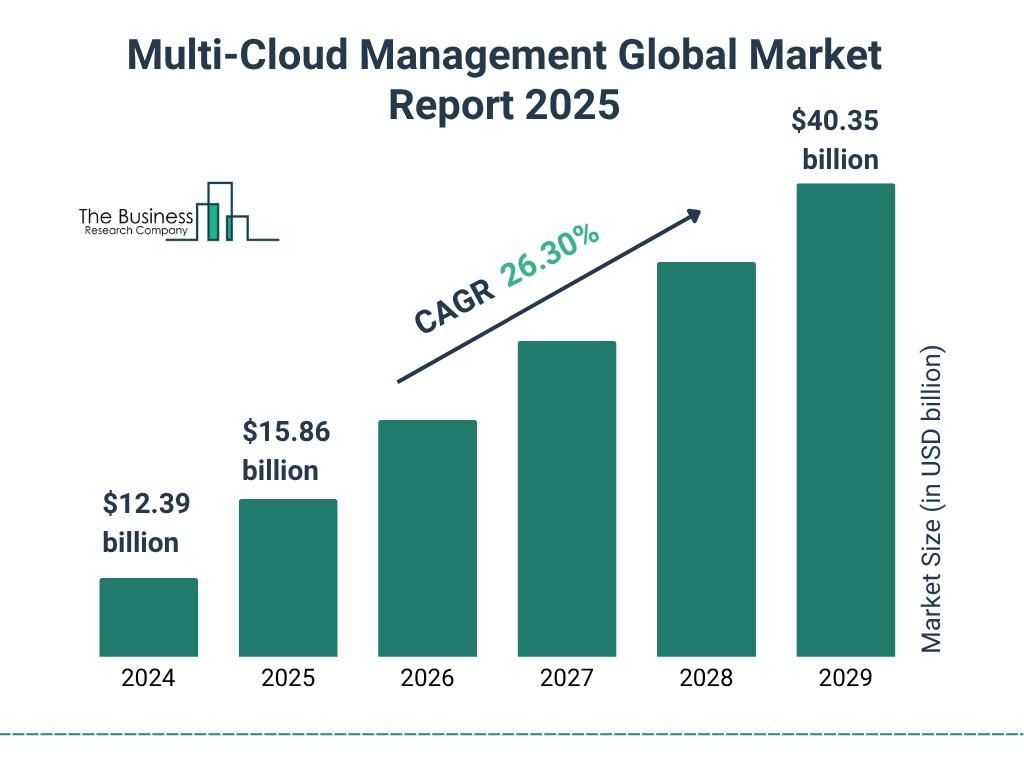
    The multi-cloud management market size has grown exponentially in recent years. It will grow from $12.39 billion in 2024 to $15.86 billion in 2025 at a compound annual growth rate (CAGR) of 28.1%. The growth in the historic period can be attributed to growing cloud adoption, complexity of multi-cloud environments, security concerns, cost optimization needs, operational efficiency demands.

    The multi-cloud management market size is expected to see exponential growth in the next few years. It will grow to $40.35 billion in 2029 at a compound annual growth rate (CAGR) of 26.3%. The growth in the forecast period can be attributed to advanced security requirements, focus on cost governance, increased complexity of multi-cloud environments, hybrid cloud expansion, regulatory compliance challenges. Major trends in the forecast period include rapid technological advancements, increased adoption of multi-cloud strategies, rising importance of interoperability, focus on cost optimization, automation for efficient management.

    Get your free report sample today:
    Multi-Cloud Management Market Size and Forecast Report 2025 Sample (https://www.thebusinessresearchcompany.com/sample.aspx?id=13492&type=smp)

    Which Key Drivers Are Fueling Growth in the Multi-Cloud Management Market?
    The increasing IoT-linked devices are expected to boost the growth of the multi-cloud management market going forward. IoT-linked devices are nonstandard computing devices that connect wirelessly to a network and transmit data. Multi-cloud management is helpful for IoT-linked devices as it allows for better management of the vast amounts of data generated by these devices across multiple cloud platforms, and it also will enable organizations to avoid being locked into a single cloud provider, which can limit their flexibility and increase costs. For instance, in November 2022, according to a report published by Ericsson, a Sweden-based telecommunication company, broadband IoT (4G/5G), which connects most cellular IoT devices, reached 1.3 billion connections in 2022. Nearly 60% of cellular IoT connections are anticipated to be broadband IoT connections by the end of 2028, with 4G connecting the bulk. Therefore, the increasing IoT IoT-linked devices is driving the growth of the multi-cloud management market.

    What Are the Major Segments Defining the Structure of the Multi-Cloud Management Market?
    The multi-cloud managementmarket covered in this report is segmented –

    1) By Solution: Security And Risk Management, Training And Consulting, Reporting And Analytics, Cloud Automation, Managed Services, Other Solutions
    2) By Deployment Model: Public Cloud, Hybrid Cloud, Private Cloud
    3) By Enterprise Size: Small And Medium Enterprise, Large Enterprise
    4) By End-Use: BFSI, IT And Telecom, Consumer Goods and Retail, Manufacturing, Healthcare, Media and Entertainment, Government, Other End-Uses

    Subsegments:
    1) By Security And Risk Management: Cloud Security Solutions, Identity And Access Management (IAM), Threat Detection And Mitigation, Compliance And Governance Tools
    2) By Training And Consulting: Cloud Strategy Consulting, Cloud Migration Consulting, Multi-Cloud Architecture Training, Managed Service Provider (MSP) Consulting
    3) By Reporting And Analytics: Cloud Performance Monitoring, Cost Management And Optimization, Cloud Usage Reporting, Business Intelligence And Analytics For Multi-Cloud
    4) By Cloud Automation: Cloud Provisioning And Orchestration, Infrastructure As Code (Iac) Solutions, Cloud Service Automation Tools, Workflow Automation
    5) By Managed Services: Cloud Operations Management, Multi-Cloud Monitoring And Support, Disaster Recovery And Backup Services, Service Level Agreement (SLA) Management
    6) By Other Solutions: Multi-Cloud Data Management, Cloud Integration Tools, Multi-Cloud Networking Solutions, Cloud Cost Optimization


    Which Disruptive Trends Are Reshaping the Competitive Landscape of the Multi-Cloud Management Market?
    Major companies operating in the multi-cloud management market are developing innovative products, such as multi-hybrid cloud, to help enterprises with digital transformation. A multi-hybrid cloud is a computing environment that integrates and manages multiple hybrid cloud deployments. For instance, in April 2023, Cognizant, a US-based information technology company, launched a multi-hybrid cloud and edge management platform called Cognizant Skygrade. The platform is designed to help enterprises transition to modern cloud-native architectures and streamline their cloud management operations. The platform integrates and operates seamlessly across multi-cloud environments, addressing the full lifecycle of cloud transformation and fusing Cognizant’s AIOps, operations, and infrastructure modernization expertise into a comprehensive solution for digital transformation leaders.

    Which Key Players Dominate the Multi-Cloud Management Market Landscape?
    Major companies operating in the multi-cloud management market report are Microsoft Corporation, Dell Technologies Inc., Amazon Web Services Inc., International Business Machines Corp., Cisco Systems Inc., Oracle Corporation, Flexera Software LLC, Infosys Limited, Lumen Technologies Inc., VMware Inc., NetApp Inc., Citrix Systems Inc., Rackspace Technology Inc., CloudBolt Software Inc., BMC Software Inc., Snow Software AB, DivvyCloud Corporation, Trianz Holdings Pvt. Ltd., Virtana Corp., AppDirect Inc., Jamcracker Inc., Cloudenablers Inc., Stacklet Inc., RightScale Inc., CloudCheckr Inc., Turbonomic Inc., EnvZero Inc., Upbound, DoubleHorn LLC, Embotics Corporation

    Get the detailed multi-cloud management market report today
    Multi-Cloud Management Market Size and Forecast Report 2025 (https://www.thebusinessresearchcompany.com/report/multi-cloud-management-global-market-report)

    Which Region Is Expected to Dominate the Multi-Cloud Management Market During the Forecast Period?
    North America was the largest region in the multi-cloud management market in 2024. The regions covered in the multi-cloud management market report are Asia-Pacific, Western Europe, Eastern Europe, North America, South America, Middle East, Africa.

    #Contact Us:#
    The Business Research Company: Market Research Reports (https://thebusinessresearchcompany.com/)
    Americas +1 310-496-7795
    Asia +44 7882 955267 & +91 8897263534
    Europe +44 7882 955267
    Email: info@tbrc.info (mailto:info@tbrc.info)

    #Follow Us On:#

    LinkedIn: The Business Research Company | LinkedIn (https://in.linkedin.com/company/the-business-research-company)

    Multi-Cloud Management Market Revenue Expected to Reach $40.35 Billion by 2029 Grab 20% Off With Code ONLINE20 On Global market Reports – Evaluate Global Trends, Market Risks, and Competitive Intelligence How Has the Multi-Cloud Management Market Evolved in Terms of Size and Value From 2025 to 2029? The multi-cloud management market size has grown exponentially in recent years. It will grow from $12.39 billion in 2024 to $15.86 billion in 2025 at a compound annual growth rate (CAGR) of 28.1%. The growth in the historic period can be attributed to growing cloud adoption, complexity of multi-cloud environments, security concerns, cost optimization needs, operational efficiency demands. The multi-cloud management market size is expected to see exponential growth in the next few years. It will grow to $40.35 billion in 2029 at a compound annual growth rate (CAGR) of 26.3%. The growth in the forecast period can be attributed to advanced security requirements, focus on cost governance, increased complexity of multi-cloud environments, hybrid cloud expansion, regulatory compliance challenges. Major trends in the forecast period include rapid technological advancements, increased adoption of multi-cloud strategies, rising importance of interoperability, focus on cost optimization, automation for efficient management. Get your free report sample today: Multi-Cloud Management Market Size and Forecast Report 2025 Sample (https://www.thebusinessresearchcompany.com/sample.aspx?id=13492&type=smp) Which Key Drivers Are Fueling Growth in the Multi-Cloud Management Market? The increasing IoT-linked devices are expected to boost the growth of the multi-cloud management market going forward. IoT-linked devices are nonstandard computing devices that connect wirelessly to a network and transmit data. Multi-cloud management is helpful for IoT-linked devices as it allows for better management of the vast amounts of data generated by these devices across multiple cloud platforms, and it also will enable organizations to avoid being locked into a single cloud provider, which can limit their flexibility and increase costs. For instance, in November 2022, according to a report published by Ericsson, a Sweden-based telecommunication company, broadband IoT (4G/5G), which connects most cellular IoT devices, reached 1.3 billion connections in 2022. Nearly 60% of cellular IoT connections are anticipated to be broadband IoT connections by the end of 2028, with 4G connecting the bulk. Therefore, the increasing IoT IoT-linked devices is driving the growth of the multi-cloud management market. What Are the Major Segments Defining the Structure of the Multi-Cloud Management Market? The multi-cloud managementmarket covered in this report is segmented – 1) By Solution: Security And Risk Management, Training And Consulting, Reporting And Analytics, Cloud Automation, Managed Services, Other Solutions 2) By Deployment Model: Public Cloud, Hybrid Cloud, Private Cloud 3) By Enterprise Size: Small And Medium Enterprise, Large Enterprise 4) By End-Use: BFSI, IT And Telecom, Consumer Goods and Retail, Manufacturing, Healthcare, Media and Entertainment, Government, Other End-Uses Subsegments: 1) By Security And Risk Management: Cloud Security Solutions, Identity And Access Management (IAM), Threat Detection And Mitigation, Compliance And Governance Tools 2) By Training And Consulting: Cloud Strategy Consulting, Cloud Migration Consulting, Multi-Cloud Architecture Training, Managed Service Provider (MSP) Consulting 3) By Reporting And Analytics: Cloud Performance Monitoring, Cost Management And Optimization, Cloud Usage Reporting, Business Intelligence And Analytics For Multi-Cloud 4) By Cloud Automation: Cloud Provisioning And Orchestration, Infrastructure As Code (Iac) Solutions, Cloud Service Automation Tools, Workflow Automation 5) By Managed Services: Cloud Operations Management, Multi-Cloud Monitoring And Support, Disaster Recovery And Backup Services, Service Level Agreement (SLA) Management 6) By Other Solutions: Multi-Cloud Data Management, Cloud Integration Tools, Multi-Cloud Networking Solutions, Cloud Cost Optimization Which Disruptive Trends Are Reshaping the Competitive Landscape of the Multi-Cloud Management Market? Major companies operating in the multi-cloud management market are developing innovative products, such as multi-hybrid cloud, to help enterprises with digital transformation. A multi-hybrid cloud is a computing environment that integrates and manages multiple hybrid cloud deployments. For instance, in April 2023, Cognizant, a US-based information technology company, launched a multi-hybrid cloud and edge management platform called Cognizant Skygrade. The platform is designed to help enterprises transition to modern cloud-native architectures and streamline their cloud management operations. The platform integrates and operates seamlessly across multi-cloud environments, addressing the full lifecycle of cloud transformation and fusing Cognizant’s AIOps, operations, and infrastructure modernization expertise into a comprehensive solution for digital transformation leaders. Which Key Players Dominate the Multi-Cloud Management Market Landscape? Major companies operating in the multi-cloud management market report are Microsoft Corporation, Dell Technologies Inc., Amazon Web Services Inc., International Business Machines Corp., Cisco Systems Inc., Oracle Corporation, Flexera Software LLC, Infosys Limited, Lumen Technologies Inc., VMware Inc., NetApp Inc., Citrix Systems Inc., Rackspace Technology Inc., CloudBolt Software Inc., BMC Software Inc., Snow Software AB, DivvyCloud Corporation, Trianz Holdings Pvt. Ltd., Virtana Corp., AppDirect Inc., Jamcracker Inc., Cloudenablers Inc., Stacklet Inc., RightScale Inc., CloudCheckr Inc., Turbonomic Inc., EnvZero Inc., Upbound, DoubleHorn LLC, Embotics Corporation Get the detailed multi-cloud management market report today Multi-Cloud Management Market Size and Forecast Report 2025 (https://www.thebusinessresearchcompany.com/report/multi-cloud-management-global-market-report) Which Region Is Expected to Dominate the Multi-Cloud Management Market During the Forecast Period? North America was the largest region in the multi-cloud management market in 2024. The regions covered in the multi-cloud management market report are Asia-Pacific, Western Europe, Eastern Europe, North America, South America, Middle East, Africa. #Contact Us:# The Business Research Company: Market Research Reports (https://thebusinessresearchcompany.com/) Americas +1 310-496-7795 Asia +44 7882 955267 & +91 8897263534 Europe +44 7882 955267 Email: info@tbrc.info (mailto:info@tbrc.info) #Follow Us On:# LinkedIn: The Business Research Company | LinkedIn (https://in.linkedin.com/company/the-business-research-company)
    0 Commentarii 0 Distribuiri 6K Views
  • Market Overview
    The 5G security market has gained substantial momentum as telecommunications providers and enterprises worldwide roll out next-generation 5G networks. As 5G promises ultra-low latency, enhanced bandwidth, and massive device connectivity, it also opens the door to a new range of security vulnerabilities that require advanced protection strategies.

    The global 5G security market size is expected to reach USD 21.11 billion by 2030, according to a new study by Polaris Market Research. The exponential growth is attributed to the expanding use of network slicing, cloud-native infrastructure, and mission-critical applications such as autonomous vehicles, remote surgery, and smart cities.

    To address the increasing threat surface, organizations are investing in AI-driven threat detection, multi-access edge computing (MEC) security, and zero trust network architectures, transforming the security landscape from reactive to proactive.

    Key Market Growth Drivers
    1. Surge in 5G Deployments Globally
    The global rollout of 5G is proceeding rapidly, with telecom operators investing heavily in infrastructure upgrades. According to the GSMA, more than 170 mobile operators had launched commercial 5G services in over 70 countries by the end of 2023. This accelerated deployment necessitates robust 5G network security mechanisms to prevent breaches in real-time communications and data-heavy environments.

    As telecom providers transition from 4G LTE to standalone 5G architecture, securing network cores, base stations, and data centers becomes imperative. This demand is creating massive opportunities for vendors offering advanced encryption, endpoint protection, and network access control (NAC).

    2. Growth of IoT and Connected Devices
    One of the key use cases of 5G is its ability to support up to 1 million devices per square kilometer, making it ideal for Internet of Things (IoT) ecosystems. Smart cities, connected factories, and healthcare systems are increasingly dependent on a vast network of IoT devices, each of which represents a potential point of vulnerability.

    5G security solutions tailored for IoT—such as lightweight encryption, device identity management, and behavior analytics—are becoming essential to protect data and operational continuity in these environments.

    3. Rising Cyber Threats and Nation-State Attacks
    Cybersecurity threats are growing more sophisticated, with state-sponsored attacks targeting 5G infrastructure and critical services such as defense, utilities, and financial institutions. 5G's low latency and decentralized structure can potentially magnify the impact of Distributed Denial of Service (DDoS) attacks, man-in-the-middle attacks, and software supply chain threats.

    This evolving threat landscape is fueling demand for zero trust security, AI-driven anomaly detection, and 5G-specific Security Information and Event Management (SIEM) solutions.

    4. Government Regulations and Compliance
    Regulatory mandates around the world are enforcing stricter guidelines for securing 5G networks. For example, the U.S. Cybersecurity and Infrastructure Security Agency (CISA) has outlined a 5G risk framework, while the European Union’s Toolbox for 5G Security recommends risk-based approaches to vendor selection and infrastructure hardening.

    These regulations are compelling telecom operators and enterprises to adopt robust security protocols and vendor vetting processes, further boosting market demand.

    𝐄𝐱𝐩𝐥𝐨𝐫𝐞 𝐓𝐡𝐞 𝐂𝐨𝐦𝐩𝐥𝐞𝐭𝐞 𝐂𝐨𝐦𝐩𝐫𝐞𝐡𝐞𝐧𝐬𝐢𝐯𝐞 𝐑𝐞𝐩𝐨𝐫𝐭 𝐇𝐞𝐫𝐞 https://www.polarismarketresearch.com/industry-analysis/5g-security-market
    Market Challenges
    Despite rapid growth, the 5G security market faces several challenges that stakeholders must address:

    Complex Architecture
    5G networks feature a highly distributed architecture using software-defined networking (SDN), virtualized network functions (VNF), and MEC. Securing such a complex environment requires a shift from traditional perimeter-based security to dynamic, end-to-end models that monitor all layers of the network.

    Legacy Infrastructure and Integration Issues
    Many operators still rely on a mix of legacy and next-gen systems, creating integration hurdles. Ensuring backward compatibility without compromising security is a daunting task, especially when transitioning from 4G to hybrid or standalone 5G.

    High Cost of Implementation
    The deployment of advanced 5G security systems—including encryption, firewalls, and AI-powered analytics—can be capital-intensive. This high upfront investment can hinder adoption, especially among small and medium-sized enterprises (SMEs) and developing nations.

    Skill Gaps and Talent Shortage
    The 5G security domain requires a specialized skill set combining telecom engineering and cybersecurity expertise. The global shortage of qualified professionals poses a significant barrier to efficient deployment and management of secure 5G infrastructure.

    Regional Analysis
    North America
    North America leads the 5G security market, thanks to aggressive 5G rollouts, early adoption of security frameworks, and robust investments by leading telecom companies such as Verizon, AT&T, and T-Mobile. The U.S. government’s focus on securing critical infrastructure and establishing secure 5G supply chains is further accelerating market growth.

    Europe
    Europe is making steady progress with harmonized cybersecurity regulations and comprehensive 5G action plans. Countries like Germany, the UK, and France are focusing on sovereign 5G infrastructure and promoting collaboration among telecom vendors and security providers to ensure network resilience.

    Asia-Pacific
    Asia-Pacific is poised for the fastest growth, led by China, South Korea, and Japan. China’s aggressive 5G rollout and emphasis on homegrown technologies have spurred the development of proprietary security solutions. In South Korea and Japan, robust tech ecosystems and government backing are fostering innovations in MEC and AI-driven network protection.

    Latin America and Middle East & Africa
    These regions are in the early stages of 5G deployment but show promising potential as telecom infrastructure modernizes. Public-private partnerships, pilot projects, and smart city initiatives are creating fertile ground for 5G security vendors.

    Key Companies and Competitive Landscape
    The 5G security market features a dynamic mix of global cybersecurity firms, telecom vendors, and niche start-ups. Competition revolves around innovation, ecosystem integration, and scalability.

    Major Players Include:
    Ericsson: Offers end-to-end 5G security solutions with built-in encryption, authentication, and threat detection tailored for telecom environments.

    Huawei Technologies: Despite facing geopolitical scrutiny, Huawei remains a key player in 5G infrastructure and associated security features in several regions.

    Nokia: Provides cloud-native 5G security solutions, with a focus on securing MEC and network slicing.

    Cisco Systems: Delivers secure access, firewall solutions, and policy control optimized for 5G networks and enterprise use cases.

    Palo Alto Networks: Offers AI-powered threat detection, zero trust enforcement, and cloud security solutions for telecom and enterprise clients.

    Fortinet, Juniper Networks, ZTE, IBM, and Trend Micro are also prominent players with comprehensive portfolios addressing various layers of 5G security.

    Start-ups like Athonet, WootCloud, and Cato Networks are gaining attention for lightweight and agile security solutions optimized for decentralized 5G networks and IoT environments.

    Conclusion
    The 5G security market is rapidly evolving into a cornerstone of next-gen communications, underpinned by the surge in 5G deployment, connected device proliferation, and heightened cyber risks. While technical and economic challenges persist, advances in AI, cloud security, and zero trust frameworks are equipping stakeholders with powerful tools to protect the future of hyper-connected networks.

    With governments, enterprises, and telecom operators aligning on the importance of resilient, scalable security architectures, the 5G security market is poised for exponential growth and innovation in the coming decade.

    More Trending Latest Reports By Polaris Market Research:

    Over the Top Market

    Surimi Market

    Folic Acid Market

    Zero-Touch Provisioning Market

    Industrial Microbiology Testing Services Market

    Vision Transformer Market

    Cannabidiol Market

    IoT Medical Devices Market

    Disaster Preparedness Systems Market
    Market Overview The 5G security market has gained substantial momentum as telecommunications providers and enterprises worldwide roll out next-generation 5G networks. As 5G promises ultra-low latency, enhanced bandwidth, and massive device connectivity, it also opens the door to a new range of security vulnerabilities that require advanced protection strategies. The global 5G security market size is expected to reach USD 21.11 billion by 2030, according to a new study by Polaris Market Research. The exponential growth is attributed to the expanding use of network slicing, cloud-native infrastructure, and mission-critical applications such as autonomous vehicles, remote surgery, and smart cities. To address the increasing threat surface, organizations are investing in AI-driven threat detection, multi-access edge computing (MEC) security, and zero trust network architectures, transforming the security landscape from reactive to proactive. Key Market Growth Drivers 1. Surge in 5G Deployments Globally The global rollout of 5G is proceeding rapidly, with telecom operators investing heavily in infrastructure upgrades. According to the GSMA, more than 170 mobile operators had launched commercial 5G services in over 70 countries by the end of 2023. This accelerated deployment necessitates robust 5G network security mechanisms to prevent breaches in real-time communications and data-heavy environments. As telecom providers transition from 4G LTE to standalone 5G architecture, securing network cores, base stations, and data centers becomes imperative. This demand is creating massive opportunities for vendors offering advanced encryption, endpoint protection, and network access control (NAC). 2. Growth of IoT and Connected Devices One of the key use cases of 5G is its ability to support up to 1 million devices per square kilometer, making it ideal for Internet of Things (IoT) ecosystems. Smart cities, connected factories, and healthcare systems are increasingly dependent on a vast network of IoT devices, each of which represents a potential point of vulnerability. 5G security solutions tailored for IoT—such as lightweight encryption, device identity management, and behavior analytics—are becoming essential to protect data and operational continuity in these environments. 3. Rising Cyber Threats and Nation-State Attacks Cybersecurity threats are growing more sophisticated, with state-sponsored attacks targeting 5G infrastructure and critical services such as defense, utilities, and financial institutions. 5G's low latency and decentralized structure can potentially magnify the impact of Distributed Denial of Service (DDoS) attacks, man-in-the-middle attacks, and software supply chain threats. This evolving threat landscape is fueling demand for zero trust security, AI-driven anomaly detection, and 5G-specific Security Information and Event Management (SIEM) solutions. 4. Government Regulations and Compliance Regulatory mandates around the world are enforcing stricter guidelines for securing 5G networks. For example, the U.S. Cybersecurity and Infrastructure Security Agency (CISA) has outlined a 5G risk framework, while the European Union’s Toolbox for 5G Security recommends risk-based approaches to vendor selection and infrastructure hardening. These regulations are compelling telecom operators and enterprises to adopt robust security protocols and vendor vetting processes, further boosting market demand. 𝐄𝐱𝐩𝐥𝐨𝐫𝐞 𝐓𝐡𝐞 𝐂𝐨𝐦𝐩𝐥𝐞𝐭𝐞 𝐂𝐨𝐦𝐩𝐫𝐞𝐡𝐞𝐧𝐬𝐢𝐯𝐞 𝐑𝐞𝐩𝐨𝐫𝐭 𝐇𝐞𝐫𝐞 https://www.polarismarketresearch.com/industry-analysis/5g-security-market Market Challenges Despite rapid growth, the 5G security market faces several challenges that stakeholders must address: Complex Architecture 5G networks feature a highly distributed architecture using software-defined networking (SDN), virtualized network functions (VNF), and MEC. Securing such a complex environment requires a shift from traditional perimeter-based security to dynamic, end-to-end models that monitor all layers of the network. Legacy Infrastructure and Integration Issues Many operators still rely on a mix of legacy and next-gen systems, creating integration hurdles. Ensuring backward compatibility without compromising security is a daunting task, especially when transitioning from 4G to hybrid or standalone 5G. High Cost of Implementation The deployment of advanced 5G security systems—including encryption, firewalls, and AI-powered analytics—can be capital-intensive. This high upfront investment can hinder adoption, especially among small and medium-sized enterprises (SMEs) and developing nations. Skill Gaps and Talent Shortage The 5G security domain requires a specialized skill set combining telecom engineering and cybersecurity expertise. The global shortage of qualified professionals poses a significant barrier to efficient deployment and management of secure 5G infrastructure. Regional Analysis North America North America leads the 5G security market, thanks to aggressive 5G rollouts, early adoption of security frameworks, and robust investments by leading telecom companies such as Verizon, AT&T, and T-Mobile. The U.S. government’s focus on securing critical infrastructure and establishing secure 5G supply chains is further accelerating market growth. Europe Europe is making steady progress with harmonized cybersecurity regulations and comprehensive 5G action plans. Countries like Germany, the UK, and France are focusing on sovereign 5G infrastructure and promoting collaboration among telecom vendors and security providers to ensure network resilience. Asia-Pacific Asia-Pacific is poised for the fastest growth, led by China, South Korea, and Japan. China’s aggressive 5G rollout and emphasis on homegrown technologies have spurred the development of proprietary security solutions. In South Korea and Japan, robust tech ecosystems and government backing are fostering innovations in MEC and AI-driven network protection. Latin America and Middle East & Africa These regions are in the early stages of 5G deployment but show promising potential as telecom infrastructure modernizes. Public-private partnerships, pilot projects, and smart city initiatives are creating fertile ground for 5G security vendors. Key Companies and Competitive Landscape The 5G security market features a dynamic mix of global cybersecurity firms, telecom vendors, and niche start-ups. Competition revolves around innovation, ecosystem integration, and scalability. Major Players Include: Ericsson: Offers end-to-end 5G security solutions with built-in encryption, authentication, and threat detection tailored for telecom environments. Huawei Technologies: Despite facing geopolitical scrutiny, Huawei remains a key player in 5G infrastructure and associated security features in several regions. Nokia: Provides cloud-native 5G security solutions, with a focus on securing MEC and network slicing. Cisco Systems: Delivers secure access, firewall solutions, and policy control optimized for 5G networks and enterprise use cases. Palo Alto Networks: Offers AI-powered threat detection, zero trust enforcement, and cloud security solutions for telecom and enterprise clients. Fortinet, Juniper Networks, ZTE, IBM, and Trend Micro are also prominent players with comprehensive portfolios addressing various layers of 5G security. Start-ups like Athonet, WootCloud, and Cato Networks are gaining attention for lightweight and agile security solutions optimized for decentralized 5G networks and IoT environments. Conclusion The 5G security market is rapidly evolving into a cornerstone of next-gen communications, underpinned by the surge in 5G deployment, connected device proliferation, and heightened cyber risks. While technical and economic challenges persist, advances in AI, cloud security, and zero trust frameworks are equipping stakeholders with powerful tools to protect the future of hyper-connected networks. With governments, enterprises, and telecom operators aligning on the importance of resilient, scalable security architectures, the 5G security market is poised for exponential growth and innovation in the coming decade. More Trending Latest Reports By Polaris Market Research: Over the Top Market Surimi Market Folic Acid Market Zero-Touch Provisioning Market Industrial Microbiology Testing Services Market Vision Transformer Market Cannabidiol Market IoT Medical Devices Market Disaster Preparedness Systems Market
    WWW.POLARISMARKETRESEARCH.COM
    5G Security Market Size Global Report, 2022 - 2030
    The global 5G security market was valued at USD 1.10 billion in 2021 and is expected to grow at a CAGR of 41.4% during the forecast period.
    0 Commentarii 0 Distribuiri 17K Views