Super-Resolution Microscopes in Nanotechnology, Materials Science, and Semiconductor Applications
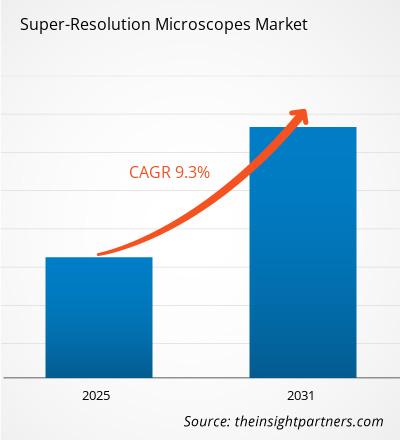
While life sciences dominate adoption, the Super-Resolution Microscopes Market is increasingly gaining traction in nanotechnology, material science, and semiconductor industries. These sectors require precise visualization and characterization of structures at the nanoscale, making super-resolution microscopy a critical analytical tool. This expanding industrial adoption significantly contributes to the market’s projected growth to US$ 8.5 billion by 2031, at a 9.2% CAGR.
Nanotechnology: Precision at the Nanoscale
Nanotechnology research focuses on materials and structures typically ranging from 1 to 100 nanometers. Super-resolution microscopy enables researchers to:
Visualize nanoparticles and nanostructures
Study nano-bio interfaces
Analyze surface functionalization
Techniques such as STORM and PALM are particularly effective in nanotechnology due to their single-molecule localization capabilities.
Companies like Bruker and JEOL Ltd provide advanced platforms that combine optical precision with analytical stability, making them suitable for cutting-edge nanotechnology research.
Material Science Applications
Material science relies on understanding structure-property relationships at the microscopic and nanoscopic levels. Super-resolution microscopes allow scientists to investigate:
Polymer morphology
Composite material interfaces
Thin-film structures
Surface defects and stress points
By revealing nanoscale defects and structural variations, these systems help researchers optimize material performance and durability.
Hitachi High-Technologies Corporation and Danaher are key contributors to this segment, offering systems tailored for industrial R&D and advanced materials characterization.
Semiconductor Industry and Advanced Electronics
The semiconductor industry is one of the fastest-growing application areas for super-resolution microscopy. As transistor sizes shrink and device architectures become more complex, traditional inspection tools are no longer sufficient.
Super-resolution microscopy supports:
Failure analysis
Defect detection
Process optimization
Research into next-generation semiconductor materials
Hybrid imaging approaches that integrate optical microscopy with computational enhancement are increasingly adopted to meet the industry’s evolving needs.
Role in Quality Control and Industrial R&D
Industrial laboratories use super-resolution microscopes for quality control, product development, and failure analysis. These applications require high throughput, repeatability, and integration with existing analytical workflows.
Manufacturers respond by offering:
Automated imaging systems
Advanced software analytics
Modular system designs
This trend enhances usability and broadens adoption beyond specialized research facilities.
Cross-Industry Collaboration and Innovation
The convergence of nanotechnology, material science, and electronics is driving interdisciplinary research. Super-resolution microscopy plays a key role in this convergence by providing a common analytical platform across disciplines.
Collaborations between instrument manufacturers and industrial R&D centers are accelerating innovation and expanding market opportunities.
Future Outlook for Industrial Applications
As industries continue to push technological boundaries, demand for advanced imaging solutions will grow. Super-resolution microscopes will increasingly be integrated with other analytical techniques, such as spectroscopy and electron microscopy, to provide comprehensive material insights.
In conclusion, non-biological applications are becoming an essential growth pillar for the Super-Resolution Microscopes Market, complementing life sciences and reinforcing the market’s strong outlook through 2031.
https://www.theinsightpartners.com/reports/super-resolution-microscopes-marketSuper-Resolution Microscopes in Nanotechnology, Materials Science, and Semiconductor Applications
While life sciences dominate adoption, the Super-Resolution Microscopes Market is increasingly gaining traction in nanotechnology, material science, and semiconductor industries. These sectors require precise visualization and characterization of structures at the nanoscale, making super-resolution microscopy a critical analytical tool. This expanding industrial adoption significantly contributes to the market’s projected growth to US$ 8.5 billion by 2031, at a 9.2% CAGR.
Nanotechnology: Precision at the Nanoscale
Nanotechnology research focuses on materials and structures typically ranging from 1 to 100 nanometers. Super-resolution microscopy enables researchers to:
Visualize nanoparticles and nanostructures
Study nano-bio interfaces
Analyze surface functionalization
Techniques such as STORM and PALM are particularly effective in nanotechnology due to their single-molecule localization capabilities.
Companies like Bruker and JEOL Ltd provide advanced platforms that combine optical precision with analytical stability, making them suitable for cutting-edge nanotechnology research.
Material Science Applications
Material science relies on understanding structure-property relationships at the microscopic and nanoscopic levels. Super-resolution microscopes allow scientists to investigate:
Polymer morphology
Composite material interfaces
Thin-film structures
Surface defects and stress points
By revealing nanoscale defects and structural variations, these systems help researchers optimize material performance and durability.
Hitachi High-Technologies Corporation and Danaher are key contributors to this segment, offering systems tailored for industrial R&D and advanced materials characterization.
Semiconductor Industry and Advanced Electronics
The semiconductor industry is one of the fastest-growing application areas for super-resolution microscopy. As transistor sizes shrink and device architectures become more complex, traditional inspection tools are no longer sufficient.
Super-resolution microscopy supports:
Failure analysis
Defect detection
Process optimization
Research into next-generation semiconductor materials
Hybrid imaging approaches that integrate optical microscopy with computational enhancement are increasingly adopted to meet the industry’s evolving needs.
Role in Quality Control and Industrial R&D
Industrial laboratories use super-resolution microscopes for quality control, product development, and failure analysis. These applications require high throughput, repeatability, and integration with existing analytical workflows.
Manufacturers respond by offering:
Automated imaging systems
Advanced software analytics
Modular system designs
This trend enhances usability and broadens adoption beyond specialized research facilities.
Cross-Industry Collaboration and Innovation
The convergence of nanotechnology, material science, and electronics is driving interdisciplinary research. Super-resolution microscopy plays a key role in this convergence by providing a common analytical platform across disciplines.
Collaborations between instrument manufacturers and industrial R&D centers are accelerating innovation and expanding market opportunities.
Future Outlook for Industrial Applications
As industries continue to push technological boundaries, demand for advanced imaging solutions will grow. Super-resolution microscopes will increasingly be integrated with other analytical techniques, such as spectroscopy and electron microscopy, to provide comprehensive material insights.
In conclusion, non-biological applications are becoming an essential growth pillar for the Super-Resolution Microscopes Market, complementing life sciences and reinforcing the market’s strong outlook through 2031.
https://www.theinsightpartners.com/reports/super-resolution-microscopes-market














 English
 Arabic
 French
 Spanish
 Portuguese
 Deutsch
 Turkish
 Dutch
Dutch
 Russian
 Romaian
 Portuguese (Brazil)
 Greek
Greek