• Defense News Today: India Strengthens Military Power with Advanced Defense Strategies
    Defense News Today brings the latest updates on India’s growing defense capabilities, global security developments, and modern military technologies reshaping national safety. From cutting-edge weapon systems and border security upgrades to international defense agreements and strategic partnerships, Defense News Today highlights crucial insights that impact national security and global stability. Stay informed with real-time analysis, expert viewpoints, and comprehensive coverage on armed forces operations and modern warfare innovations — all created fully AI free and deeply researched.
    News |"Bangladesh Unrest, Trump–Saudi F-35 Deal | Red Fort Probe Twist & India–Canada Trade Boost"
    Bangladesh is on edge after Sheikh Hasina’s death verdict sparked nationwide unrest. In the US, Donald Trump is signalling a possible F-35 jet sale to Saudi Arabia. The UN has approved a new Gaza peace plan. Back home, Umar Nabi’s ‘martyrdom ops’ video has intensified the Red Fort blast probe, even as Mehbooba Mufti’s remarks trigger fresh political controversy. Plus, Canada now calls India a key trade partner
    https://youtu.be/3G45CDUQtgk?si=vJqOQ9NLesEotpRg


    Defense News Today: India Strengthens Military Power with Advanced Defense Strategies Defense News Today brings the latest updates on India’s growing defense capabilities, global security developments, and modern military technologies reshaping national safety. From cutting-edge weapon systems and border security upgrades to international defense agreements and strategic partnerships, Defense News Today highlights crucial insights that impact national security and global stability. Stay informed with real-time analysis, expert viewpoints, and comprehensive coverage on armed forces operations and modern warfare innovations — all created fully AI free and deeply researched. News |"Bangladesh Unrest, Trump–Saudi F-35 Deal | Red Fort Probe Twist & India–Canada Trade Boost" Bangladesh is on edge after Sheikh Hasina’s death verdict sparked nationwide unrest. In the US, Donald Trump is signalling a possible F-35 jet sale to Saudi Arabia. The UN has approved a new Gaza peace plan. Back home, Umar Nabi’s ‘martyrdom ops’ video has intensified the Red Fort blast probe, even as Mehbooba Mufti’s remarks trigger fresh political controversy. Plus, Canada now calls India a key trade partner https://youtu.be/3G45CDUQtgk?si=vJqOQ9NLesEotpRg
    Love
    1
    0 Comentários 0 Compartilhamentos 2KB Visualizações
  • Global Mobile Satellite Services Market Projected to Strengthen in Value and Scale by 2029

    Grab 20% Off With Code ONLINE20 On Global market Reports – Evaluate Global Trends, Market Risks, and Competitive Intelligence

    What Is the Predicted Market Size and CAGR of the Mobile Satellite Services Market by the End of the 2029?
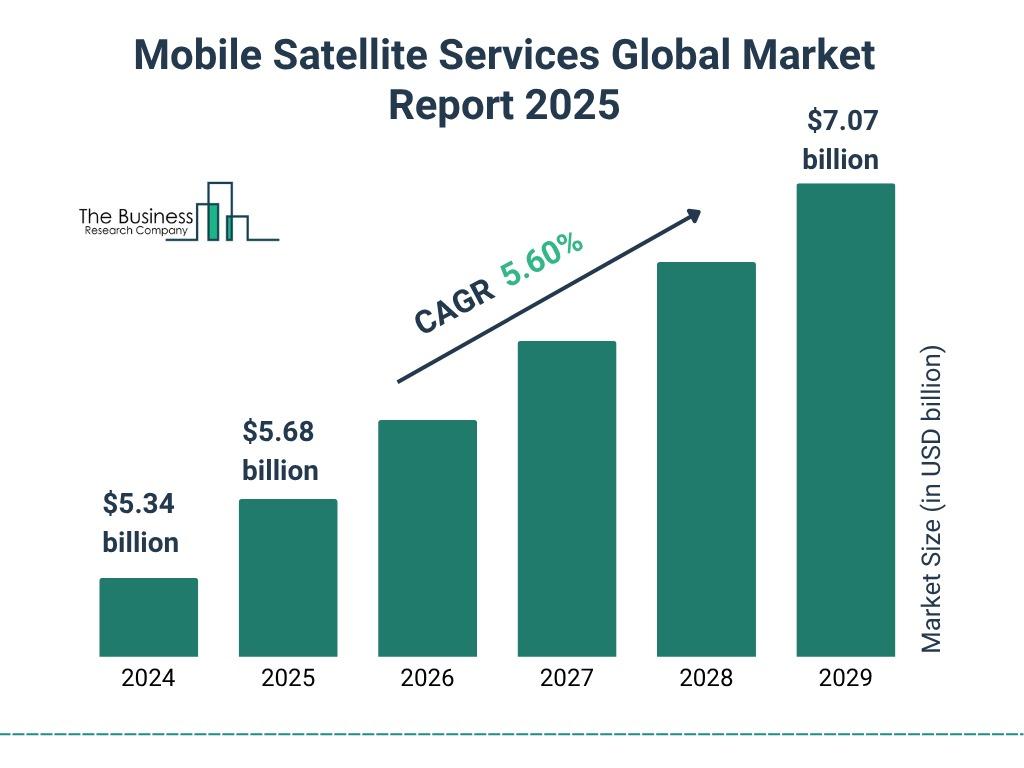
    The mobile satellite services market size has grown strongly in recent years. It will grow from $5.34 billion in 2024 to $5.68 billion in 2025 at a compound annual growth rate (CAGR) of 6.4%. The growth in the historic period can be attributed to emergence of global connectivity needs, increased military and defense applications, expansion of broadcasting and media, enterprise connectivity, telecommunications backhaul.

    The mobile satellite services market size is expected to see strong growth in the next few years. It will grow to $7.07 billion in 2029 at a compound annual growth rate (CAGR) of 5.6%. The growth in the forecast period can be attributed to emerging market growth, commercial space activities, smart transportation, increased agriculture and precision farming, adoption of smart transportation. Major trends in the forecast period include integration with 5G networks, rapid expansion of IoT connectivity, increasing demand for broadband connectivity, enhanced disaster response and public safety solutions, diversification of service offerings.

    Get your free report sample today:
    Mobile Satellite Services Market Size and Growth Report 2025 Sample (https://www.thebusinessresearchcompany.com/sample.aspx?id=14143&type=smp)

    What Are the Significant Market Forces Driving the Mobile Satellite Services Market Performance?
    The expansion of oil and gas exploration is expected to propel the growth of the mobile satellite services market going forward. Oil and gas exploration refers to the process of searching for underground or underwater reservoirs of oil and natural gas deposits. It is rising due to economic, technological, and geopolitical factors to meet global energy needs. Mobile satellite services are used in oil and gas exploration activities to offer dependable communication, data transmission, logistics assistance, and environmental monitoring in remote and challenging environments. For instance, in March 2024, according to the Energy Information Administration, a U.S-based government agency U.S. crude oil production grew by 9% in 2023 compared to 2022, reaching a record 12.9 million barrels per day. This increase has driven higher crude oil exports, despite U.S. refineries continuing to be optimized for processing heavier crude oils. Therefore, the expansion of oil and gas exploration is driving the growth of the mobile satellite services market.

    Which Segments Are Likely to Shape the Future Outlook of the Mobile Satellite Services Market?
    The mobile satellite servicesmarket covered in this report is segmented –

    1) By Service: Voice, Data
    2) By Application: Land Mobile Satellite Service, Aeronautical Mobile Satellite Service, Maritime Mobile Satellite Service
    3) By Industry: Oil And gas, Media And Entertainment, Transportation, Aviation, Defense, Automative, Government, Other Industries

    Subsegments:
    1) By Voice: Satellite Phone Services, Push-To-Talk Services
    2) By Data: Internet Access Services, Remote Monitoring And Control Services


    Which Future-Ready Trends Are Expected to Influence the Mobile Satellite Services Market?
    Major companies operating in the mobile satellite service industry are adopting a strategic partnership approach to provide resilient and reliable connectivity, particularly in remote and rural areas where terrestrial infrastructure is insufficient. Strategic partnerships refer to a process in which companies leverage each other's strengths and resources to achieve mutual benefits and success. For instance, in June 2023, Spark New Zealand, a New Zealand-based telecommunications company, partnered with Lynk Global., a US-based developer of satellite-to-mobile-phone satellite constellations. With this partnership, they aim to launch a satellite-to-mobile service, aiming to enhance connectivity for its customers, address key challenges, capitalize on emerging opportunities, and position themselves as a leader in innovative connectivity solutions for the New Zealand market.

    Which Major Organizations Influence the Direction of the Mobile Satellite Services Market?
    Major companies operating in the mobile satellite services market are Ericsson AB, Telstra Corporation Limited, Singapore Telecommunications Limited., Viasat Inc., Intelsat SA, SES S.A., EchoStar Corporation, Hughes Network Systems, AI Yah Satellite Communications company P.J.S.C, Inmarsat plc, Eutelsat Communications S.A., Telesat Canada, Iridium Communications Inc., Telespazio S.p.A., Comtech Telecommunications Corporation, Orbcomm Inc., Encompass Digital Media Inc., Speedcast International Limited, Globecast Asia Pte Ltd, Gilat Satellite Networks Ltd., Globalstar Inc., Avanti Communications Group plc, Ligado Networks LLC, Russian Satellite Communications Company (RSCC), MTN Satellite Communications Inc.

    Get the detailed mobile satellite services market report today
    https://www.thebusinessresearchcompany.com/report/mobile-satellite-services-global-market-report (https://www.thebusinessresearchcompany.com/report/mobile-satellite-services-global-market-report)

    Which Region Holds the Largest Share of the Mobile Satellite Services Market?
    North America was the largest region in the Mobile Satellite Service market in 2024. North America is expected to be the fastest-growing region in the forecast period. The regions covered in the mobile satellite services market report are Asia-Pacific, Western Europe, Eastern Europe, North America, South America, Middle East, Africa.

    #Contact Us:#
    The Business Research Company: Market Research Reports (https://thebusinessresearchcompany.com/)
    Americas +1 310-496-7795
    Asia +44 7882 955267 & +91 8897263534
    Europe +44 7882 955267
    Email: info@tbrc.info (mailto:info@tbrc.info)

    #Follow Us On:#

    LinkedIn: The Business Research Company | LinkedIn (https://in.linkedin.com/company/the-business-research-company)


    Global Mobile Satellite Services Market Projected to Strengthen in Value and Scale by 2029 Grab 20% Off With Code ONLINE20 On Global market Reports – Evaluate Global Trends, Market Risks, and Competitive Intelligence What Is the Predicted Market Size and CAGR of the Mobile Satellite Services Market by the End of the 2029? The mobile satellite services market size has grown strongly in recent years. It will grow from $5.34 billion in 2024 to $5.68 billion in 2025 at a compound annual growth rate (CAGR) of 6.4%. The growth in the historic period can be attributed to emergence of global connectivity needs, increased military and defense applications, expansion of broadcasting and media, enterprise connectivity, telecommunications backhaul. The mobile satellite services market size is expected to see strong growth in the next few years. It will grow to $7.07 billion in 2029 at a compound annual growth rate (CAGR) of 5.6%. The growth in the forecast period can be attributed to emerging market growth, commercial space activities, smart transportation, increased agriculture and precision farming, adoption of smart transportation. Major trends in the forecast period include integration with 5G networks, rapid expansion of IoT connectivity, increasing demand for broadband connectivity, enhanced disaster response and public safety solutions, diversification of service offerings. Get your free report sample today: Mobile Satellite Services Market Size and Growth Report 2025 Sample (https://www.thebusinessresearchcompany.com/sample.aspx?id=14143&type=smp) What Are the Significant Market Forces Driving the Mobile Satellite Services Market Performance? The expansion of oil and gas exploration is expected to propel the growth of the mobile satellite services market going forward. Oil and gas exploration refers to the process of searching for underground or underwater reservoirs of oil and natural gas deposits. It is rising due to economic, technological, and geopolitical factors to meet global energy needs. Mobile satellite services are used in oil and gas exploration activities to offer dependable communication, data transmission, logistics assistance, and environmental monitoring in remote and challenging environments. For instance, in March 2024, according to the Energy Information Administration, a U.S-based government agency U.S. crude oil production grew by 9% in 2023 compared to 2022, reaching a record 12.9 million barrels per day. This increase has driven higher crude oil exports, despite U.S. refineries continuing to be optimized for processing heavier crude oils. Therefore, the expansion of oil and gas exploration is driving the growth of the mobile satellite services market. Which Segments Are Likely to Shape the Future Outlook of the Mobile Satellite Services Market? The mobile satellite servicesmarket covered in this report is segmented – 1) By Service: Voice, Data 2) By Application: Land Mobile Satellite Service, Aeronautical Mobile Satellite Service, Maritime Mobile Satellite Service 3) By Industry: Oil And gas, Media And Entertainment, Transportation, Aviation, Defense, Automative, Government, Other Industries Subsegments: 1) By Voice: Satellite Phone Services, Push-To-Talk Services 2) By Data: Internet Access Services, Remote Monitoring And Control Services Which Future-Ready Trends Are Expected to Influence the Mobile Satellite Services Market? Major companies operating in the mobile satellite service industry are adopting a strategic partnership approach to provide resilient and reliable connectivity, particularly in remote and rural areas where terrestrial infrastructure is insufficient. Strategic partnerships refer to a process in which companies leverage each other's strengths and resources to achieve mutual benefits and success. For instance, in June 2023, Spark New Zealand, a New Zealand-based telecommunications company, partnered with Lynk Global., a US-based developer of satellite-to-mobile-phone satellite constellations. With this partnership, they aim to launch a satellite-to-mobile service, aiming to enhance connectivity for its customers, address key challenges, capitalize on emerging opportunities, and position themselves as a leader in innovative connectivity solutions for the New Zealand market. Which Major Organizations Influence the Direction of the Mobile Satellite Services Market? Major companies operating in the mobile satellite services market are Ericsson AB, Telstra Corporation Limited, Singapore Telecommunications Limited., Viasat Inc., Intelsat SA, SES S.A., EchoStar Corporation, Hughes Network Systems, AI Yah Satellite Communications company P.J.S.C, Inmarsat plc, Eutelsat Communications S.A., Telesat Canada, Iridium Communications Inc., Telespazio S.p.A., Comtech Telecommunications Corporation, Orbcomm Inc., Encompass Digital Media Inc., Speedcast International Limited, Globecast Asia Pte Ltd, Gilat Satellite Networks Ltd., Globalstar Inc., Avanti Communications Group plc, Ligado Networks LLC, Russian Satellite Communications Company (RSCC), MTN Satellite Communications Inc. Get the detailed mobile satellite services market report today https://www.thebusinessresearchcompany.com/report/mobile-satellite-services-global-market-report (https://www.thebusinessresearchcompany.com/report/mobile-satellite-services-global-market-report) Which Region Holds the Largest Share of the Mobile Satellite Services Market? North America was the largest region in the Mobile Satellite Service market in 2024. North America is expected to be the fastest-growing region in the forecast period. The regions covered in the mobile satellite services market report are Asia-Pacific, Western Europe, Eastern Europe, North America, South America, Middle East, Africa. #Contact Us:# The Business Research Company: Market Research Reports (https://thebusinessresearchcompany.com/) Americas +1 310-496-7795 Asia +44 7882 955267 & +91 8897263534 Europe +44 7882 955267 Email: info@tbrc.info (mailto:info@tbrc.info) #Follow Us On:# LinkedIn: The Business Research Company | LinkedIn (https://in.linkedin.com/company/the-business-research-company)
    0 Comentários 0 Compartilhamentos 4KB Visualizações
  • The motorcycle airbag jacket market is projected to grow from an estimated USD 757.4 million in 2025 to USD 1,269.5 million by 2035, reflecting a steady compound annual growth rate (CAGR) of 5.3%. This growth signals a shift from early-stage premium adoption to widespread commercial availability, offering manufacturers significant opportunities to capture value through strategic partnerships, innovative designs, and targeted market entry.

    For investors and manufacturers, understanding this evolving landscape is critical. The first half of the decade (2025–2030) will be pivotal for building brand recognition and establishing distribution networks. During this period, the market is expected to add USD 223.2 million in value, primarily driven by safety-conscious premium riders. The latter half (2030–2035) is projected to generate USD 288.9 million in additional value, as competitive pricing, lighter materials, and integration with rider-assist electronics accelerate mass adoption. Notably, the 2034–2035 period anticipates a single-year surge of nearly USD 64 million, highlighting a crucial window for scale and market leadership.

    Driving Forces Behind Market Expansion

    Several key factors are propelling the growth of motorcycle airbag jackets. Technological advancements in wearable safety gear have significantly improved both reliability and comfort. Electronic sensor modules, accelerometers, and gyroscopic systems allow airbag deployment within milliseconds of an impact, while battery-free mechanical activation options broaden affordability and accessibility.

    Consumer readiness to invest in protective gear has also increased. Insurance incentives for riders wearing certified airbag jackets, combined with heightened awareness of injury prevention, particularly in Europe, Japan, and Australia, are boosting adoption. Additionally, modular designs that integrate seamlessly with different jacket styles and rider electronics, as well as the integration of ventilation and abrasion-resistant materials, further enhance appeal.

    The market is also supported by infrastructure and policy initiatives in high-risk traffic regions, which encourage the use of advanced protective equipment. Motorsport and adventure-touring communities are early adopters, reinforcing credibility and expanding visibility among everyday riders.

    Click Here for More Information:- https://www.futuremarketinsights.com/reports/motorcycle-airbag-jacket-market
    The motorcycle airbag jacket market is projected to grow from an estimated USD 757.4 million in 2025 to USD 1,269.5 million by 2035, reflecting a steady compound annual growth rate (CAGR) of 5.3%. This growth signals a shift from early-stage premium adoption to widespread commercial availability, offering manufacturers significant opportunities to capture value through strategic partnerships, innovative designs, and targeted market entry. For investors and manufacturers, understanding this evolving landscape is critical. The first half of the decade (2025–2030) will be pivotal for building brand recognition and establishing distribution networks. During this period, the market is expected to add USD 223.2 million in value, primarily driven by safety-conscious premium riders. The latter half (2030–2035) is projected to generate USD 288.9 million in additional value, as competitive pricing, lighter materials, and integration with rider-assist electronics accelerate mass adoption. Notably, the 2034–2035 period anticipates a single-year surge of nearly USD 64 million, highlighting a crucial window for scale and market leadership. Driving Forces Behind Market Expansion Several key factors are propelling the growth of motorcycle airbag jackets. Technological advancements in wearable safety gear have significantly improved both reliability and comfort. Electronic sensor modules, accelerometers, and gyroscopic systems allow airbag deployment within milliseconds of an impact, while battery-free mechanical activation options broaden affordability and accessibility. Consumer readiness to invest in protective gear has also increased. Insurance incentives for riders wearing certified airbag jackets, combined with heightened awareness of injury prevention, particularly in Europe, Japan, and Australia, are boosting adoption. Additionally, modular designs that integrate seamlessly with different jacket styles and rider electronics, as well as the integration of ventilation and abrasion-resistant materials, further enhance appeal. The market is also supported by infrastructure and policy initiatives in high-risk traffic regions, which encourage the use of advanced protective equipment. Motorsport and adventure-touring communities are early adopters, reinforcing credibility and expanding visibility among everyday riders. Click Here for More Information:- https://www.futuremarketinsights.com/reports/motorcycle-airbag-jacket-market
    WWW.FUTUREMARKETINSIGHTS.COM
    Motorcycle Airbag Jacket Market | Global Market Analysis Report - 2035
    Motorcycle Airbag Jacket Market is expected to reach USD 1,269.5 million and likely to surge at a CAGR of 5.3% during forecast period from 2025 to 2035.
    0 Comentários 0 Compartilhamentos 2KB Visualizações
  • Strategic Partnerships: The Secret to Quality Leads

    Strategic lead generation partnerships boost quality leads, expand audience reach, reduce costs, and leverage data, AI, and unified teams for faster, measurable business growth.

    Download Our Free Media Kit @ https://shorturl.at/73QfH
    Strategic Partnerships: The Secret to Quality Leads Strategic lead generation partnerships boost quality leads, expand audience reach, reduce costs, and leverage data, AI, and unified teams for faster, measurable business growth. Download Our Free Media Kit @ https://shorturl.at/73QfH
    0 Comentários 0 Compartilhamentos 2KB Visualizações
  • The Alzheimer's Therapeutics Market is evolving fast! With disease-modifying therapies, AI-powered R&D, and strategic partnerships, major players like Eisai, Novartis & AbbVie lead the charge. Mid-tier firms & rising biotech stars are investing in next-gen treatments to slow cognitive decline. Market to hit $4.28B soon—innovation is accelerating!

    Get Sample PDF:- https://www.futuremarketinsights.com/reports/sample/rep-gb-20808

    Purchase Here to Get Full Report Access:- https://www.futuremarketinsights.com/checkout/20808

    #Alzheimers #Biotech #PharmaNews #Innovation #DrugDiscovery
    🧠 The Alzheimer's Therapeutics Market is evolving fast! 🚀 With disease-modifying therapies, AI-powered R&D, and strategic partnerships, major players like Eisai, Novartis & AbbVie lead the charge. 🧬 Mid-tier firms & rising biotech stars are investing in next-gen treatments to slow cognitive decline. 🌍 Market to hit $4.28B soon—innovation is accelerating! Get Sample PDF:- https://www.futuremarketinsights.com/reports/sample/rep-gb-20808 Purchase Here to Get Full Report Access:- https://www.futuremarketinsights.com/checkout/20808 💊 #Alzheimers #Biotech #PharmaNews #Innovation #DrugDiscovery
    Alzheimer's Therapeutics Market Share Analysis - Sample | Future Market Insights
    Request a Free Sample for Alzheimer's Therapeutics Market Share Analysis
    0 Comentários 0 Compartilhamentos 3KB Visualizações
  • Europe Commercial Vehicle Automotive Sensors Market 2027

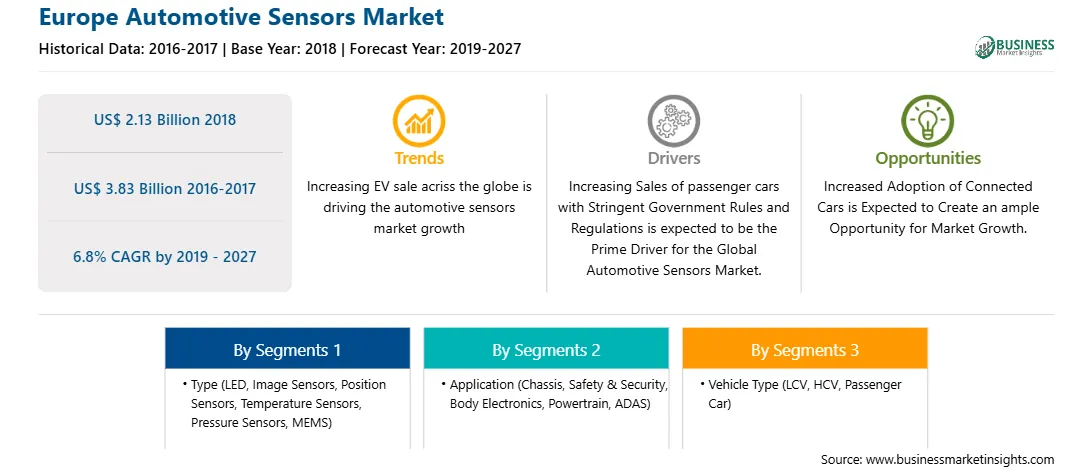
    The Europe automotive sensors market accounted for US$ 2.13 Bn in 2018 and is expected to grow at a CAGR of 6.8% over the forecast period 2019-2027, to account for US$ 3.83 Bn in 2027.

    Get Full Report: https://www.businessmarketinsights.com/reports/europe-automotive-sensors-market

    The automotive industry continues to face mounting pressure to integrate advanced electronics and semiconductor components into vehicles to improve overall performance. A key driver of this trend is the growing shift toward vehicle electrification, which is significantly boosting the demand for sensors across the automotive sector. As a result, automakers are increasingly forming strategic partnerships with sensor manufacturers to meet evolving customer expectations for enhanced safety, reliability, and performance.

    Get a sample PDF of the report – https://www.businessmarketinsights.com/sample/TIPRE00005045?utm_source=Blog&utm_medium=10640

    #EuropeAutoSensors #ADAS #AutomotiveSensors #SensorMarket #VehicleTechnology #Electrification #MEMSSensors #TrafficSafety #Powertrain #ChassisSensors #PassengerCar #HCV #LCV #AutoOEM #MarketForecast #SensorTrends #CleanVehicles #SmartMobility #InvestmentInsights
    Europe Commercial Vehicle Automotive Sensors Market 2027 The Europe automotive sensors market accounted for US$ 2.13 Bn in 2018 and is expected to grow at a CAGR of 6.8% over the forecast period 2019-2027, to account for US$ 3.83 Bn in 2027. Get Full Report: https://www.businessmarketinsights.com/reports/europe-automotive-sensors-market The automotive industry continues to face mounting pressure to integrate advanced electronics and semiconductor components into vehicles to improve overall performance. A key driver of this trend is the growing shift toward vehicle electrification, which is significantly boosting the demand for sensors across the automotive sector. As a result, automakers are increasingly forming strategic partnerships with sensor manufacturers to meet evolving customer expectations for enhanced safety, reliability, and performance. Get a sample PDF of the report – https://www.businessmarketinsights.com/sample/TIPRE00005045?utm_source=Blog&utm_medium=10640 #EuropeAutoSensors #ADAS #AutomotiveSensors #SensorMarket #VehicleTechnology #Electrification #MEMSSensors #TrafficSafety #Powertrain #ChassisSensors #PassengerCar #HCV #LCV #AutoOEM #MarketForecast #SensorTrends #CleanVehicles #SmartMobility #InvestmentInsights
    WWW.BUSINESSMARKETINSIGHTS.COM
    Europe Automotive Sensors Market Analysis and Forecasts to 2027 by Type, Application, Vehicle Type | Business Market Insights
    Europe Automotive Sensors Market accounted for US$ 2.13 Bn in 2018 and is expected to grow at a CAGR of 6.8% over the forecast period 2019-2027, to account for US$ 3.83 Bn in 2027 and segmented into By Type, Application, Vehicle Type.
    0 Comentários 0 Compartilhamentos 9KB Visualizações
  • The global data lake market is experiencing rapid expansion, driven by the exponential growth of digital data, increasing demand for advanced analytics, and the proliferation of cloud-based solutions. The global data lake market size is expected to reach USD 86.83 billion by 2032, according to a new study by Polaris Market Research.

    As organizations worldwide increasingly rely on data-driven decision-making, the ability to consolidate, store, and analyze vast volumes of structured and unstructured data is no longer optional—it's critical. Data lakes offer the scalability, flexibility, and cost-effectiveness that traditional data warehouses struggle to match.

    Market Overview
    A data lake is a centralized repository that stores raw data in its native format until it is needed for analytics. Unlike traditional data warehouses, which structure data before storage (schema-on-write), data lakes use a schema-on-read approach, allowing greater flexibility in managing diverse data types. This makes them an ideal solution for enterprises dealing with ever-increasing data volume, velocity, and variety.

    The surge in big data analytics, the increasing adoption of cloud data storage, and the growth of Internet of Things (IoT) and artificial intelligence (AI) technologies are propelling the demand for data lakes across industries such as BFSI, healthcare, retail, manufacturing, and government.

    Key Market Growth Drivers
    1. Explosion of Data Generation Across Industries
    The sheer volume of data generated by social media platforms, connected devices, e-commerce websites, and enterprise applications is unprecedented. This explosion is accelerating the need for scalable solutions like data lakes that can ingest, process, and store petabytes of structured and unstructured data efficiently.

    2. Growing Adoption of Big Data and Analytics Solutions
    Organizations are increasingly investing in big data analytics to gain real-time insights into consumer behavior, operations, and market trends. Data lakes facilitate the collection and analysis of varied datasets, enabling advanced analytics models, including machine learning and predictive modeling.

    3. Shift Toward Cloud-Based Deployments
    The move from on-premise infrastructure to cloud data storage is one of the most significant shifts impacting the market. Cloud-based data lakes—offered by leading providers such as AWS, Microsoft Azure, and Google Cloud—offer elasticity, speed, and cost-efficiency, helping businesses scale their data operations seamlessly.

    4. Strategic Emphasis on Unified Data Management
    As companies prioritize enterprise data strategy, they are increasingly integrating disparate data systems to achieve a unified data architecture. Data lakes play a critical role in this transformation by serving as the backbone for data management platforms, streamlining data access, governance, and analytics.

    𝐄𝐱𝐩𝐥𝐨𝐫𝐞 𝐓𝐡𝐞 𝐂𝐨𝐦𝐩𝐥𝐞𝐭𝐞 𝐂𝐨𝐦𝐩𝐫𝐞𝐡𝐞𝐧𝐬𝐢𝐯𝐞 𝐑𝐞𝐩𝐨𝐫𝐭 𝐇𝐞𝐫𝐞: https://www.polarismarketresearch.com/industry-analysis/data-lake-market
    Market Challenges
    Despite its rapid growth, the data lake market faces several challenges that could hamper adoption:

    1. Data Governance and Security Concerns
    As data lakes grow, so do concerns over data security, privacy, and compliance. Without robust governance frameworks, organizations risk creating “data swamps”—repositories filled with unusable, unclassified data that can lead to inefficiencies and regulatory penalties.

    2. Integration Complexity
    Integrating a data lake with existing legacy systems, data warehouses, and analytics tools can be complex and costly. Without seamless interoperability, the promise of real-time analytics and unified insights may fall short.

    3. Skill Gaps in Data Engineering and Architecture
    Organizations often lack skilled professionals who can design, manage, and optimize data lake environments. Talent shortages in data engineering and cloud architecture can slow implementation and reduce return on investment (ROI).

    4. Performance and Query Optimization
    While data lakes offer storage scalability, their performance for ad-hoc queries and real-time data retrieval may lag compared to purpose-built data warehouses unless optimized with additional tools or data processing layers such as data lakehouses or query engines like Presto and Apache Hive.

    Regional Analysis
    North America
    North America holds the largest market share in the global data lake market, primarily due to early adoption of cloud technologies, robust digital infrastructure, and a high concentration of data-driven enterprises. The U.S. leads with investments from sectors like finance, healthcare, and e-commerce in building scalable data lakes for enterprise data strategy execution.

    Europe
    Europe follows closely, with increasing regulatory emphasis on data compliance and privacy driving the need for secure, well-governed data lakes. The General Data Protection Regulation (GDPR) has led to more structured approaches to data management.

    Asia-Pacific (APAC)
    The APAC region is witnessing the fastest growth, fueled by digital transformation initiatives in countries like China, India, and Singapore. Growing investment in cloud infrastructure, coupled with the rising demand for customer analytics in sectors like retail and banking, is propelling the data lake market forward.

    Middle East and Africa (MEA)
    The MEA region is gradually adopting data lake solutions, particularly in oil and gas, telecommunications, and government sectors, where large-scale data ingestion and analytics can significantly improve decision-making.

    Key Companies and Competitive Landscape
    The data lake market is characterized by intense competition and rapid innovation. Key players are focusing on product enhancements, strategic partnerships, and cloud integrations to strengthen their market position.

    1. Amazon Web Services (AWS)
    AWS offers one of the most robust and scalable data lake solutions through Amazon S3 and AWS Lake Formation. With services that support ingestion, cataloging, and querying, AWS dominates in terms of flexibility and ecosystem integration.

    2. Microsoft Corporation
    Microsoft Azure Data Lake Storage provides high-throughput, enterprise-grade capabilities tailored for big data analytics workloads. Its tight integration with Power BI, Azure Synapse, and machine learning tools makes it a preferred choice for enterprises.

    3. Google Cloud Platform (GCP)
    GCP’s BigLake service brings together the flexibility of data lakes with the performance of warehouses. GCP stands out for its serverless architecture and strong machine learning integration via Vertex AI.

    4. IBM Corporation
    IBM's Cloud Pak for Data and Watson Studio allow for advanced analytics and AI modeling on top of a secure data lake foundation. IBM also excels in hybrid-cloud deployments, serving enterprises with complex infrastructure needs.

    5. Snowflake Inc.
    Snowflake’s cloud-native data platform combines the best of data lake and data warehouse architectures. Its support for structured and semi-structured data in a single environment offers unparalleled ease of use and scalability.

    Other Notable Players:
    Oracle Corporation

    Cloudera Inc.

    Informatica

    Databricks

    Dremio

    Talend

    These players are continuously evolving their offerings to support the needs of data management platforms in real-time analytics, AI/ML workloads, and governed data collaboration.

    Future Outlook
    The future of the data lake market is poised for intelligent convergence. As organizations mature in their data strategies, the convergence of data lakes and data warehouses—popularly termed “data lakehouses”—is expected to dominate. This hybrid approach offers the best of both worlds: the scalability of lakes and the performance of warehouses.

    Additionally, the integration of AI and ML workflows, enhanced metadata management, and automation in data pipeline orchestration will shape the next generation of data lake platforms.

    Conclusion
    The global data lake market is at a pivotal moment. With the growing importance of big data analytics, cloud data storage, and a unified enterprise data strategy, data lakes are no longer a niche technology—they are essential infrastructure for the digital enterprise.

    Despite challenges in governance, integration, and skills, the market is poised for sustained growth, driven by innovation, cloud adoption, and the insatiable enterprise appetite for actionable insights.

    More Trending Latest Reports By Polaris Market Research:

    Pre-owned Luxury Watches Market

    Planters Market

    Badminton Shoes Market

    Smart Label Market

    Reach Stacker Market

    High Purity Silica Sand for Solar Cell Market

    Carrier Aggregation Solutions Market

    Amniocentesis Needle Market

    Nucleic Acid Isolation And Purification Market

    The global data lake market is experiencing rapid expansion, driven by the exponential growth of digital data, increasing demand for advanced analytics, and the proliferation of cloud-based solutions. The global data lake market size is expected to reach USD 86.83 billion by 2032, according to a new study by Polaris Market Research. As organizations worldwide increasingly rely on data-driven decision-making, the ability to consolidate, store, and analyze vast volumes of structured and unstructured data is no longer optional—it's critical. Data lakes offer the scalability, flexibility, and cost-effectiveness that traditional data warehouses struggle to match. Market Overview A data lake is a centralized repository that stores raw data in its native format until it is needed for analytics. Unlike traditional data warehouses, which structure data before storage (schema-on-write), data lakes use a schema-on-read approach, allowing greater flexibility in managing diverse data types. This makes them an ideal solution for enterprises dealing with ever-increasing data volume, velocity, and variety. The surge in big data analytics, the increasing adoption of cloud data storage, and the growth of Internet of Things (IoT) and artificial intelligence (AI) technologies are propelling the demand for data lakes across industries such as BFSI, healthcare, retail, manufacturing, and government. Key Market Growth Drivers 1. Explosion of Data Generation Across Industries The sheer volume of data generated by social media platforms, connected devices, e-commerce websites, and enterprise applications is unprecedented. This explosion is accelerating the need for scalable solutions like data lakes that can ingest, process, and store petabytes of structured and unstructured data efficiently. 2. Growing Adoption of Big Data and Analytics Solutions Organizations are increasingly investing in big data analytics to gain real-time insights into consumer behavior, operations, and market trends. Data lakes facilitate the collection and analysis of varied datasets, enabling advanced analytics models, including machine learning and predictive modeling. 3. Shift Toward Cloud-Based Deployments The move from on-premise infrastructure to cloud data storage is one of the most significant shifts impacting the market. Cloud-based data lakes—offered by leading providers such as AWS, Microsoft Azure, and Google Cloud—offer elasticity, speed, and cost-efficiency, helping businesses scale their data operations seamlessly. 4. Strategic Emphasis on Unified Data Management As companies prioritize enterprise data strategy, they are increasingly integrating disparate data systems to achieve a unified data architecture. Data lakes play a critical role in this transformation by serving as the backbone for data management platforms, streamlining data access, governance, and analytics. 𝐄𝐱𝐩𝐥𝐨𝐫𝐞 𝐓𝐡𝐞 𝐂𝐨𝐦𝐩𝐥𝐞𝐭𝐞 𝐂𝐨𝐦𝐩𝐫𝐞𝐡𝐞𝐧𝐬𝐢𝐯𝐞 𝐑𝐞𝐩𝐨𝐫𝐭 𝐇𝐞𝐫𝐞: https://www.polarismarketresearch.com/industry-analysis/data-lake-market Market Challenges Despite its rapid growth, the data lake market faces several challenges that could hamper adoption: 1. Data Governance and Security Concerns As data lakes grow, so do concerns over data security, privacy, and compliance. Without robust governance frameworks, organizations risk creating “data swamps”—repositories filled with unusable, unclassified data that can lead to inefficiencies and regulatory penalties. 2. Integration Complexity Integrating a data lake with existing legacy systems, data warehouses, and analytics tools can be complex and costly. Without seamless interoperability, the promise of real-time analytics and unified insights may fall short. 3. Skill Gaps in Data Engineering and Architecture Organizations often lack skilled professionals who can design, manage, and optimize data lake environments. Talent shortages in data engineering and cloud architecture can slow implementation and reduce return on investment (ROI). 4. Performance and Query Optimization While data lakes offer storage scalability, their performance for ad-hoc queries and real-time data retrieval may lag compared to purpose-built data warehouses unless optimized with additional tools or data processing layers such as data lakehouses or query engines like Presto and Apache Hive. Regional Analysis North America North America holds the largest market share in the global data lake market, primarily due to early adoption of cloud technologies, robust digital infrastructure, and a high concentration of data-driven enterprises. The U.S. leads with investments from sectors like finance, healthcare, and e-commerce in building scalable data lakes for enterprise data strategy execution. Europe Europe follows closely, with increasing regulatory emphasis on data compliance and privacy driving the need for secure, well-governed data lakes. The General Data Protection Regulation (GDPR) has led to more structured approaches to data management. Asia-Pacific (APAC) The APAC region is witnessing the fastest growth, fueled by digital transformation initiatives in countries like China, India, and Singapore. Growing investment in cloud infrastructure, coupled with the rising demand for customer analytics in sectors like retail and banking, is propelling the data lake market forward. Middle East and Africa (MEA) The MEA region is gradually adopting data lake solutions, particularly in oil and gas, telecommunications, and government sectors, where large-scale data ingestion and analytics can significantly improve decision-making. Key Companies and Competitive Landscape The data lake market is characterized by intense competition and rapid innovation. Key players are focusing on product enhancements, strategic partnerships, and cloud integrations to strengthen their market position. 1. Amazon Web Services (AWS) AWS offers one of the most robust and scalable data lake solutions through Amazon S3 and AWS Lake Formation. With services that support ingestion, cataloging, and querying, AWS dominates in terms of flexibility and ecosystem integration. 2. Microsoft Corporation Microsoft Azure Data Lake Storage provides high-throughput, enterprise-grade capabilities tailored for big data analytics workloads. Its tight integration with Power BI, Azure Synapse, and machine learning tools makes it a preferred choice for enterprises. 3. Google Cloud Platform (GCP) GCP’s BigLake service brings together the flexibility of data lakes with the performance of warehouses. GCP stands out for its serverless architecture and strong machine learning integration via Vertex AI. 4. IBM Corporation IBM's Cloud Pak for Data and Watson Studio allow for advanced analytics and AI modeling on top of a secure data lake foundation. IBM also excels in hybrid-cloud deployments, serving enterprises with complex infrastructure needs. 5. Snowflake Inc. Snowflake’s cloud-native data platform combines the best of data lake and data warehouse architectures. Its support for structured and semi-structured data in a single environment offers unparalleled ease of use and scalability. Other Notable Players: Oracle Corporation Cloudera Inc. Informatica Databricks Dremio Talend These players are continuously evolving their offerings to support the needs of data management platforms in real-time analytics, AI/ML workloads, and governed data collaboration. Future Outlook The future of the data lake market is poised for intelligent convergence. As organizations mature in their data strategies, the convergence of data lakes and data warehouses—popularly termed “data lakehouses”—is expected to dominate. This hybrid approach offers the best of both worlds: the scalability of lakes and the performance of warehouses. Additionally, the integration of AI and ML workflows, enhanced metadata management, and automation in data pipeline orchestration will shape the next generation of data lake platforms. Conclusion The global data lake market is at a pivotal moment. With the growing importance of big data analytics, cloud data storage, and a unified enterprise data strategy, data lakes are no longer a niche technology—they are essential infrastructure for the digital enterprise. Despite challenges in governance, integration, and skills, the market is poised for sustained growth, driven by innovation, cloud adoption, and the insatiable enterprise appetite for actionable insights. More Trending Latest Reports By Polaris Market Research: Pre-owned Luxury Watches Market Planters Market Badminton Shoes Market Smart Label Market Reach Stacker Market High Purity Silica Sand for Solar Cell Market Carrier Aggregation Solutions Market Amniocentesis Needle Market Nucleic Acid Isolation And Purification Market

    WWW.POLARISMARKETRESEARCH.COM
    Data Lake Market Trends and Forecasts 2024-2032
    The Data Lake Market is forecasted to reach USD 86.83 billion by 2032, driven by a CAGR of 20.40% over the next decade.
    0 Comentários 0 Compartilhamentos 23KB Visualizações
  • The global cheese powder market is experiencing significant growth, driven by the increasing demand for convenient food options, flavor innovations, and the rising popularity of Western cuisines in emerging markets. The global Cheese Powder market size is expected to reach USD 9.90 billion by 2032, according to a new study by Polaris Market Research.

    Market Overview

    Cheese powder, known for its extended shelf life, ease of storage, and versatile applications, has become a staple ingredient in various food products, including snacks, sauces, dressings, and ready-to-eat meals. The convenience and rich flavor profile of cheese powder make it an attractive option for both manufacturers and consumers seeking quick meal solutions without compromising on taste.

    Key Market Growth Drivers

    Rising Demand for Ready-to-Eat and Convenience Foods: The fast-paced lifestyles of consumers have led to an increased preference for ready-to-eat (RTE) and ready-to-cook (RTC) meals. Cheese powder serves as a convenient flavoring agent in these products, enhancing taste while simplifying preparation .

    Flavor Innovations and Product Diversification: Manufacturers are investing in research and development to introduce diverse cheese powder flavors, such as aged cheddar, blue cheese, gouda, and smoked varieties, catering to evolving consumer tastes and preferences .

    Health-Conscious Offerings: The growing consumer preference for healthier food options has led to the development of organic, clean-label, and nutrient-fortified cheese powders. These products align with the demand for natural ingredients free from artificial additives and preservatives .

    Expansion in Emerging Markets: The increasing popularity of Western cuisines in regions like Asia-Pacific is driving the demand for cheese powder-infused products. Urbanization, rising disposable incomes, and changing dietary habits contribute to this trend .

    Market Challenges

    Despite the positive outlook, the cheese powder market faces several challenges:

    Health Concerns: High sodium and fat content in cheese powder may deter health-conscious consumers, impacting market growth. Additionally, potential contaminants like phthalates raise safety concerns .

    Fluctuating Raw Material Prices: Variations in cheese prices can affect production costs and profit margins for manufacturers, posing a challenge to market stability .

    Regulatory Compliance: Navigating diverse food safety regulations across regions requires manufacturers to adapt their processes and formulations, which can be resource-intensive .

    𝐄𝐱𝐩𝐥𝐨𝐫𝐞 𝐓𝐡𝐞 𝐂𝐨𝐦𝐩𝐥𝐞𝐭𝐞 𝐂𝐨𝐦𝐩𝐫𝐞𝐡𝐞𝐧𝐬𝐢𝐯𝐞 𝐑𝐞𝐩𝐨𝐫𝐭 𝐇𝐞𝐫𝐞: https://www.polarismarketresearch.com/industry-analysis/cheese-powder-market

    Regional Analysis

    North America: Holding a significant share of the global market, North America's dominance is attributed to high consumption of processed foods and snacks. The region's inclination towards convenience foods and RTE meals further propels market growth .

    Europe: Europe remains a key market, with countries like Germany and the Netherlands exhibiting a refined appreciation for premium cheese flavors. The demand for authentic and natural ingredients drives the adoption of cheese powder in various culinary applications .

    Asia-Pacific: Expected to be the fastest-growing region, Asia-Pacific's market expansion is fueled by urbanization, increased disposable incomes, and the Westernization of diets in countries such as China, India, Japan, and Australia .

    Key Companies

    Several prominent players are shaping the cheese powder market through strategic initiatives:

    Kerry Group PLC: Strengthened its market position by acquiring The Kraft Heinz Company's powdered cheese business, expanding its scale and manufacturing capabilities .

    Land O'Lakes, Inc.: Collaborated with Fonterra Co-operative Group to enhance its foodservice offerings in the U.S., aiming to tap into new channels and markets .

    Lactosan A/S: Introduced innovative products like the 4-cheeses powder, combining mozzarella, cheddar, blue cheese, and extra hard cheese to offer a rich-tasting cheese powder .

    Butter Buds Inc.: Launched Cheese Buds Simple Cheddar Cheese Concentrate, a clean-label solution delivering authentic cheddar flavor, catering to the demand for natural ingredients .

    Conclusion

    The global cheese powder market is poised for substantial growth, driven by consumer demand for convenience, flavor diversity, and healthier food options. While challenges like health concerns and regulatory compliance persist, ongoing innovations and strategic partnerships among key players are expected to navigate these hurdles, ensuring sustained market expansion in the coming years.

    More Trending Latest Reports By Polaris Market Research:

    Data Center Market

    Chronic Obstructive Pulmonary Disease Market

    Cable Modem Termination System (CMTS) and Converged Cabel Access Platform (CCAP) Market

    Satellite Internet Market

    Corn Market

    Digital Printing Market

    Food Grade Gases Market

    Automotive Brake System Market

    3D Ultrasound Market
    The global cheese powder market is experiencing significant growth, driven by the increasing demand for convenient food options, flavor innovations, and the rising popularity of Western cuisines in emerging markets. The global Cheese Powder market size is expected to reach USD 9.90 billion by 2032, according to a new study by Polaris Market Research. Market Overview Cheese powder, known for its extended shelf life, ease of storage, and versatile applications, has become a staple ingredient in various food products, including snacks, sauces, dressings, and ready-to-eat meals. The convenience and rich flavor profile of cheese powder make it an attractive option for both manufacturers and consumers seeking quick meal solutions without compromising on taste. Key Market Growth Drivers Rising Demand for Ready-to-Eat and Convenience Foods: The fast-paced lifestyles of consumers have led to an increased preference for ready-to-eat (RTE) and ready-to-cook (RTC) meals. Cheese powder serves as a convenient flavoring agent in these products, enhancing taste while simplifying preparation . Flavor Innovations and Product Diversification: Manufacturers are investing in research and development to introduce diverse cheese powder flavors, such as aged cheddar, blue cheese, gouda, and smoked varieties, catering to evolving consumer tastes and preferences . Health-Conscious Offerings: The growing consumer preference for healthier food options has led to the development of organic, clean-label, and nutrient-fortified cheese powders. These products align with the demand for natural ingredients free from artificial additives and preservatives . Expansion in Emerging Markets: The increasing popularity of Western cuisines in regions like Asia-Pacific is driving the demand for cheese powder-infused products. Urbanization, rising disposable incomes, and changing dietary habits contribute to this trend . Market Challenges Despite the positive outlook, the cheese powder market faces several challenges: Health Concerns: High sodium and fat content in cheese powder may deter health-conscious consumers, impacting market growth. Additionally, potential contaminants like phthalates raise safety concerns . Fluctuating Raw Material Prices: Variations in cheese prices can affect production costs and profit margins for manufacturers, posing a challenge to market stability . Regulatory Compliance: Navigating diverse food safety regulations across regions requires manufacturers to adapt their processes and formulations, which can be resource-intensive . 𝐄𝐱𝐩𝐥𝐨𝐫𝐞 𝐓𝐡𝐞 𝐂𝐨𝐦𝐩𝐥𝐞𝐭𝐞 𝐂𝐨𝐦𝐩𝐫𝐞𝐡𝐞𝐧𝐬𝐢𝐯𝐞 𝐑𝐞𝐩𝐨𝐫𝐭 𝐇𝐞𝐫𝐞: https://www.polarismarketresearch.com/industry-analysis/cheese-powder-market Regional Analysis North America: Holding a significant share of the global market, North America's dominance is attributed to high consumption of processed foods and snacks. The region's inclination towards convenience foods and RTE meals further propels market growth . Europe: Europe remains a key market, with countries like Germany and the Netherlands exhibiting a refined appreciation for premium cheese flavors. The demand for authentic and natural ingredients drives the adoption of cheese powder in various culinary applications . Asia-Pacific: Expected to be the fastest-growing region, Asia-Pacific's market expansion is fueled by urbanization, increased disposable incomes, and the Westernization of diets in countries such as China, India, Japan, and Australia . Key Companies Several prominent players are shaping the cheese powder market through strategic initiatives: Kerry Group PLC: Strengthened its market position by acquiring The Kraft Heinz Company's powdered cheese business, expanding its scale and manufacturing capabilities . Land O'Lakes, Inc.: Collaborated with Fonterra Co-operative Group to enhance its foodservice offerings in the U.S., aiming to tap into new channels and markets . Lactosan A/S: Introduced innovative products like the 4-cheeses powder, combining mozzarella, cheddar, blue cheese, and extra hard cheese to offer a rich-tasting cheese powder . Butter Buds Inc.: Launched Cheese Buds Simple Cheddar Cheese Concentrate, a clean-label solution delivering authentic cheddar flavor, catering to the demand for natural ingredients . Conclusion The global cheese powder market is poised for substantial growth, driven by consumer demand for convenience, flavor diversity, and healthier food options. While challenges like health concerns and regulatory compliance persist, ongoing innovations and strategic partnerships among key players are expected to navigate these hurdles, ensuring sustained market expansion in the coming years. More Trending Latest Reports By Polaris Market Research: Data Center Market Chronic Obstructive Pulmonary Disease Market Cable Modem Termination System (CMTS) and Converged Cabel Access Platform (CCAP) Market Satellite Internet Market Corn Market Digital Printing Market Food Grade Gases Market Automotive Brake System Market 3D Ultrasound Market
    WWW.POLARISMARKETRESEARCH.COM
    Cheese Powder Market Share, Size, Trend, Growth Report ,2024-2032
    Cheese Powder Market is expected to reach USD 9.90 billion in 2032 and grow at a CAGR of 7.7% according to market forecast.
    0 Comentários 0 Compartilhamentos 11KB Visualizações
  • Market Overview
    The automotive blind spot detection system market has emerged as a vital segment of the broader ADAS market, gaining significant traction in recent years. Blind spot detection systems are designed to alert drivers about the presence of other vehicles or objects in areas that are not visible through traditional mirrors—commonly known as the "blind spot." These systems utilize radar sensors, cameras, and ultrasonic technologies to monitor adjacent lanes and provide timely alerts, thereby enhancing vehicle safety.

    The global automotive blind spot detection system market size is expected to reach USD 38.68 billion by 2032, according to a new study by Polaris Market Research.

    As automakers ramp up investments in smart mobility and governments introduce stringent vehicle safety norms, blind spot detection systems are becoming a standard offering in both luxury and mid-range vehicles.

    Key Market Growth Drivers
    1. Rising Demand for Safety and Comfort
    Consumer awareness surrounding road safety has surged in the past decade. The World Health Organization reports over 1.3 million road traffic deaths annually, many of which are attributed to lane-change and side-impact collisions. As a result, vehicle manufacturers are prioritizing the integration of safety features such as lane change assist, collision avoidance system, and blind spot monitoring.

    OEMs are increasingly equipping new vehicles with blind spot detection technologies as part of their standard or optional safety packages. Furthermore, aftermarket solutions are now widely available, making this safety feature more accessible for older vehicles.

    2. Stringent Government Regulations
    Governments across North America, Europe, and parts of Asia have enacted safety regulations mandating the inclusion of advanced driver-assistance systems in vehicles. In the European Union, the General Safety Regulation mandates the inclusion of multiple ADAS features, including blind spot monitoring, for all new vehicles sold after 2024.

    Similarly, the U.S. National Highway Traffic Safety Administration (NHTSA) supports voluntary guidelines that promote the integration of blind spot detection systems. These regulatory frameworks act as key catalysts for market growth, compelling both OEMs and aftermarket players to accelerate product development and deployment.

    3. Integration with ADAS and Autonomous Driving
    Blind spot detection is increasingly being integrated into more comprehensive driver assistance systems, including autonomous emergency braking (AEB) and adaptive cruise control. As vehicles progress toward higher levels of autonomy, blind spot systems play a crucial role in ensuring safe maneuvering, particularly during lane changes and overtaking.

    This integration enhances the value proposition of blind spot detection systems, making them essential components in the evolution toward semi-autonomous and fully autonomous vehicles.

    4. Growing Penetration of Electric and Luxury Vehicles
    The rise of electric vehicles (EVs) and premium vehicle segments has fueled the adoption of advanced safety features. Companies like Tesla, BMW, Mercedes-Benz, and Audi are leading the charge in integrating comprehensive safety technologies, including blind spot monitoring, as a standard or optional feature. As EV sales continue to climb, this trend is expected to further expand the blind spot detection market.

    𝐄𝐱𝐩𝐥𝐨𝐫𝐞 𝐓𝐡𝐞 𝐂𝐨𝐦𝐩𝐥𝐞𝐭𝐞 𝐂𝐨𝐦𝐩𝐫𝐞𝐡𝐞𝐧𝐬𝐢𝐯𝐞 𝐑𝐞𝐩𝐨𝐫𝐭 𝐇𝐞𝐫𝐞 https://www.polarismarketresearch.com/industry-analysis/automotive-blind-spot-detection-system-market
    Market Challenges
    Despite the promising growth trajectory, the blind spot detection system market faces several challenges:

    High Cost of Implementation
    One of the primary barriers to widespread adoption is the high cost associated with these systems. Blind spot detection technologies involve sophisticated sensors, software algorithms, and hardware integration, which can add significantly to the manufacturing cost of a vehicle. This cost barrier is particularly pronounced in emerging markets, where price sensitivity is high.

    Technical Limitations and False Positives
    While blind spot monitoring systems are generally reliable, they are not immune to errors. False alerts and system malfunctions due to poor weather, sensor obstruction, or calibration issues can compromise user trust and system effectiveness. Manufacturers must continue to refine algorithms and sensor technologies to enhance accuracy and reliability.

    Privacy and Data Concerns
    As blind spot detection systems become part of broader vehicle telematics and connected car ecosystems, concerns around data privacy and cybersecurity are gaining traction. Ensuring secure communication between sensors, ECUs, and vehicle networks remains a significant challenge for OEMs and system developers.

    Regional Analysis
    North America
    North America is currently the largest market for automotive blind spot detection systems, driven by strong regulatory support and high consumer awareness of vehicle safety. The U.S., in particular, has seen rapid adoption of ADAS features across both luxury and mid-range vehicles. Major automotive players in the region continue to invest in R&D to improve sensor technology and system integration.

    Europe
    Europe follows closely, with stringent safety regulations and strong presence of premium automotive brands fueling market demand. The EU’s safety mandates are expected to significantly boost adoption over the next five years. Germany, France, and the UK remain key contributors due to their advanced automotive manufacturing ecosystems.

    Asia-Pacific
    The Asia-Pacific region is projected to witness the fastest growth during the forecast period. Countries such as China, Japan, and South Korea are at the forefront of technological innovation and vehicle electrification. Increasing disposable incomes and a growing middle class in countries like India and Southeast Asia are also expected to drive market expansion as safety becomes a higher priority for consumers.

    Latin America and Middle East & Africa
    These regions are still in the early stages of adopting blind spot detection technologies. However, urbanization, rising vehicle ownership, and gradual regulatory improvements may open new growth avenues in the future.

    Key Companies and Competitive Landscape
    The global automotive blind spot detection system market is moderately consolidated, with several leading companies competing on the basis of technological innovation, product quality, and strategic partnerships.

    Prominent Players Include:
    Bosch Mobility Solutions: A pioneer in ADAS technology, Bosch offers state-of-the-art radar and camera-based blind spot detection solutions integrated with other safety systems.

    Continental AG: Known for its robust sensor technologies, Continental provides scalable blind spot systems adaptable for various vehicle types.

    Denso Corporation: A leading supplier to Japanese automakers, Denso focuses on compact, energy-efficient detection systems optimized for high-traffic environments.

    Valeo S.A.: Valeo's innovations in radar-based sensing and smart software algorithms have positioned it as a major player in the European market.

    Magna International: With a strong presence in North America, Magna offers complete ADAS packages including lane-keeping assist and blind spot monitoring.

    Other notable companies include ZF Friedrichshafen AG, Autoliv Inc., Hyundai Mobis, and Aptiv PLC. Start-ups and niche players are also entering the market with specialized technologies and competitive pricing, especially in the aftermarket segment.

    Conclusion
    The automotive blind spot detection system market is on a clear upward trajectory, underpinned by growing demand for vehicle safety, regulatory pressure, and advancements in autonomous vehicle technologies. While challenges such as high implementation costs and technical limitations remain, continued R&D investment and government support are expected to unlock new opportunities.

    As automakers increasingly commit to zero-accident goals and smarter mobility solutions, blind spot detection systems will remain at the forefront of the global push toward safer, more intelligent transportation.

    More Trending Latest Reports By Polaris Market Research:

    Wood Coatings Market

    AI Video Generator Market

    Anti-Migrating Agent Market

    Waste to Energy Market

    Green Data Center Market

    U.S. Viral Vector And Plasmid DNA Manufacturing Market

    Synchronous Condenser Market

    Sandarac Market

    Over-The-Top Devices And Services Market
    Market Overview The automotive blind spot detection system market has emerged as a vital segment of the broader ADAS market, gaining significant traction in recent years. Blind spot detection systems are designed to alert drivers about the presence of other vehicles or objects in areas that are not visible through traditional mirrors—commonly known as the "blind spot." These systems utilize radar sensors, cameras, and ultrasonic technologies to monitor adjacent lanes and provide timely alerts, thereby enhancing vehicle safety. The global automotive blind spot detection system market size is expected to reach USD 38.68 billion by 2032, according to a new study by Polaris Market Research. As automakers ramp up investments in smart mobility and governments introduce stringent vehicle safety norms, blind spot detection systems are becoming a standard offering in both luxury and mid-range vehicles. Key Market Growth Drivers 1. Rising Demand for Safety and Comfort Consumer awareness surrounding road safety has surged in the past decade. The World Health Organization reports over 1.3 million road traffic deaths annually, many of which are attributed to lane-change and side-impact collisions. As a result, vehicle manufacturers are prioritizing the integration of safety features such as lane change assist, collision avoidance system, and blind spot monitoring. OEMs are increasingly equipping new vehicles with blind spot detection technologies as part of their standard or optional safety packages. Furthermore, aftermarket solutions are now widely available, making this safety feature more accessible for older vehicles. 2. Stringent Government Regulations Governments across North America, Europe, and parts of Asia have enacted safety regulations mandating the inclusion of advanced driver-assistance systems in vehicles. In the European Union, the General Safety Regulation mandates the inclusion of multiple ADAS features, including blind spot monitoring, for all new vehicles sold after 2024. Similarly, the U.S. National Highway Traffic Safety Administration (NHTSA) supports voluntary guidelines that promote the integration of blind spot detection systems. These regulatory frameworks act as key catalysts for market growth, compelling both OEMs and aftermarket players to accelerate product development and deployment. 3. Integration with ADAS and Autonomous Driving Blind spot detection is increasingly being integrated into more comprehensive driver assistance systems, including autonomous emergency braking (AEB) and adaptive cruise control. As vehicles progress toward higher levels of autonomy, blind spot systems play a crucial role in ensuring safe maneuvering, particularly during lane changes and overtaking. This integration enhances the value proposition of blind spot detection systems, making them essential components in the evolution toward semi-autonomous and fully autonomous vehicles. 4. Growing Penetration of Electric and Luxury Vehicles The rise of electric vehicles (EVs) and premium vehicle segments has fueled the adoption of advanced safety features. Companies like Tesla, BMW, Mercedes-Benz, and Audi are leading the charge in integrating comprehensive safety technologies, including blind spot monitoring, as a standard or optional feature. As EV sales continue to climb, this trend is expected to further expand the blind spot detection market. 𝐄𝐱𝐩𝐥𝐨𝐫𝐞 𝐓𝐡𝐞 𝐂𝐨𝐦𝐩𝐥𝐞𝐭𝐞 𝐂𝐨𝐦𝐩𝐫𝐞𝐡𝐞𝐧𝐬𝐢𝐯𝐞 𝐑𝐞𝐩𝐨𝐫𝐭 𝐇𝐞𝐫𝐞 https://www.polarismarketresearch.com/industry-analysis/automotive-blind-spot-detection-system-market Market Challenges Despite the promising growth trajectory, the blind spot detection system market faces several challenges: High Cost of Implementation One of the primary barriers to widespread adoption is the high cost associated with these systems. Blind spot detection technologies involve sophisticated sensors, software algorithms, and hardware integration, which can add significantly to the manufacturing cost of a vehicle. This cost barrier is particularly pronounced in emerging markets, where price sensitivity is high. Technical Limitations and False Positives While blind spot monitoring systems are generally reliable, they are not immune to errors. False alerts and system malfunctions due to poor weather, sensor obstruction, or calibration issues can compromise user trust and system effectiveness. Manufacturers must continue to refine algorithms and sensor technologies to enhance accuracy and reliability. Privacy and Data Concerns As blind spot detection systems become part of broader vehicle telematics and connected car ecosystems, concerns around data privacy and cybersecurity are gaining traction. Ensuring secure communication between sensors, ECUs, and vehicle networks remains a significant challenge for OEMs and system developers. Regional Analysis North America North America is currently the largest market for automotive blind spot detection systems, driven by strong regulatory support and high consumer awareness of vehicle safety. The U.S., in particular, has seen rapid adoption of ADAS features across both luxury and mid-range vehicles. Major automotive players in the region continue to invest in R&D to improve sensor technology and system integration. Europe Europe follows closely, with stringent safety regulations and strong presence of premium automotive brands fueling market demand. The EU’s safety mandates are expected to significantly boost adoption over the next five years. Germany, France, and the UK remain key contributors due to their advanced automotive manufacturing ecosystems. Asia-Pacific The Asia-Pacific region is projected to witness the fastest growth during the forecast period. Countries such as China, Japan, and South Korea are at the forefront of technological innovation and vehicle electrification. Increasing disposable incomes and a growing middle class in countries like India and Southeast Asia are also expected to drive market expansion as safety becomes a higher priority for consumers. Latin America and Middle East & Africa These regions are still in the early stages of adopting blind spot detection technologies. However, urbanization, rising vehicle ownership, and gradual regulatory improvements may open new growth avenues in the future. Key Companies and Competitive Landscape The global automotive blind spot detection system market is moderately consolidated, with several leading companies competing on the basis of technological innovation, product quality, and strategic partnerships. Prominent Players Include: Bosch Mobility Solutions: A pioneer in ADAS technology, Bosch offers state-of-the-art radar and camera-based blind spot detection solutions integrated with other safety systems. Continental AG: Known for its robust sensor technologies, Continental provides scalable blind spot systems adaptable for various vehicle types. Denso Corporation: A leading supplier to Japanese automakers, Denso focuses on compact, energy-efficient detection systems optimized for high-traffic environments. Valeo S.A.: Valeo's innovations in radar-based sensing and smart software algorithms have positioned it as a major player in the European market. Magna International: With a strong presence in North America, Magna offers complete ADAS packages including lane-keeping assist and blind spot monitoring. Other notable companies include ZF Friedrichshafen AG, Autoliv Inc., Hyundai Mobis, and Aptiv PLC. Start-ups and niche players are also entering the market with specialized technologies and competitive pricing, especially in the aftermarket segment. Conclusion The automotive blind spot detection system market is on a clear upward trajectory, underpinned by growing demand for vehicle safety, regulatory pressure, and advancements in autonomous vehicle technologies. While challenges such as high implementation costs and technical limitations remain, continued R&D investment and government support are expected to unlock new opportunities. As automakers increasingly commit to zero-accident goals and smarter mobility solutions, blind spot detection systems will remain at the forefront of the global push toward safer, more intelligent transportation. More Trending Latest Reports By Polaris Market Research: Wood Coatings Market AI Video Generator Market Anti-Migrating Agent Market Waste to Energy Market Green Data Center Market U.S. Viral Vector And Plasmid DNA Manufacturing Market Synchronous Condenser Market Sandarac Market Over-The-Top Devices And Services Market
    WWW.POLARISMARKETRESEARCH.COM
    Automotive Blind Spot Detection System Market Growth Analysis, 2024-2032
    Automotive Blind Spot Detection System Market size is projected to reach 38.68 Billion by 2032, growing at a CAGR of 18.4% from 2024-2032
    0 Comentários 0 Compartilhamentos 13KB Visualizações
  • The global inoculants market size is expected to reach USD 2.49 billion by 2032, according to a new study by Polaris Market Research.This expansion is primarily fueled by the increasing adoption of sustainable farming practices, heightened awareness of environmental concerns, and the growing demand for organic agricultural products.

    Market Overview

    Inoculants are formulations containing beneficial microorganisms, such as bacteria, fungi, and other microbes, that are applied to soil, seeds, or plants to enhance plant growth, improve nutrient uptake, and suppress plant diseases. These biological agents serve as eco-friendly alternatives to chemical fertilizers and pesticides, aligning with the global shift towards sustainable agriculture.

    The market is segmented into two primary categories:

    Agricultural Inoculants: These are used to promote plant growth by enhancing nutrient availability and improving soil health.

    Silage Inoculants: Applied in livestock feed production to improve fermentation processes and increase the nutritional value of silage.

    Key Market Drivers

    Several factors are contributing to the robust growth of the inoculants market:

    Sustainable Farming Practices: There is a growing emphasis on reducing chemical inputs in agriculture. Inoculants offer a natural solution to enhance soil fertility and plant health, thereby supporting sustainable farming practices.

    Organic Farming Growth: The increasing consumer demand for organic products is driving farmers to adopt biological inputs like inoculants to meet market requirements.

    Soil Health Awareness: Degradation of soil health due to over-reliance on chemical fertilizers has led to a shift towards biological solutions that promote long-term soil fertility.

    Government Initiatives: Policies and subsidies promoting the use of bio-based agricultural inputs are accelerating the adoption of inoculants.

    𝐄𝐱𝐩𝐥𝐨𝐫𝐞 𝐓𝐡𝐞 𝐂𝐨𝐦𝐩𝐥𝐞𝐭𝐞 𝐂𝐨𝐦𝐩𝐫𝐞𝐡𝐞𝐧𝐬𝐢𝐯𝐞 𝐑𝐞𝐩𝐨𝐫𝐭 𝐇𝐞𝐫𝐞: https://www.polarismarketresearch.com/industry-analysis/inoculants-market

    Regional Insights

    North America: The United States and Canada are leading the adoption of inoculants, driven by advanced agricultural practices and strong regulatory support for sustainable farming.

    Europe: Countries like Germany, France, and the UK are witnessing significant growth in the use of inoculants, supported by stringent environmental regulations and a strong emphasis on organic farming.

    Asia-Pacific: The region is experiencing rapid growth, particularly in countries like China and India, where there is a pressing need to enhance food production and ensure soil health amidst growing populations.

    Latin America: Brazil and Argentina are key markets, with large-scale agricultural activities and increasing awareness of the benefits of microbial inoculants.

    Middle East and Africa: The region presents untapped potential for market growth, with opportunities arising from the need to improve soil fertility and agricultural productivity in arid and semi-arid regions.

    Competitive Landscape

    The inoculants market is characterized by the presence of several key players who are actively involved in research and development, product innovation, and strategic partnerships:

    BASF SE: A leading player in the development of microbial solutions, BASF offers a range of agricultural inoculants aimed at enhancing crop productivity and sustainability.

    Bayer AG: Bayer's Crop Science division is engaged in the development of innovative microbial products to support sustainable agriculture practices.

    Novozymes A/S: Specializing in microbial solutions, Novozymes provides a comprehensive portfolio of agricultural inoculants to improve soil health and plant performance.

    Verdesian Life Sciences: Known for its nutrient efficiency and biological products, Verdesian Life Sciences offers microbial inoculants that promote plant growth and soil health.

    Lallemand Inc.: Lallemand develops and markets microbial products for agriculture, focusing on improving soil fertility and plant health.

    XiteBio Technologies Inc.: XiteBio offers a range of inoculants designed to enhance nutrient uptake and promote sustainable farming practices.

    Market Outlook

    The inoculants market is poised for continued growth, driven by technological advancements in microbial research, formulation technologies, and application methods. The increasing adoption of precision agriculture, integration of digital tools, and emphasis on sustainable farming practices are anticipated to further propel market growth.

    In conclusion, inoculants represent a pivotal component in the evolution of modern farming, offering sustainable solutions to enhance crop productivity, improve soil health, and reduce environmental impact. As the global agricultural landscape continues to evolve, the role of microbial inoculants in shaping the future of agriculture becomes increasingly significant.

    More Trending Latest Reports By Polaris Market Research:

    Corn Market

    Fitness App Market- update

    Riflescope & Red Dot Sight Market

    Metaverse Market

    Envelope Market

    Subcutaneous Drug Delivery Devices Market

    Anti-Vascular Endothelial Growth Factor Therapeutics Market

    Aluminum Bags and Pouches Market

    Waterjet Cutting Machine Market
    The global inoculants market size is expected to reach USD 2.49 billion by 2032, according to a new study by Polaris Market Research.This expansion is primarily fueled by the increasing adoption of sustainable farming practices, heightened awareness of environmental concerns, and the growing demand for organic agricultural products. Market Overview Inoculants are formulations containing beneficial microorganisms, such as bacteria, fungi, and other microbes, that are applied to soil, seeds, or plants to enhance plant growth, improve nutrient uptake, and suppress plant diseases. These biological agents serve as eco-friendly alternatives to chemical fertilizers and pesticides, aligning with the global shift towards sustainable agriculture. The market is segmented into two primary categories: Agricultural Inoculants: These are used to promote plant growth by enhancing nutrient availability and improving soil health. Silage Inoculants: Applied in livestock feed production to improve fermentation processes and increase the nutritional value of silage. Key Market Drivers Several factors are contributing to the robust growth of the inoculants market: Sustainable Farming Practices: There is a growing emphasis on reducing chemical inputs in agriculture. Inoculants offer a natural solution to enhance soil fertility and plant health, thereby supporting sustainable farming practices. Organic Farming Growth: The increasing consumer demand for organic products is driving farmers to adopt biological inputs like inoculants to meet market requirements. Soil Health Awareness: Degradation of soil health due to over-reliance on chemical fertilizers has led to a shift towards biological solutions that promote long-term soil fertility. Government Initiatives: Policies and subsidies promoting the use of bio-based agricultural inputs are accelerating the adoption of inoculants. 𝐄𝐱𝐩𝐥𝐨𝐫𝐞 𝐓𝐡𝐞 𝐂𝐨𝐦𝐩𝐥𝐞𝐭𝐞 𝐂𝐨𝐦𝐩𝐫𝐞𝐡𝐞𝐧𝐬𝐢𝐯𝐞 𝐑𝐞𝐩𝐨𝐫𝐭 𝐇𝐞𝐫𝐞: https://www.polarismarketresearch.com/industry-analysis/inoculants-market Regional Insights North America: The United States and Canada are leading the adoption of inoculants, driven by advanced agricultural practices and strong regulatory support for sustainable farming. Europe: Countries like Germany, France, and the UK are witnessing significant growth in the use of inoculants, supported by stringent environmental regulations and a strong emphasis on organic farming. Asia-Pacific: The region is experiencing rapid growth, particularly in countries like China and India, where there is a pressing need to enhance food production and ensure soil health amidst growing populations. Latin America: Brazil and Argentina are key markets, with large-scale agricultural activities and increasing awareness of the benefits of microbial inoculants. Middle East and Africa: The region presents untapped potential for market growth, with opportunities arising from the need to improve soil fertility and agricultural productivity in arid and semi-arid regions. Competitive Landscape The inoculants market is characterized by the presence of several key players who are actively involved in research and development, product innovation, and strategic partnerships: BASF SE: A leading player in the development of microbial solutions, BASF offers a range of agricultural inoculants aimed at enhancing crop productivity and sustainability. Bayer AG: Bayer's Crop Science division is engaged in the development of innovative microbial products to support sustainable agriculture practices. Novozymes A/S: Specializing in microbial solutions, Novozymes provides a comprehensive portfolio of agricultural inoculants to improve soil health and plant performance. Verdesian Life Sciences: Known for its nutrient efficiency and biological products, Verdesian Life Sciences offers microbial inoculants that promote plant growth and soil health. Lallemand Inc.: Lallemand develops and markets microbial products for agriculture, focusing on improving soil fertility and plant health. XiteBio Technologies Inc.: XiteBio offers a range of inoculants designed to enhance nutrient uptake and promote sustainable farming practices. Market Outlook The inoculants market is poised for continued growth, driven by technological advancements in microbial research, formulation technologies, and application methods. The increasing adoption of precision agriculture, integration of digital tools, and emphasis on sustainable farming practices are anticipated to further propel market growth. In conclusion, inoculants represent a pivotal component in the evolution of modern farming, offering sustainable solutions to enhance crop productivity, improve soil health, and reduce environmental impact. As the global agricultural landscape continues to evolve, the role of microbial inoculants in shaping the future of agriculture becomes increasingly significant. More Trending Latest Reports By Polaris Market Research: Corn Market Fitness App Market- update Riflescope & Red Dot Sight Market Metaverse Market Envelope Market Subcutaneous Drug Delivery Devices Market Anti-Vascular Endothelial Growth Factor Therapeutics Market Aluminum Bags and Pouches Market Waterjet Cutting Machine Market
    WWW.POLARISMARKETRESEARCH.COM
    Inoculants Market, Size, Share, Strategy, Opportunity 2023-2032
    With a predicted CAGR of 8.9%, the Global Inoculants Market is USD 2.49 Billion positioned to be a thriving industry, offering lucrative opportunities by 2032.
    0 Comentários 0 Compartilhamentos 10KB Visualizações
Páginas impulsionada