


What Is the Role of Diaphragm Pressure Gauges in Steam Applications?
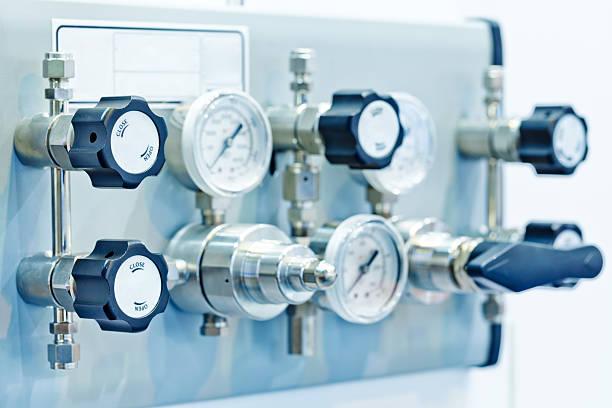
Diaphragm pressure gauges play an essential role in modern steam systems. They protect equipment, improve system reliability, and help operators maintain safe operating conditions. Their structure allows them to withstand difficult environments. Their performance helps maintain stable readings even when pressure changes quickly. Steam applications demand precision and durability, and diaphragm designs often provide both. This article explains why these gauges matter, how they work, and why steam systems depend on them. It also explores specific challenges in steam environments and shows how diaphragm instruments address those challenges through design, material choice, and mechanical function.
Understanding the Structure and Function of Diaphragm Gauges
Basic Operating Principle
Diaphragm pressure gauges use a flexible metallic diaphragm to sense pressure. The diaphragm deflects when pressure increases. The motion transfers through a mechanical linkage to a pointer. The pointer moves across a dial, and the user sees a clear reading. The system relies on a simple mechanical action. It does not rely on electricity. It works in many environments.
In steam applications, pressure may rise quickly. The diaphragm reacts fast because it has a low mass. The lightweight structure improves sensitivity. This responsiveness allows accurate readings even when pressure oscillates.
Importance of the Diaphragm Element
The diaphragm element itself plays the central role. It separates the steam medium from the measuring mechanism. The membrane protects delicate parts from high temperature, moisture, and possible contamination. It prevents corrosion and mechanical damage. It also provides stability because the elastic properties remain predictable across a wide temperature range.
In steam systems, this separation is critical. Steam carries heat energy. Steam may contain dissolved minerals. Steam may entrain droplets. These features can damage internal gears or linkages. The diaphragm acts as a shield, allowing the gauge to survive and operate reliably.
Why Steam Applications Require Special Gauge Designs
Challenges of High Temperature
Steam systems expose instruments to high temperature. The gauge must tolerate thermal expansion. The gauge must resist metal fatigue. Diaphragm pressure gauges often use high-temperature alloys. These alloys keep their elasticity even when exposed to heat for long periods. The diaphragm does not warp easily. The linkage remains stable.
Many traditional Bourdon tube gauges fail under constant thermal stress. Steam can heat the Bourdon tube unevenly. This uneven heating increases drift. Diaphragm gauges show less drift because the membrane distributes heat more evenly.
Exposure to Condensate and Moisture
Steam systems often contain condensate. Condensate forms when steam cools. Condensate may accumulate in instrumentation lines. Moisture can corrode internal components. Moisture can freeze under outdoor conditions. Moisture can enter a gauge and change its calibration.
Diaphragm pressure gauges use sealed housings. They use tight welds around the diaphragm rim. They keep moisture away from the interior. This protection ensures long gauge life.
Vibration and Pulsation
Steam systems sometimes create vibration. Pumps start and stop. Valves open and close. Pipes expand and contract. Pressure pulses may travel through the system. These factors can affect gauge accuracy.
The diaphragm design helps absorb pulsations. The membrane flexes smoothly. It cushions the mechanical linkage. The pointer does not jump as much. This stable response helps operators make better decisions.
Applications of Diaphragm Pressure Gauges in Steam Systems
Boiler Monitoring
Boilers rely on accurate pressure information. Operators must manage boiler pressure carefully. Too high pressure creates safety hazards. Too low pressure decreases efficiency. Diaphragm pressure gauges provide stable readings even during temperature swings. They help operators avoid dangerous conditions.
They also help in start-up and shutdown operations. Temperature changes rapidly during these phases. Many gauge designs struggle with thermal shock. Diaphragm gauges tolerate these transitions well.
Steam Distribution Networks
Steam travels through distribution lines to reach equipment. These lines need periodic monitoring. Pressure drops indicate leaks or restrictions. Pressure surges indicate valve problems or sudden demand changes.
Diaphragm pressure gauges help technicians diagnose these issues. Their accuracy remains stable even when ambient temperature fluctuates. Their robust design allows installation in outdoor or industrial settings. They handle humidity, dirt, and thermal cycles.
Steam-Powered Process Equipment
Many industries use steam as a process medium. Food production uses steam for cooking. Chemical plants use steam for heating. Pharmaceutical facilities use steam for sterilization. All these processes require reliable pressure measurement.
Diaphragm pressure gauges provide this reliability. They can measure low pressure and high pressure. They can handle saturated steam and superheated steam. Their materials can resist corrosion from chemicals that may enter the steam system.
Material Selection and Gauge Performance
Common Diaphragm Materials
Stainless steel is a common diaphragm material. It resists corrosion. It tolerates heat. It stays elastic. Specialized alloys such as Hastelloy or Inconel appear in high-temperature or high-pressure applications. These materials maintain elasticity under extreme stress. They resist steam impurities.
The choice of material affects gauge accuracy and longevity. The correct material prevents cracking. It reduces drift. It protects the gauge against thermal stress.
Gauge Housing and Seals
The housing usually consists of stainless steel or coated steel. It protects internal components. High-temperature elastomers or metal seals ensure steam does not enter the mechanism. These seals must resist swelling and degradation. They keep the gauge calibrated.
The combination of strong housing and reliable seals allows diaphragm pressure gauges to survive harsh steam environments.
Advantages of Diaphragm Gauges in Steam
Accuracy Across Temperature Ranges
Diaphragm designs maintain accuracy because temperature has a smaller effect on the membrane than on other sensing elements. The membrane flexes consistently. The gauge shows reliable readings even when the pipe temperature changes quickly.
Protection From Contaminants
Steam may contain oils, rust particles, or minerals. These contaminants can damage mechanical parts. The diaphragm provides a barrier. The gauge remains clean. The readings remain stable.
Suitability for Low-Pressure and High-Pressure Steam
Some steam systems operate at low pressure. Others operate at extremely high pressure. Diaphragm gauges can handle both. They can be calibrated for delicate measurements or robust industrial readings.
Comparison With Other Pressure Gauges
Versus Bourdon Tube Gauges
Bourdon tube instruments are common. They are inexpensive. They work well in many conditions. But they can struggle with steam. Thermal shock affects them. Steam condensate enters the coil. The readings drift.
Diaphragm pressure gauges avoid these issues. They do not rely on a hollow tube. They isolate the steam behind a solid membrane. This makes them more suitable for difficult steam environments.
Versus Digital Gauges
Digital gauges can be accurate. They can be compact. But many digital sensors do not tolerate high temperature. Their electronics degrade. Their displays fail. Their sensors drift under heat.
Diaphragm gauges need no electricity. They work in extreme heat. They survive long-term exposure to steam. They provide stable mechanical readings in places where digital sensors cannot survive.
Conclusion
Diaphragm pressure gauges play a crucial role in steam applications. They provide reliable measurements in high-temperature, high-moisture, and high-vibration environments. Their diaphragm element protects internal mechanisms. Their materials withstand heat and contamination. Their design ensures accurate readings despite rapid pressure changes. They outperform many other gauge types in steam environments because they resist condensate, thermal shock, and corrosion.
Steam systems require durability, stability, and clarity in pressure measurement. Diaphragm pressure gauges deliver these qualities. They help operators maintain safe conditions. They improve efficiency. They extend the service life of equipment. In every sector that uses steam, from boilers to manufacturing lines, diaphragm gauges prove their value. Through their robust design and reliable performance, they remain essential tools in modern industrial steam management.
 French
 English
 Arabic
 Spanish
 Portuguese
 Deutsch
 Turkish
 Dutch
Dutch
 Italiano
 Russian
 Romaian
 Portuguese (Brazil)
 Greek
Greek